Last year Lisa and I camped out at the Stirling Ranges for our anniversary at the end of October. It was a hot few days and while we did get a bit of rain to cool things off briefly, in truth it was pretty uncomfortable. But, as is always the case when we crash at the Mount Trio Bush Camp we had a good time. In part because it is a beautiful place but also to catch up with the owners, John and Margot who we have now known for eleven years. This year we went for Lisa’s birthday, just under four weeks earlier than last year:
Two things struck us, it was busy. Much busier than we have ever known it, and there were portable loos scattered round the area to help with the additional load. Eleven years back, when we first came here it was during the spring school holiday and yet we had several nights with the place all to ourselves. This year they have had up to 350 people camping each night. It was a huge change, but not unsurprising with most Western Australians being unable to go on their usual interstate or overseas trips. And as such seeking out alternative local adventures:
The second thing was the water, we have seen water trickle down the creek line before. But this year it has properly flowed for extended periods, and the last time John could recall this happening was in 2006. It was also much cooler than last year, which suited us fine. We had three nights away which meant two days to chill out and explore. No surprises in that Lisa did more of the chilling out and I did more of the exploring, and being spring you can probably guess what I was looking for:
Camping out we tend to hit the sack early, and then I’m up and about at first light. The dawn chorus was wonderful with a mixture of so many birds. I could only recognise the obvious and bigger birds, such as the magpie, cockatoos, ringnecks, wattlebirds and crows. There was also the quieter background song from a myriad of small birds that probably included willy wagtails, fantails, robins, wrens, etc. There is a great nature trail in the bush camp, but also plenty of bushland to explore both in the camp and in the national park that sits right on the edge of the camp:
So each morning it was a similar routine, I’d get up and go for an hour to an hour and half wander. Come back and make a cuppa for both of us and then go for another hour plus wander. When I got back Lisa and I would head to the camp kitchen for a lazy breakfast. The good thing about the routine being that the morning rush in the camp kitchen would have died down by then, and generally the people left lingering about were after a quiet morning. After that we would then get ready to head out for a wander together:
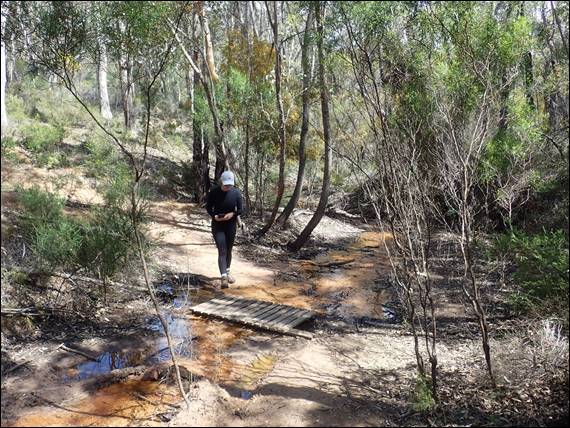
On the first full day we decided to climb Mount Magog, which is the only publicly advertised peak for hiking up that we have never been to. It was also one of the lesser frequented ones, and there was only one car parked up when we arrived. The track crossed a small creek and then took a steady and increasingly steepening track, which takes a reasonably direct route for four kilometres. Mount Magog is supposed to have a steep finish that requires scrambling, which is in part why we hadn’t attempted it before:
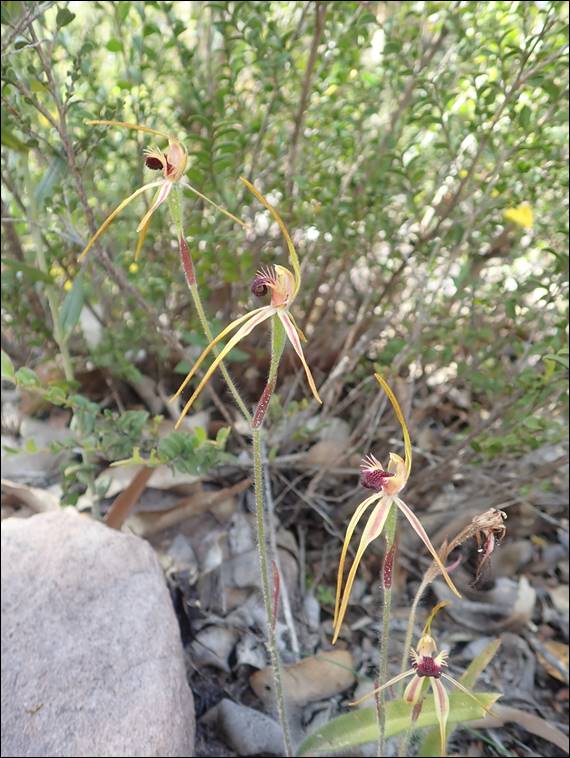
In the areas that had been so decimated in the 2020 fires, life was definitely coming back and I’ll come back to that later. Some areas had burned way too hot and much of the seedbank in the soil was destroyed, one area we visited on the second day was like this and the regrowth was in complete contrast to the more balanced ecology we were seeing here. The fires hadn’t extended to this part of the park, and as such the bush was amazingly diverse and the landscape was littered with flowers:
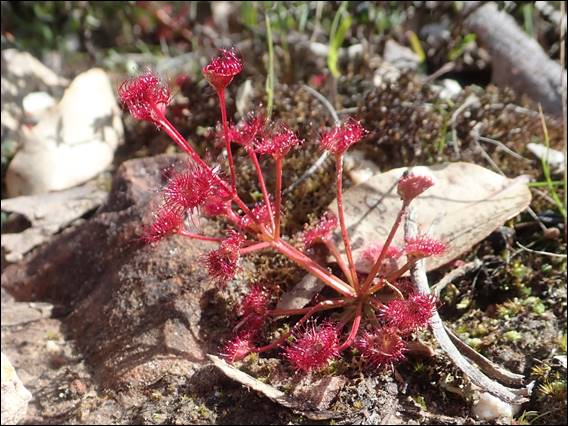
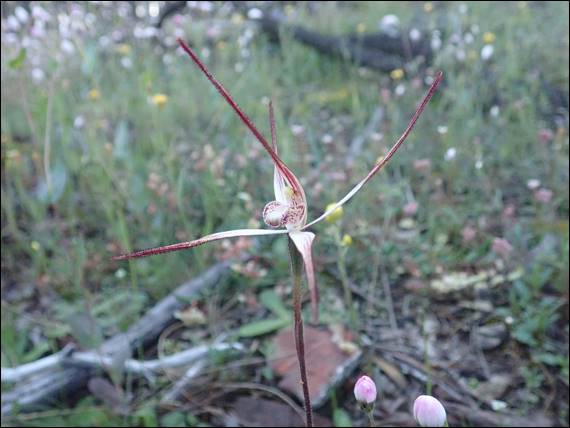
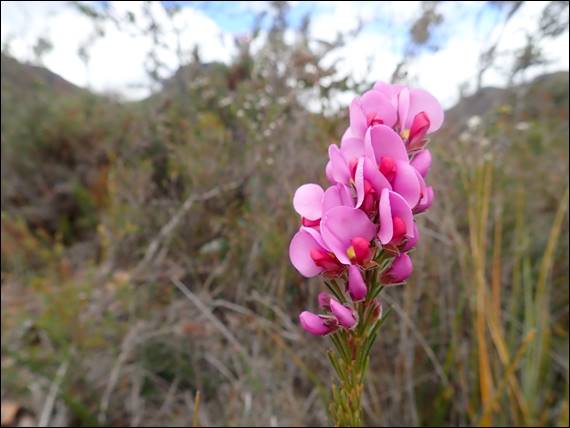
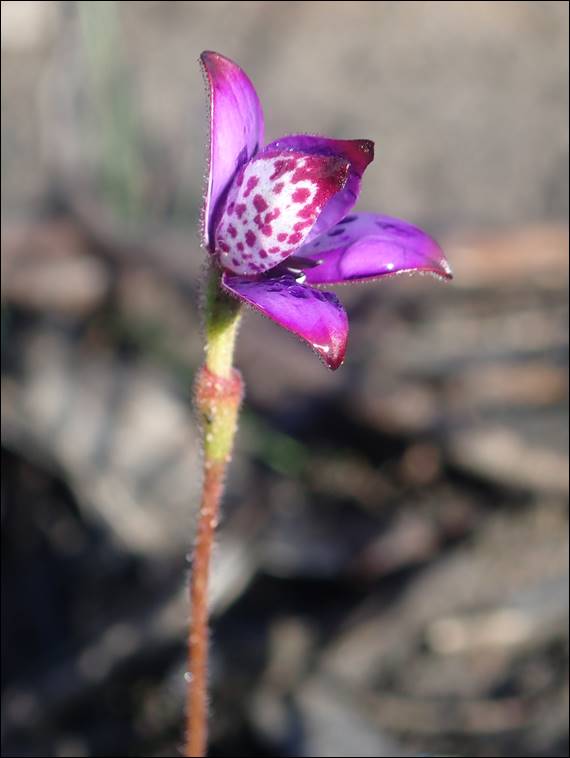
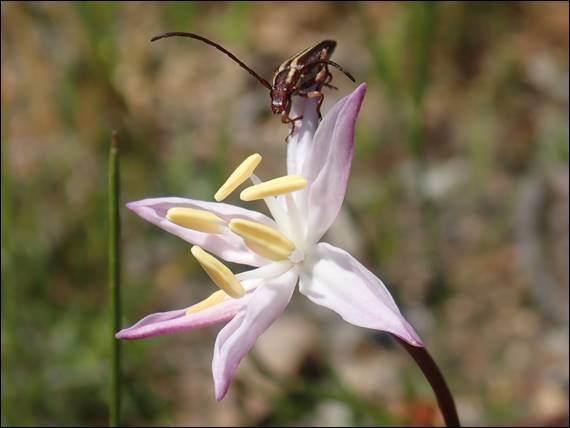
The track switched from sandy to rocky areas and then back again, and with the changing soils the vegetation also switched. As can be see above and below we were spotting small sundews through to amazing peas. The ones below were the most stunning, each flower was about two centimetres high and even in the semi-cloudy conditions the pink shone so brightly. Then of course there were the orchids to spot, I’ve already included images of four species I found but I will refrain from mentioning all of them:
One reason for not mentioning all of them is that there were too many. During the trip I found thirty species and/or hybrids species, and possibly more as some of them were just too hard to really know if they were different. I’ll mention a couple of the more special finds but that will come later. In the image below the track looks like it is heading to Mount Talyuberlup, a place that we have both hiked up before and I have also climbed at. But the track slowly drifts leftward to the peak just hidden behind the shrub:
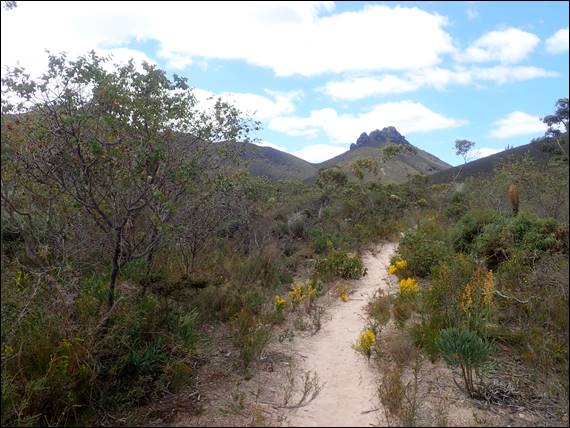
Mount Magog and Talyuberlup are connected by a ridge and I was really tempted to suggest we hike the ridge, but knew that it would probably be a bit too much for Lisa. However, one day I’ll be keen to extend the hike to take in both peaks. As the track steepened up, our heads looked down and we did not take in so much of the scenery round us. This did however make me notice small holes along the track. At first I thought they were holes made from hiking poles, but on closer inspection these were raised holes:
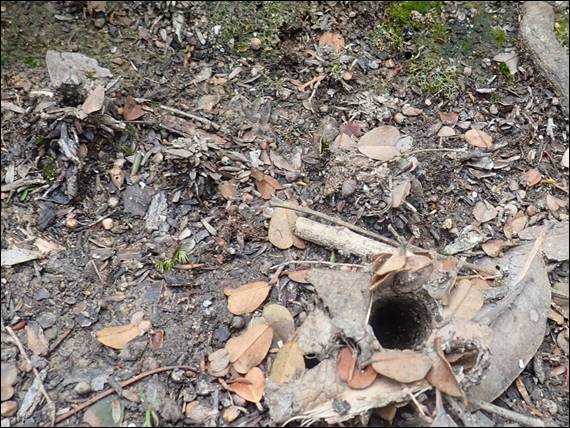
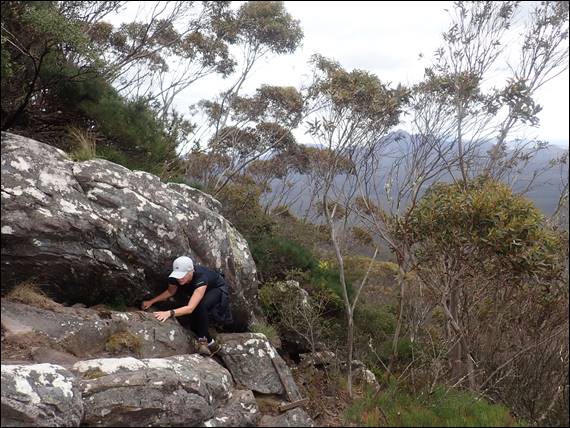
The raised portion was strengthened by securely placed twigs, and I can only guess that these are to prevent the hole from being flooded. I never saw anything go in or come out of these burrows so can’t tell you what creature was housed within. While it was a steep track there were no steps, a couple of the hikes in the Stirling Ranges have steps that are way too high and we are not that keen on them. We were also pleasantly surprised to find that the final stretch only had a couple of sections to scramble up. This was the worse section but Lisa was determined and managed it with relative ease:
It was a cloudy and windy day to be on top of a peak, but we found a bit of respite from the wind and even weathered a shower that came over. It made us wonder what it might be like going back down; the rocky scramble sections would be pretty dicey in the wet. Fortunately the rain passed over and the wind was such that the rock would soon dry, plus that band was followed by mostly clear skies. It then felt good to lie back on a rock armchair in the sun, munching on some snacks. Soon my eyes started to drift and I found a whole bunch of orchids in the undergrowth:
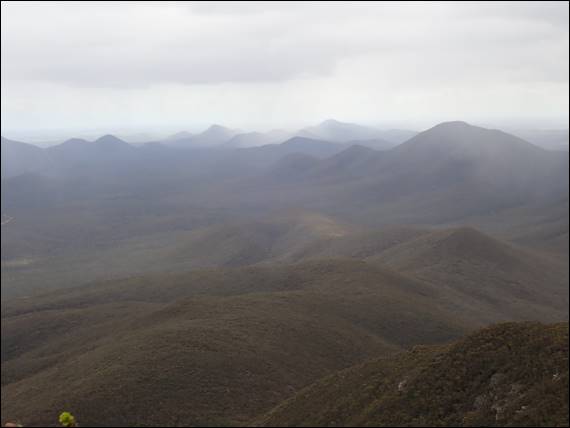
The group ahead of us were still on top enjoying just being out there, a man and his two sons, but there was plenty of room up there plus just like us they were just quietly enjoying the place. Someone else also turned up but had to head off after a quick photo. His girlfriend hadn’t managed the rock steps, so was waiting a bit below the top. The group of three said a quick scramble across the ridge to the next peak, not Talyuberlup but the second peak of Magog was worth it. So I left Lisa to have a quick scramble and sure enough they were right:
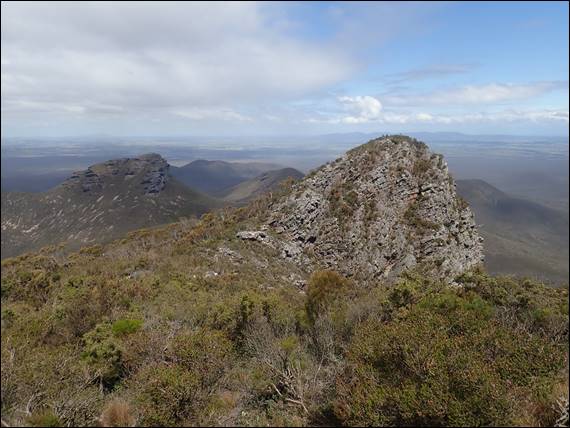
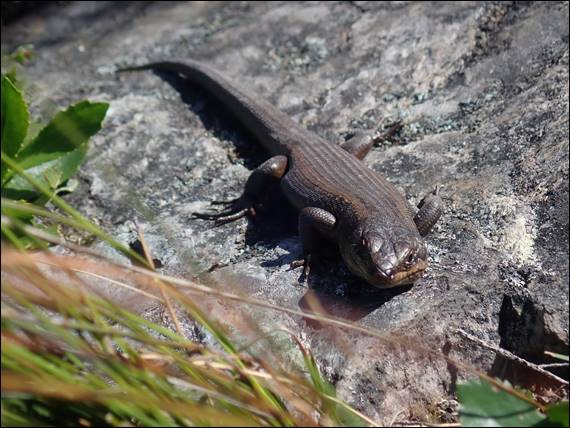
The sheer face of the main peak was stunning to see, even better with the backdrop of Talyuberlup. When I got back the third group was there in full, the woman had managed to conjure up the courage to get up the rocky steps to enjoy the views. Before Lisa and I headed off we munched on a few more snacks and watched the fearless lizards come out to join us sunbathing. They may be also realise that were humans are tasty morsels might be dropped, and they got really close to us looking about and only scampering away if we moved suddenly:
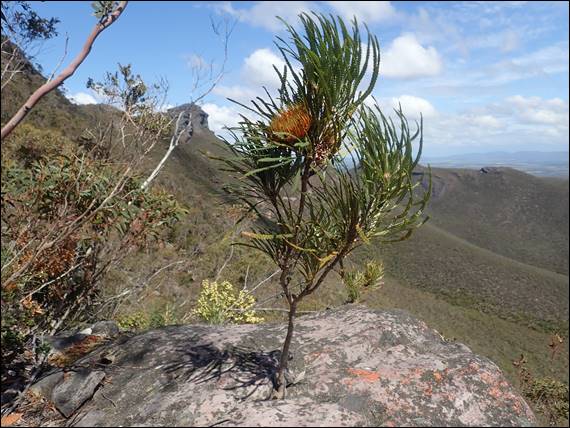
We left the peak in reverse order, and as such the first group had the peak to themselves once more. Going downhill is so much harder on your knees and Lisa started to feel hers when we got to the steep descent. But there was no rush and we took a slow and steady pace. This allowed me to look about a bit more on this section than I had as we came up; when our heads were just watching the track. I really liked this banksia, quite literally growing out of the middle of a big solid boulder and I’m honestly not sure where it’s roots went:
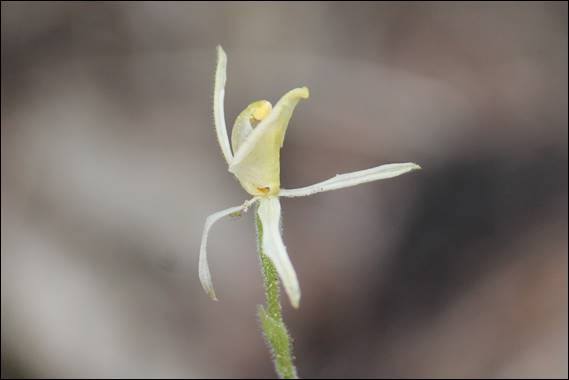
The track started to become less steep and soon we were on the almost level path back. I took a heap of images of the more visually stunning flowers, and like the orchids too many to include. With every intention of identifying all the flowers and writing about some of them, I decided against that after having to spend hours trying to work out the thirty orchid species. So I will leave the flower identification for another time. The next orchid is one that I really wanted to mention, which is an albino Zebra orchid. I have no idea how rare it is to find them but I was very chuffed to spot it:
The drive back to camp took us through the middle of the ranges. We stopped at the central lookout carpark only to find a short walk up a peak allowing you to take in the view both east and west of the peaks stretching out. Another walk that we had not been on before, and didn’t even know existed. It was strange to think just how many people were staying at the campsite yet how few we saw out. I feel that most stay in the eastern side and many only come here to head up Bluff Knoll, the highest peak and the one with the most high steps, which was good for us today:
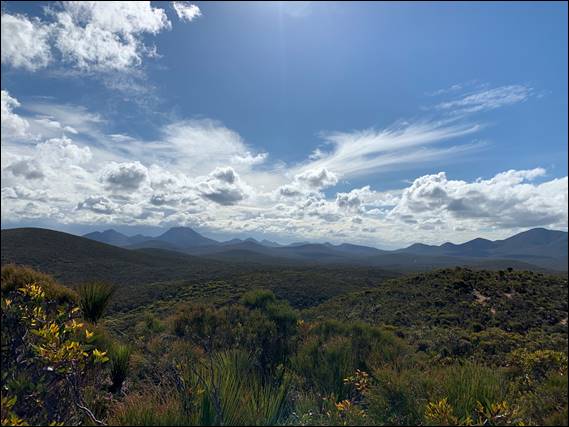
Back at the camp the numbers had thinned out and what we noticed that many of the noisier groups had moved on. Not to say they were rowdy, but some people seem to just be naturally louder and are probably not even aware of it. We had timed our outing today well and once we were settled in the camp kitchen making food and playing a game the rain set in. The fire pits didn’t have anyone round them, which was an unusual sight and one that didn’t last for too long after the rain abated:
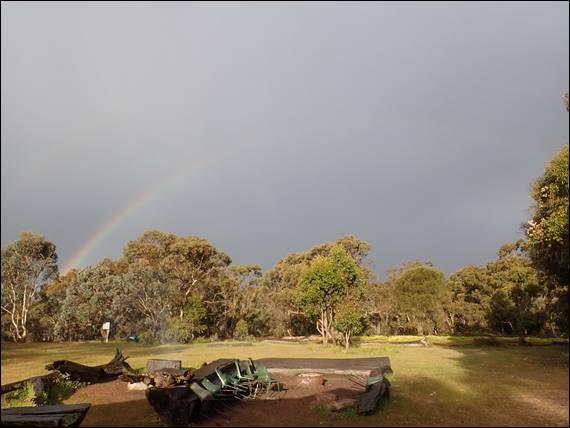
The next morning came and with it the morning chorus to tell me it was time to get up. I again started the day with a wander round the nature trail, going the other direction this time. I also remembered to take my glasses this time and that helped me to spot quite a few things I missed the day before. I have to also admit to not strictly sticking to the track. Knowing the area quite well from all our visits here there are a few extra spots I head for that I have had a fair bit of success in finding orchids at:
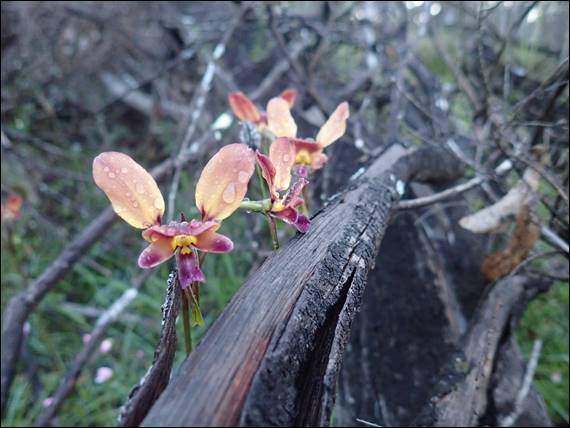
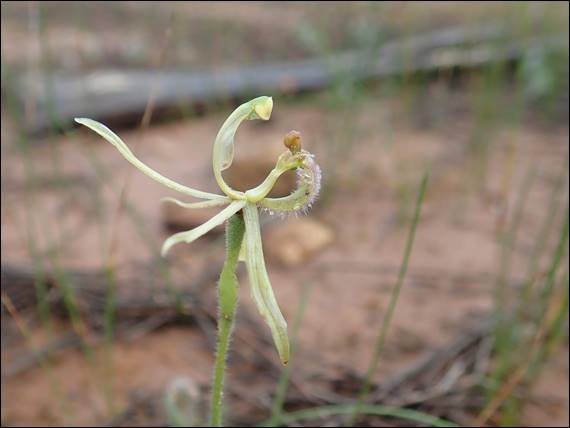
The ever faithful finds here seem to be the fringed mantis, below, and dragon orchids. These two are present in masses, but are definitely not the only ones to be found here. In my head I had counted up, if I was lucky, 25 species. It wasn’t until I got home and started to look in more detail at the images that I saw the differences come out. Especially with the donkey and spider orchids, with seven and three species from each respectively. It did however get to a point where it was simply getting to hard to distinguish between them:
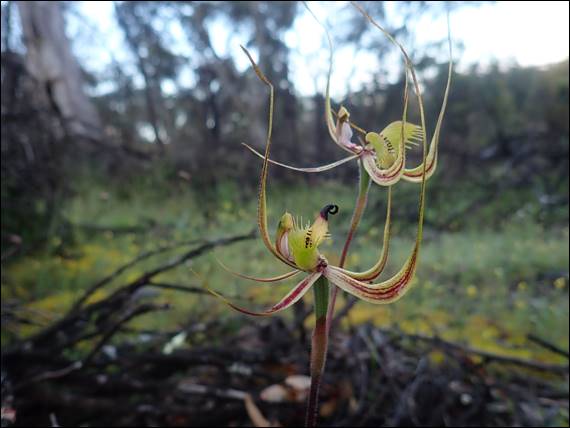
This may have been due to my orchid guide being for the South West of Western Australia and I probably need to get the guide for the Wheatbelt and South Coast. Also this time I had to get down to the real minutia to try to identify some species. This included going as far as not just looking at the shape and size of the labellum and its fringes, but also the colour and even colour graduations. Then there are the calli, the little protruding parts on the labellum, and looking at their shape and colour, how far they extend and how many rows there are:
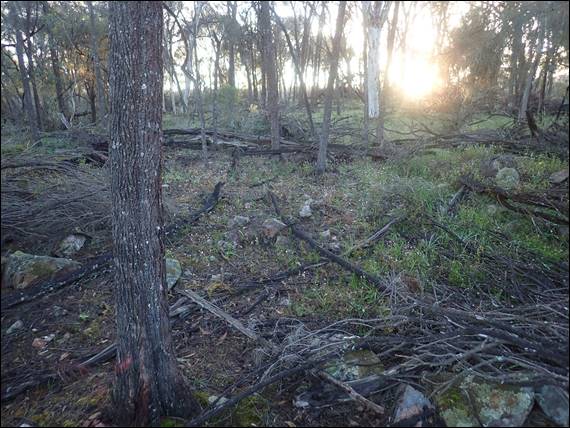
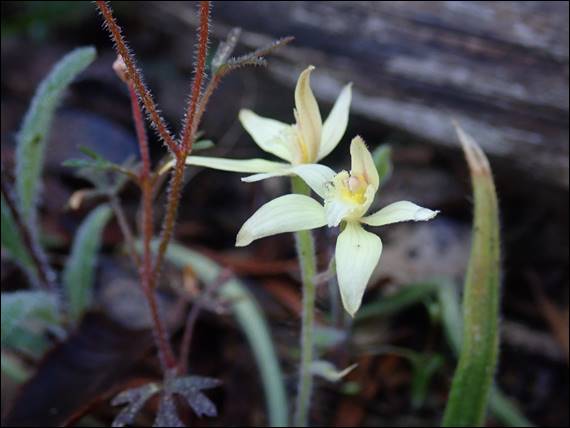
Then for some species you need to look at the same level of detail for the petals and sepals, so it is an intensive process. I take lots of images, but without noting the slight variations out in the field it is easy to not take enough images of the different plants found. While I really enjoy finding them and working it all out, I can’t bring myself to start trying to identify them in the field with my guide at hand. As such I do wonder if I am reaching my upper threshold of desire to go much deeper, and then on top of all that there are the hybrids such as this Cowslip Fairy:
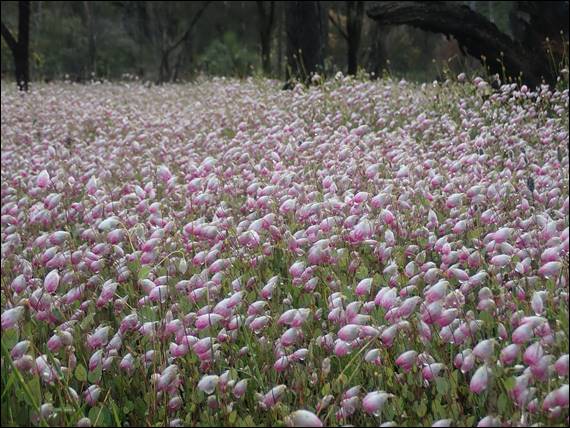
Mind you all that said orchids are mostly out in spring. So by the time summer arrives and I get back in the water and start trawling over my marine books, for all the finds when I’m snorkelling, it won’t feel like I’ve got competing interests for my time. While I might seem to spend a lot of time hunting orchids, one of my fondest memories of the nature trail is however the simple daisy. Elseya would love to just sit in amongst them. On this trip I rarely got to see them open up, my morning walks were too early and they were still closed up waiting for the sun:
It was time to bring Lisa that cuppa, and I changed things a bit this time round by making the cuppa before my first walk. The rationale being that our thermos mugs are so effective that the tea is simply too hot to drink if I made it after the walk. This way is had an hour and half to cool just enough to make it a drinkable temperature. Lisa was once again snug as a bug in her sleeping bag, happy as Larry with her kindle reading and dozing as the day woke up round her. So with tea delivered I wandered once more:
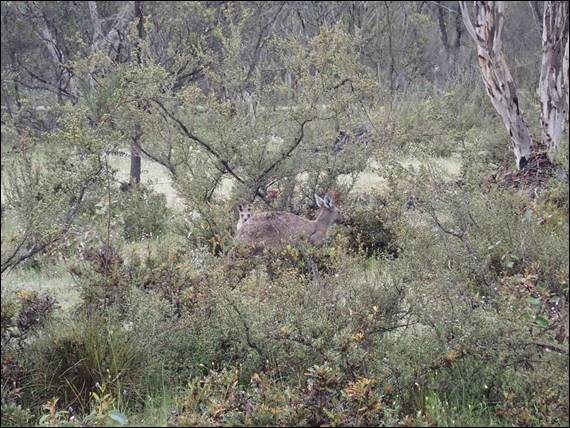
In addition to loving hearing and seeing the birds on my early jaunts, and much as they are seen all over, I still get enjoy seeing the roos out and about. Wandering through the bush it is usually the thump, thump sound that tells me to look up and sure enough I’ll see them hopping at what seems to them a leisurely pace away. There are a few about that are more used to people, such as this doe. Her joey however was less convinced and immediately hid behind her and then disappeared into her pouch, as she carried on munching taking no heed of me:
It is a reasonably quick stroll towards the edge of the property, from where you get into the national park. I’ve never really ventured far beyond the boundary line so today was the day. But before I got there I scoured the ground for whatever I might see and it was because of the doe above that I changed direction and stumbled across my second albino orchid. This time it was a dragon, with all the reds and darker greens stripped away it looked a little ghostly. I only came across the two albinos, I heard rumour of a couple of albino mantis but never found them:
Once in the national park the track I was looking for was called Six Chains track. I believe it takes you all the way to Mount Trio, but I wasn’t intending to go that far. Besides it took me a while to find out where it was. The directions I had remembered were vague and once in the bush it all looks the same. I eventually hit the creek, which I didn’t expect, and just followed that until the track came into view allowing me to find heaps of orchids I would not have otherwise seen. The track is actually a firebreak so wide enough to remain clear and obvious:
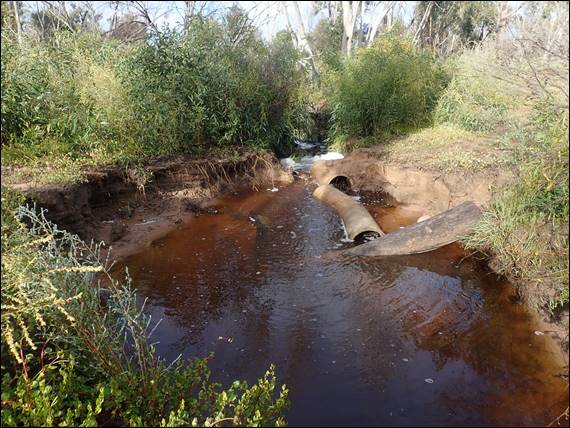
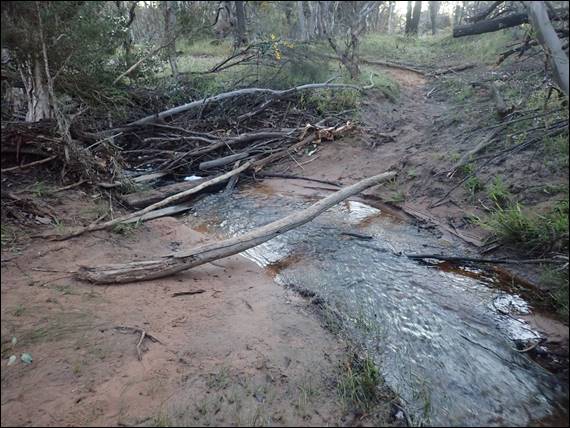
Due to the heavy rain last week the creek crossing had blown out somewhat, the small culvert had been no match for the flows that had thundered down. As the water had flowed over the top of the crossing it washed out all the sand and resulted in this mess, but luckily the vegetation up and downstream had held the banks firm so I was able to hop over the narrower section. Then I was simply followed the track until I decided I should probably head back, killing another hour and half just enjoying being out:
The firebreak while evident didn’t seem to get lots of traffic and had heaps of flowers growing in the more open ground. The landscape changed with the changing soils, as I wandered and there was heaps to see. It was a lovely peaceful walk with the views of Mount Trio ahead and Mount Hassle and Mount Toolbrunup to the south, so I was never really going to get lost. I occasionally ducked into the bush to the side to have a sticky beak, but never went too far just in case I did lose my bearings. Eventually it felt like it was time to turn back:
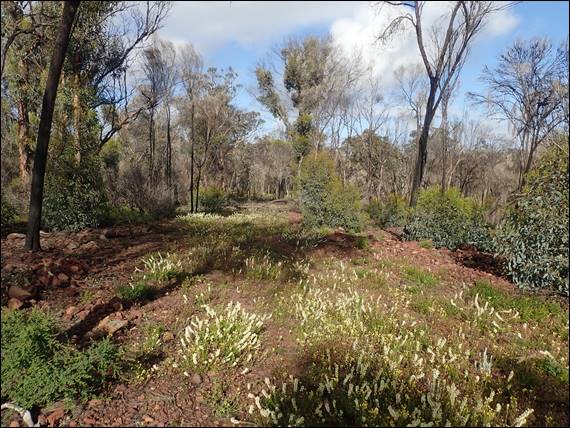
Again not rushing I found more and more things to spend time checking out and as I was capturing images of a great orchid just off the track someone walked up behind me. I guessed, and was right in thinking, it was Jarred. I’d only met him once before years back. He takes the orchids tours and spends hours searching for them, I found out later that his sister works at the same place I do and I have had the odd communication with her even though she is based in Perth. It’s a small world. He mentioned he had found an unusually orchid and pointed in a direction saying it was a twenty minute walk that way:
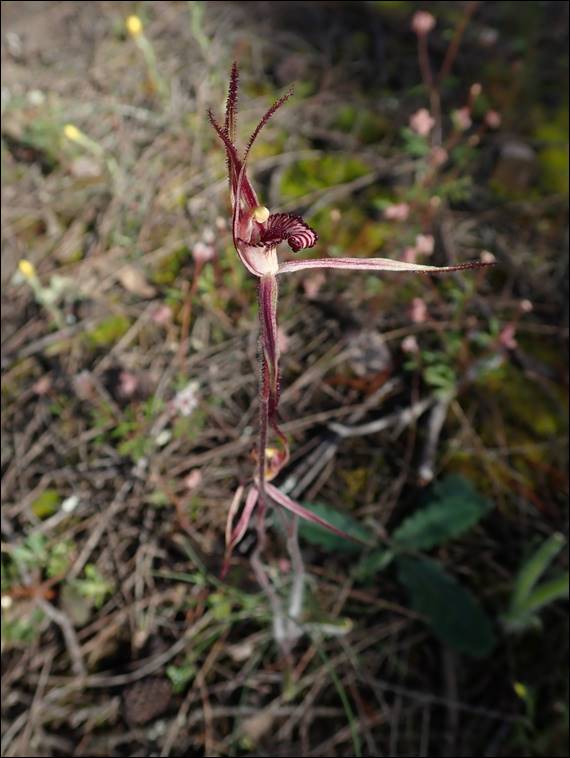
I kept that direction in mind for tomorrow. Then as he headed off to get ready to provide the tour, I strolled for a little longer coming across yet another find. A Prisoner Spider, which is a cross between a Zebra and Joseph Spider Orchid, identified by the longer petals and sepals. The distinct zebra part being the colourful stripy labellum, so very different to the albino version I found. The Joseph Spider, so being called due to the many colours it can display including yellow, white, red and purples and each flower can display them in a myriad of ways:
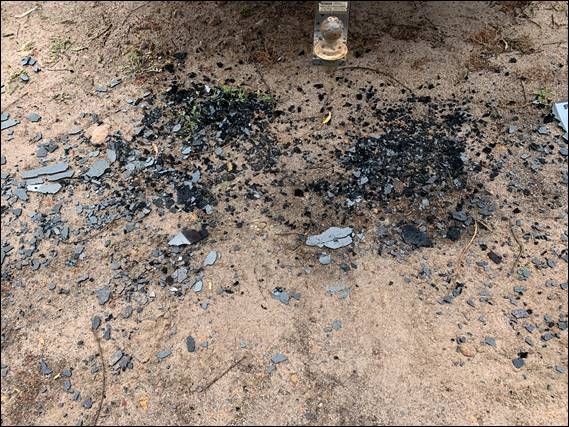
Lisa was about ready for breakfast when I returned, so it was another reasonably quiet and lazy time down at the camp kitchen. We decided to head further south to the Porongurup’s today, the reason being that the hike would be flatter and that would prevent any chance of aggravating her knees further. However, things went a little pear shaped after breakfast when the rear canopy window shattered. There was the clean-up and a few calls to see if we could get it fixed, which we couldn’t, that chewed up time. By then the rain started to fall:
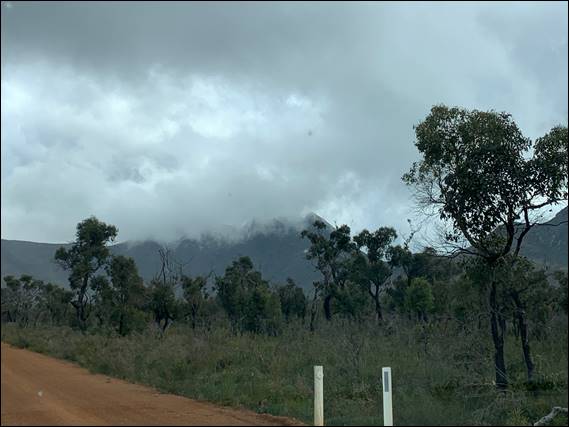
We still started to drive south an hour plus later after the shattering experience, and in the distance the Porongurup’s were practically hidden from view. The clouds had engulfed them and it was raining steadily, so we decided to turn back and head instead to Mount Toolbrunup where the clouds were more broken and the rain seemed to be light, as shown above. This is the first peak that Elseya walked up, and she choose it because from the campsite she saw it was in the clouds and she wanted to walk in the clouds:
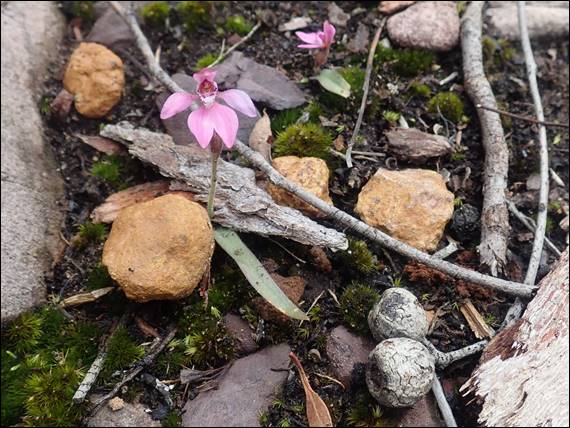
The mind of a seven year old is wonderful, but we were in luck as the clouds stayed until we got to the top on that day and she got to walk in the clouds. It is my favourite hike here, and not only because of that story. The path and terrain is highly variable and interesting and the peak itself it a proper mountain type peak with a pinnacle to stand on. I knew today we wouldn’t get as far as that peak, our aim was to have a stroll and we planned to reach the base of the boulder scree slope where it got steeper:
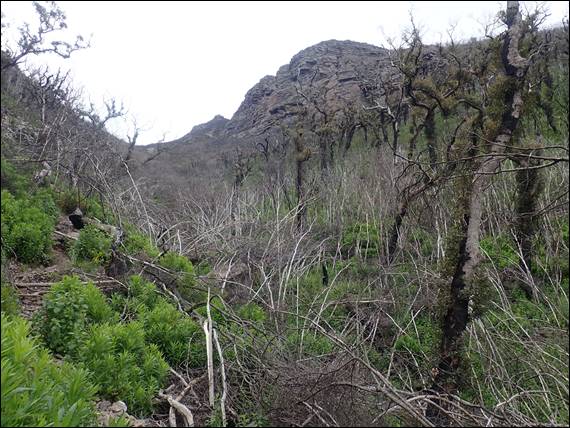
The path to get to the boulder field seemed longer and steeper than either of us remembered. But with a slow and steady pace we made it. This peak like Mount Trio had been well and truly ravaged by the fires in late 2020, and this is one of the areas where it had burned so hot the seed base in the soils had been destroyed. As such the returning vegetation wasn’t as varied as other places and seemed quite unvaried. The other visually striking, and slightly eerie, aspect was the way the dead trees in the gully we were hiking up, were all bowing towards the peak:
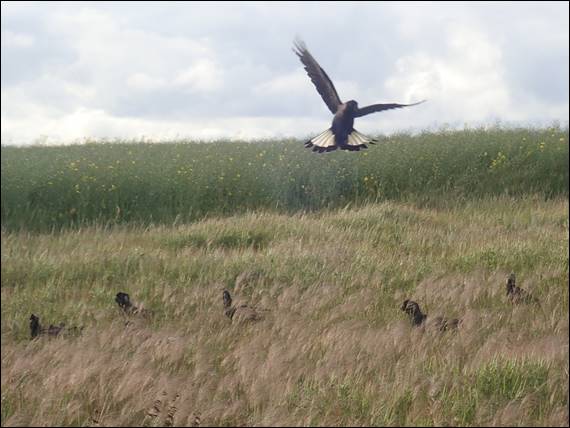
We got back down just as the rain really hit and we headed back to camp for a hot cuppa, snacks and game. The wetter weather brought with it a chill in the air, and sitting in the camp kitchen we got cold so Lisa said she would head to the tent to curl up in her sleeping bag and read. But somehow I managed to convince her to come for a little wander to check out the local flora. I showed her a few of the finds and we also got a wonderful display from a mob of white tailed cockatoos, before she decided it was time to headed back to get warm:
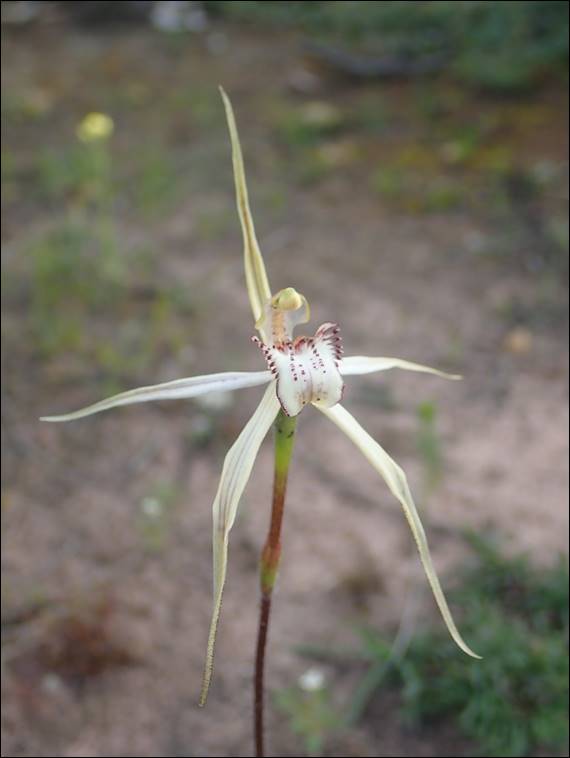
I stayed out and above is one of my finds as I scoured “in that direction for about twenty minutes” in search of the unusual orchid Jarred had found. This spider orchid is not what I was hoping to find but was still pretty cool. It is also one of the spiders I have really struggled to identify, maybe an Enigmatic Spider Orchid but I can’t be sure. There were also heaps of tell-tell basal leaves to indicate more orchids were going to come out at some point. For some leaves the stems were coming up but the flowers were yet to open:
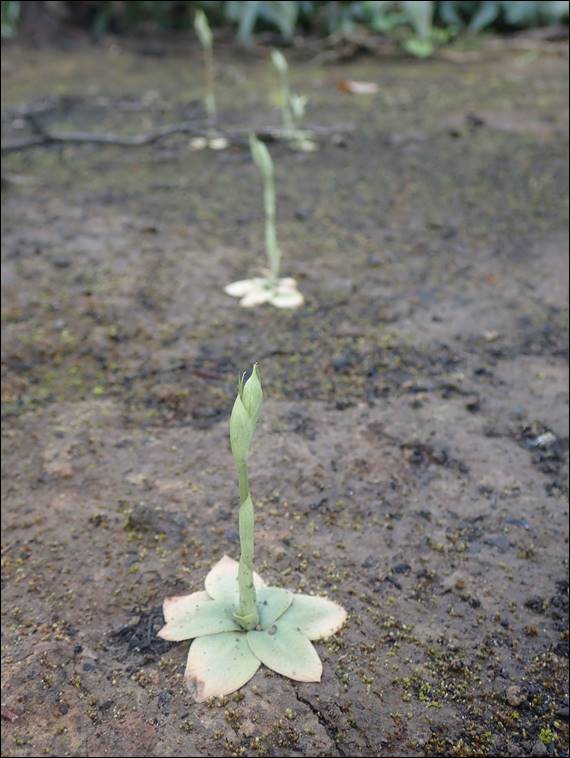
I spent several hours looking round but never found the unusual orchids. While it may be a small world in terms of degrees of separation of us humans, in terms of finding a flower in a patch of bush within “twenty minute walk in that general direction” it feels like a very big world. As the sun got lower in the sky I gave up with my search and headed back. Being so wet this year and just recently the ground was pretty damp in places, and this meant there were lots of fungi out. I saw heaps of really cool ones, but refrained from stopping to check those out as well keeping my focus mainly on flowers:
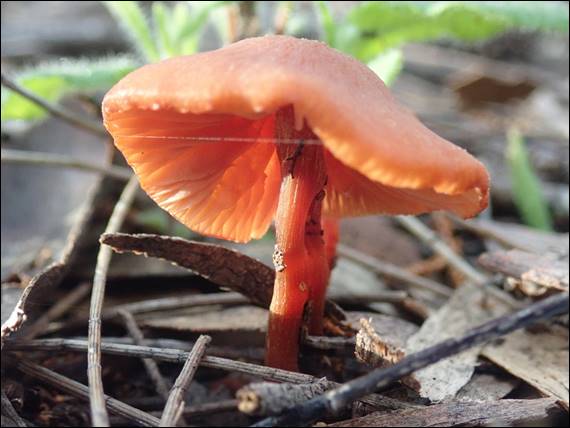
Our last evening came and the vibe of the camp kitchen changed once more. This time there seemed to be more families, with parents that wanted to have music playing and didn’t seem to care or notice that that their kids ran amuck screaming at the tops of their voices. It wasn’t the most peaceful of evenings so we retired early and left them to it. On my return to the kitchen to make a cuppa in the morning, it was empty and blissfully peaceful. Then for one final morning I headed out for a wander, this time walking along the fire breaks towards Mount Hassle:

This track took in higher and much rockier ground, it was more of a walk than a flower hunt and I soon put some kilometres behind me. I walked past the neighbouring property, which is where Jarred lives and I spotted a roo leaping through the crop of wheat. The reason that seemed strange was that the paddock had a serious roo fence round it. I asked him about it later and he later told me that a couple of roos had got in when the fence was damaged in the fire. When they repaired the fence and they couldn’t get the roos out and so they remained. There is also some bush in the same fenced area so they seem happy enough:
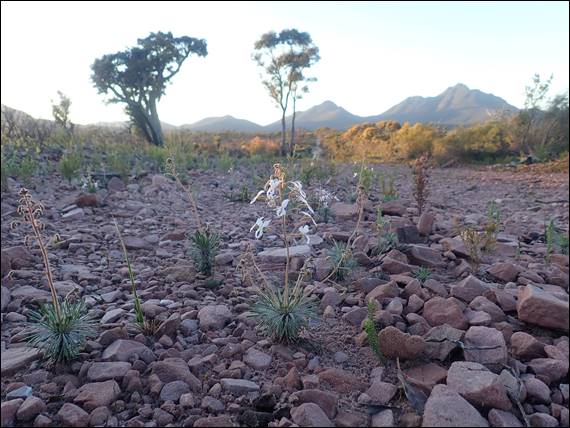
After his property the track turns to head south, and as the image above show heads towards Mount Hassel on the left and Mount Toolbrunup on the right. Way too far to think about going, and also as the track dipped into the valley there was no way to get across. This area was a swamp, the still water providing a crystal clear and flat mirror in which the trees were reflected. It was a lovely sight and a very tranquil place, so I spent quite a bit of time soaking it all up. Wandering round the edge of the water checking out plants:
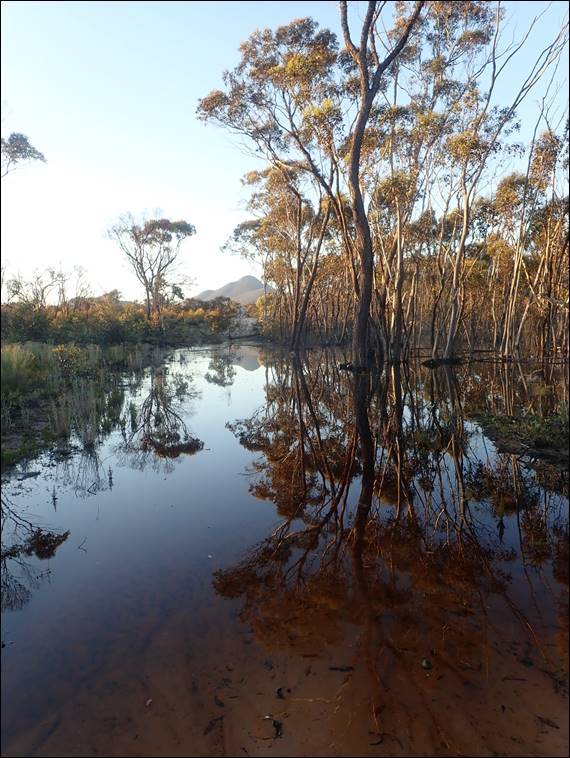
I eventually got back to camp and Lisa looked more alert than the last two mornings. It was not that she was actually more awake, only that she had finished her book and didn’t have another one to start. So as I handed her the cuppa she hinted that we should head down for breakfast. Seeing we were heading off today an earlier breakfast wasn’t a bad thing. The camp kitchen was still relatively quiet, and as I was making a second cuppa Jarred came over and said he had an hour before the tour so was happy to take me out to see the unusual orchid:
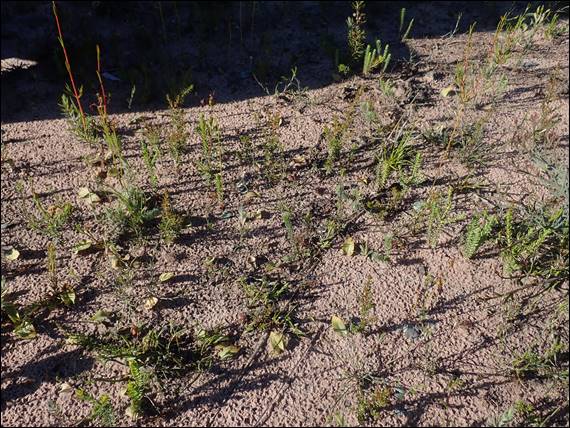
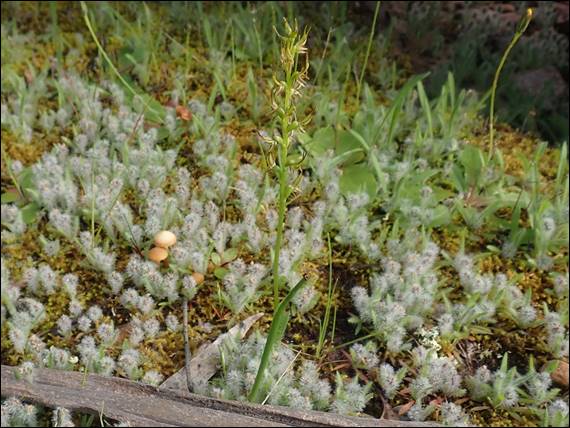
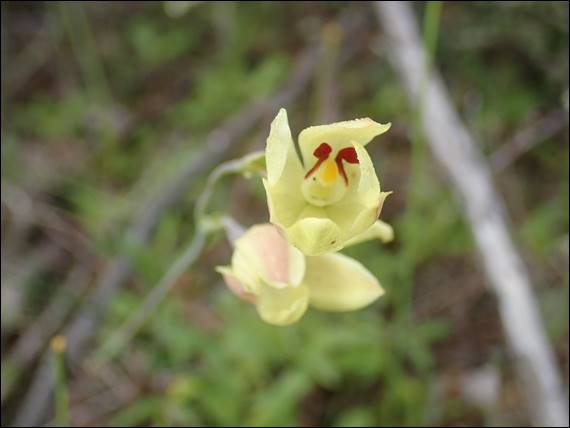
Lisa was fine with me heading off at a drop of a hat, so we went walking some twenty minutes in that general direction. Where we came cross the sight above, and it was not until you looked more closely that ten or so King in his Carriage Orchids could be seen. They were stunning with the flower being approx. one centimetre high and the plant only standing maybe ten centimetres high. On my two wanders out this way I wasn’t far from where they were, but doubt I would have spotted them:
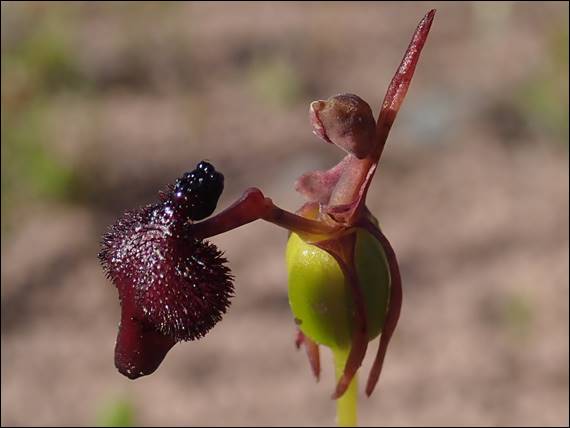
After spending some time being amazed at the king sitting there looking comfortable, we wandered back and had a good chat. Jarred has definitely got the bug and is an orchid fanatic, and I learnt a lot in that short time about the area and orchids for which I was hugely grateful. While I was a sponge taking in all that knowledge, I also knew that I would never get that involved. I’ll stay on the edge of keeping interested and checking things out, as there are too many other things out there that I also enjoy looking for and checking out:
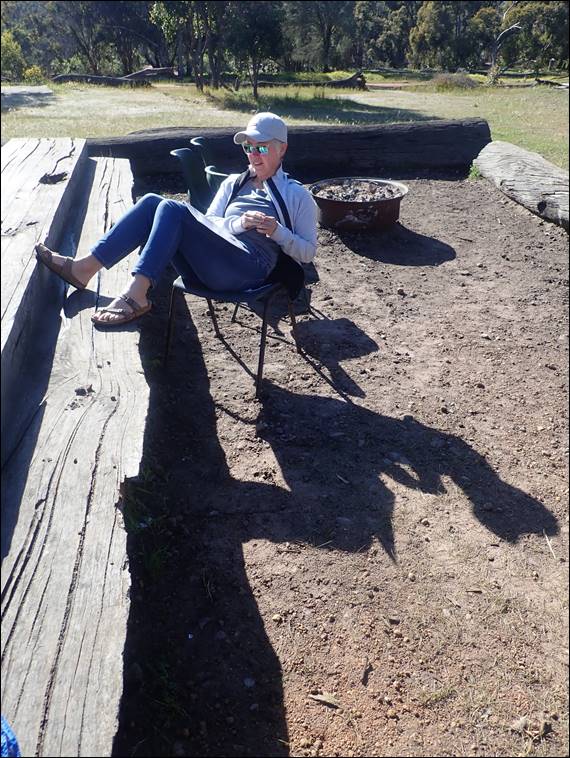
We got back and Lisa too was sitting pretty, a comfy position in the warm morning sun, cup of coffee in one hand and something to ready in the other. After breakfast we clearing up and packed away a dry tent, which is always a massive bonus, and sorted the car. We stopped to say good bye to Margot as we passed their home. She told us there were plans underway for a second camp kitchen, so the place will change even more. I’m not sure how she and John find the energy to keep everything going, it’s a monstrous job but we are certainly glad they do:
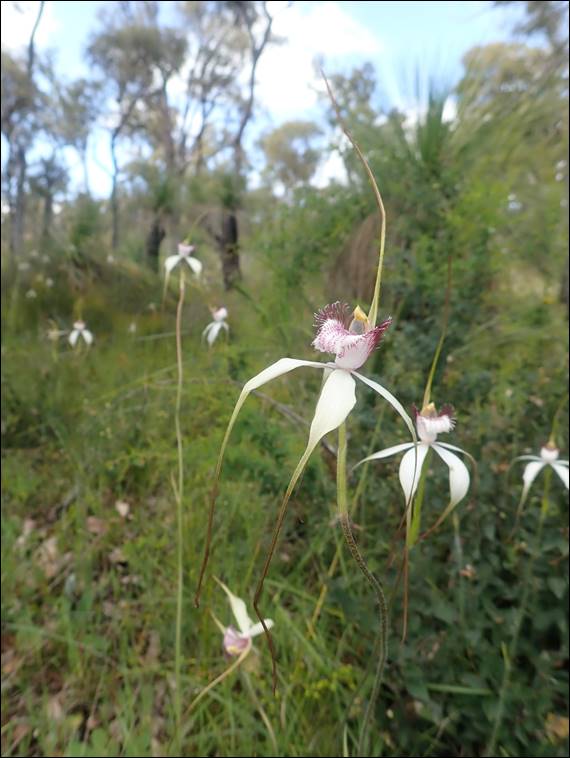
On the road home we made one stop at a patch of bush just outside Boyup Brook. I had spotted a heap of flowers that I thought were Donkey Orchids as we had drove down, but they were just a weed that looked like them when you drive past at 110 km/hr. When we stopped we did however found heaps of huge Stark White Spider Orchids, as well as many other interesting stuff. It was certainly a great trip. And despite the Mount Trio Bush Camp getting so popular, we still love the place and will no doubt go back next spring:
 Sandbagged
Thanks for taking you with me on your journeys. I feel like I am by your side. Reading these blogs are like my meditation and are a world away from Lisa and my own day jobs!
LikeLike
Happy to oblige and I understand where you are coming from. For me writing the posts allow me to experience our adventures twice!
LikeLike