Despite being the last day of a long weekend, we risked a walk at Cape Naturaliste. Located at the northerly end of the Leeuwin-Naturaliste National Park this is where the Cape to Cape track, mentioned in my last post, starts or ends depending on whether you hike south to north or north to south. Why was it risky, well to start with being a long weekend it could have been busy, as it is a very accessible area, and secondly as it was the last day of a long weekend the traffic heading home could have been hideous. But I was wrong on both counts:
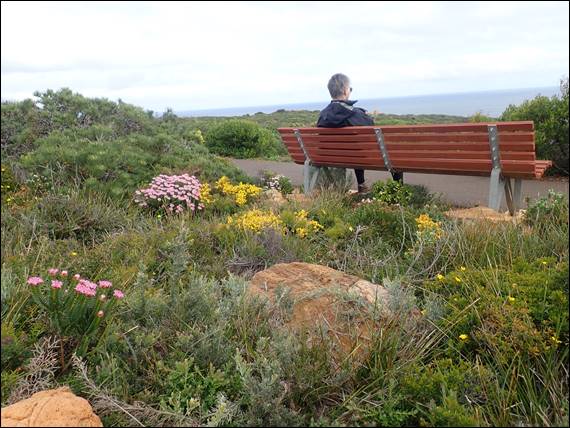
That was probably due to the long weekend being tacked onto the school holidays, so there wasn’t the mad rush when everyone has limited time to cram in their intended activities and journeys. One reason Lisa was keen to come here was that with ocean views from most parts of the walk there would be the chance to look out for whales. So, we took advantage of the numerous places to “park-your-bum” and watch the ocean. Well, Lisa did and I used these times to scour the ground looking for anything that stood out:

There were plenty of flowers out, and to change things a bit I took a few images of the non-orchid flowers that caught my eye. Above was a small and delicate flower that I think may be False Boronia. The one below I am more convinced of, and is a perennial herb called Milkmaid. This species is Bruchardia congesta and found, amongst other places, on dunes and in coastal environments. A similar species, Bruchardia umbellata, found in woodland and heath habitats, has a cluster of nondescript flavoured carrot like tubers that can be eaten raw or cooked. Needless to say I didn’t pull up any plants to check if this was also true for the species we saw:

Lisa spotted a couple of beetles on the path so I moved them to safer ground, something I did in an area not too far from here last year (https://sandbagged.blog/2020/10/08/stuffed-jalapenos/). It was a Cockchafer beetle and I’ve mentioned them before. There are hundreds of varieties of these beetles, and they are difficult to tell apart. But I was fascinated to read the only way to distinguish the various species belonging to the Heteronyx genus, which I think this one is, was by looking at the layout of hairs around the anus of the larvae:
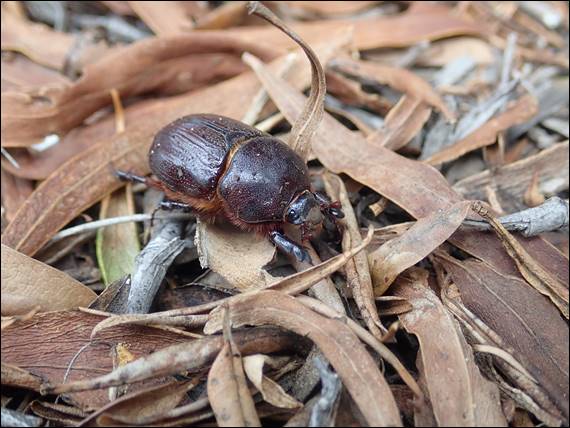
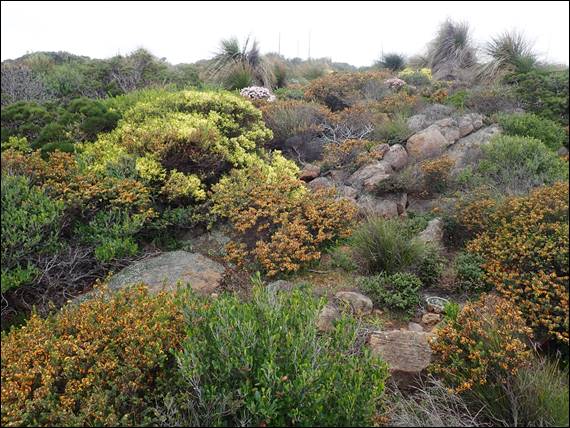
I have come across the larvae of a Cockchafer beetle once before but didn’t think to check that particular detail (https://sandbagged.blog/2020/08/14/stiff-as-a-board/). Even though it was a cloudy day the colours of the low shrubs and herbs still shone out. These seemed more prominent on the rocky and higher parts of the walk. As the track dipped into lower ground it was more of a mass of greens, with occasional flowers. I’m not sure why this may be and the only thing I can think of is that maybe the higher ground is drier, and the plants wait for drier conditions before they flower:
There were of course orchids about, including most of the ones we had seen at Mount Duckworth just yesterday. So, while this is yet another Dunsborough Donkey Orchid, it is worth including due to the Jewel Beetle. Called such, not only because of the brilliant colours but also as the wing case is textured and this helps create an appearance of cut precious stones. Due to their amazing appearance insect collectors held them in high regard in the mid-1900s and the only insect that was more sought after for a period were tropical butterflies:
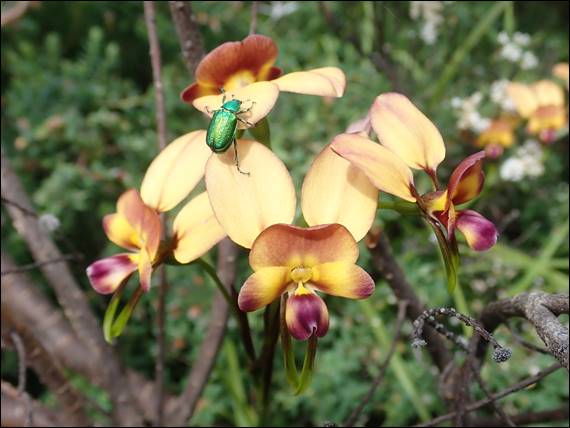
The appeal of jewel beetles was so high that they were exported from Australia at such a rate to make their existence become threatened. For this reason, in 1978 the jewel beetles were listed under the WA Wildlife Conservation Act to help protect them and allow numbers to restore. They were the first invertebrates in Australia to get this level of environmental protection. We did come across one new orchid being the Exotic Spider Orchid, which Jaime and Alan had told me they had seen heaps of, so I was expecting to find them:
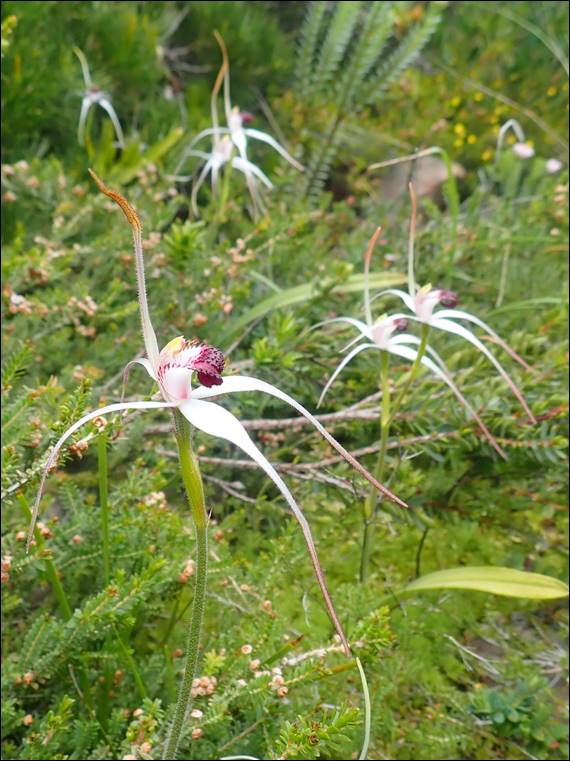
This next flower is endemic to Western Australia, found from Cape Leeuwin up to Fremantle in low heath, loamy soils, limestone and sand dunes. It is known as Dampier’s rose, Diplolaena dampieri, and was one of several flowers that provided an additional sensory experience due to its strong aroma. I’m sure you will have guessed that the main reason for taking the image was however the net-winged beetles, with their very distinctive antenna and ribbed wing case. I’ll only go as far as to say they are in the Lycidae family, trying to work out their genus or species is a bit too hard:

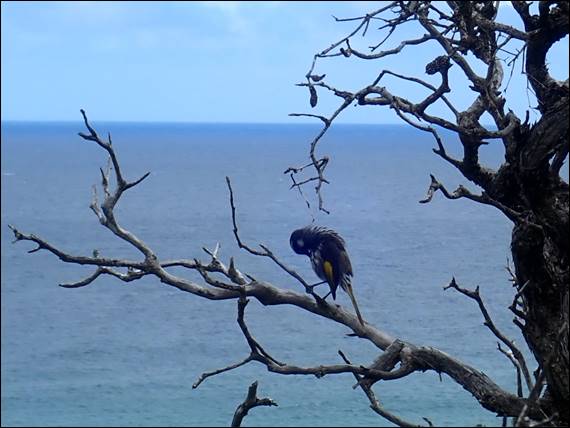
While the slower moving beetles were reasonably compliant when I wanted to capture some images the many birds we saw were not, as has been the case on most of our walks. We did however stop several times as they flitted across the path hiding in the shrubs on either side, and of the smaller birds only the dependable New Holland Honeyeater ever sat still allowing us to observe them. This one sat pruning itself for what felt like ages, and then there were others that bobbed about within the open space of the path catching a feed while on the wing, right in front of us:
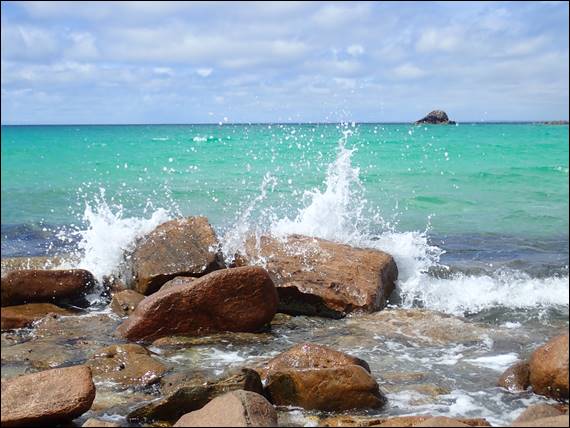
It was certainly busier than previous walks, but we still enjoyed being out again. Something else that was different was that we didn’t shoulder the rucksack, even though Lisa had made up the flask along with snacks. But it didn’t go to waste and after we finished the walk, we stopped somewhere quiet along the coast to enjoy a cuppa and feed. Here we once again marvelled at the stunning aqua blue colour of the ocean on the eastern side of the cape, which was very contrasting to the darker blue green of the water on the west side of the cape where we had just been:
 Sandbagged