Lisa and I headed out for a local wander today. The forecast was a tad iffy so we didn’t fancy going too far afield only to be rained on, as happened last weekend. But we needn’t have worried and the precipitation never came and it even started to feel a bit too warm when the sun came out. We picked a loop walk just north of Yallingup and started at Mount Duckworth. On the steep decent down towards the coast I spotted big patches full of Pink Fairy, Donkey and Cowslip orchids. We were also serenaded by a large flock of White Tailed Cockatoos as the alighted after being scared by an eagle:
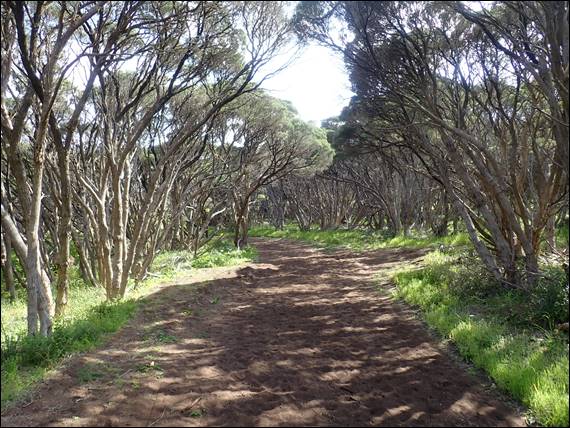
The coastal path was part of the Cape to Cape walk, a 250km coastal hike that takes you along the entire length of the Leeuwin-Naturaliste National Park. It is a walk that we would one day be keen to hike end to end, but today we only joined it for a short four kilometres. The track passes all of the climbing spots I frequent on the western coastline. And in the image below, for those who know what to look for, it is possible to make out Smiths Beach Rocks. Despite the great start to the walk, in terms of orchids, there were not many along this part of the track as sides of the path were covered in weeds:
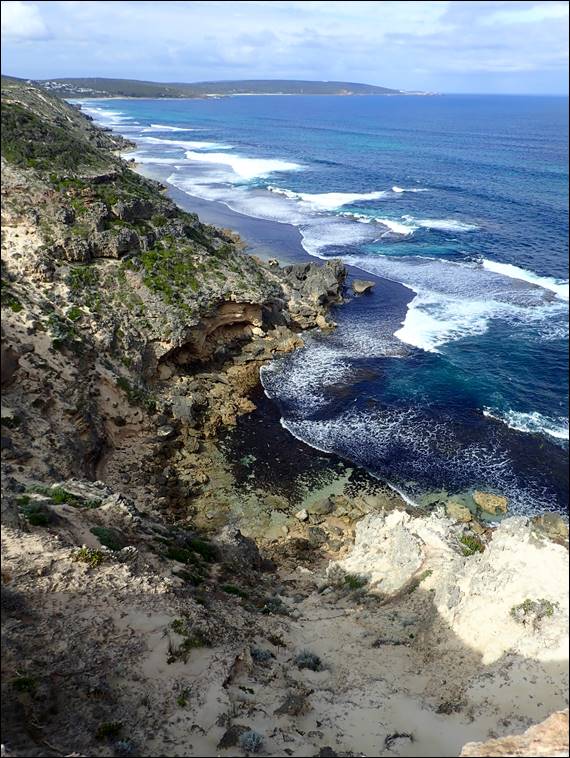
After a while we spotted an area that looked like a good place to have a cuppa, it was a little way off the path but there was a goat track to take us there. The Cape to Cape path didn’t seem to truly skirt the coast. Possibly to keep people away from the steep drop into the ocean. The sandy dunes here are protected by interlaced beds or limestone, as can be seen above. Much of the limestone comprises a fragile rock that comprises sand cemented by calcium carbonate that has percolated through the dunes with rainwater, over thousands of years. At times, in a geological sense, this process was paused allowing plants to grow:
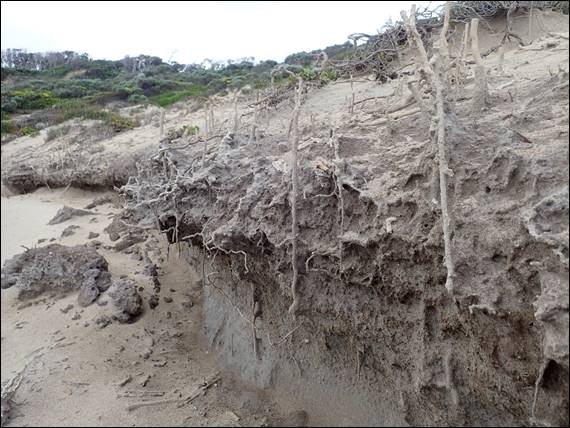
When it started up again the roots of these plants became encapsulated by the calcium carbonate. Then as the organic matter broke down, it left solution pipes that provided a pathway for the water. Overtime these pipes fill with calcium carbonate as it came out of solution. And being more concentrated within the pipe it created a much harder formation. The skeletal remains of these plants have now become exposed, as the softer calcified sand has been eroded away. It was a fascinating landscape to see, and completely unexpected:
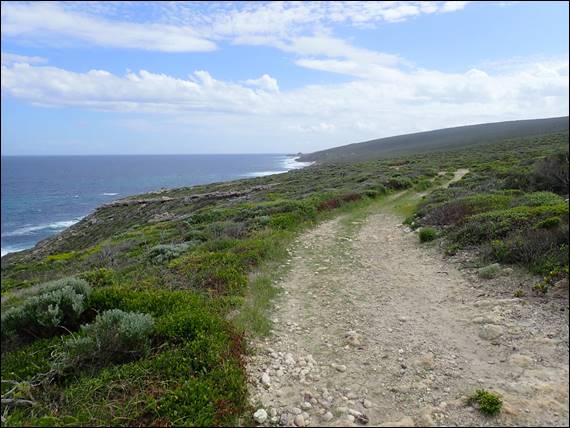
Once we hit the track again we didn’t dilly-dally and kept a steady pace, it was a wide and featureless path with low scrub on either side. It seemed a shame that the track wasn’t closer to the ocean, to allow more of a view of the coastal formations. We found out that the original track was closer to the coast but the markers have since been moved to this wider path, maybe due to increased usage. With weeds once again smothering the vegetation on either side of the track there was little hope of finding any orchids. We did however keep an eye on the ocean, and spotted a whale that breached several times for us:
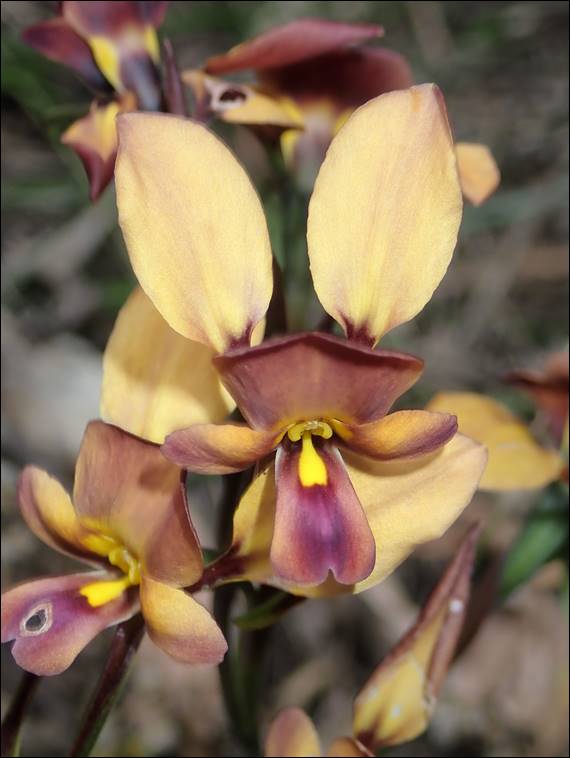
The next section of our walk took us along a four wheel drive track, as we hiked back up the soft sandy dune for several kilometres until we were back up on the ridgeline. During this section numerous cars passed us. But unlike last weekend, everyone that passed us slowed down and some even stopped to have a quick chat. If felt like a slog going back up the dune, but we did spot more orchids as we got higher up. I previously mentioned that we had seen donkey orchids at the start of the walk, and these were by far the most prolific orchids we saw:
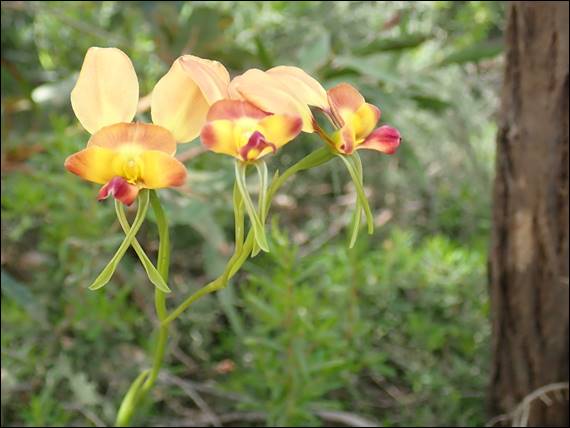
There were so many that I just couldn’t believe they were all the same, so I took a few more images than maybe necessary to allow me to check them out later. I’m pretty sure that the ones we saw the most of were the Dunsborough Donkey Orchids. They were a much taller plant and were up to half a meter in height. The colours of the sepals and petals were a deep brown-purple, see two images above. Then there was the above smaller, both in height and flower size, variety:
As the image shows it also had a more golden colour and had “ears” that were more rounded in shape, and I believe it was the Pansy Orchid. This made me check our trip to Narrogin a few weeks back (https://sandbagged.blog/2021/09/11/itsy-bitsy-spider/), and looking at the features of our previous find in more detail I reckon they were the Western Wheatbelt Donkey Orchids. It is very similar to the Common Donkey Orchid, which I first called it, but has slightly smaller flowers and looking back at donkey orchids I have found in previous years I now reckon my first guess was wrong:
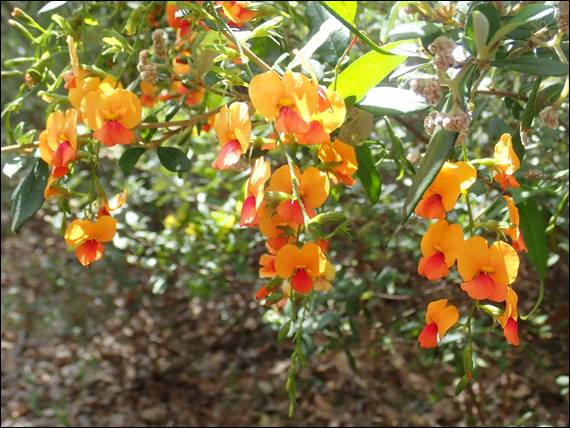
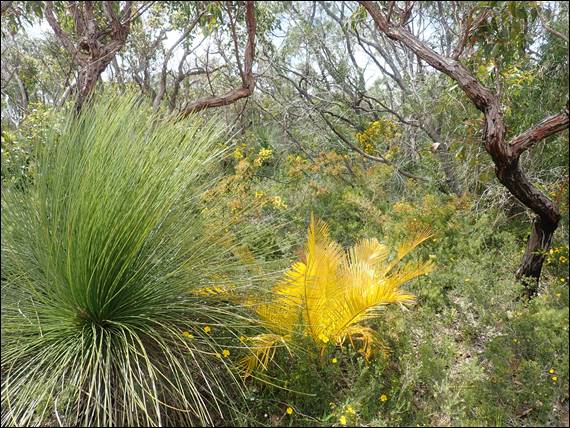
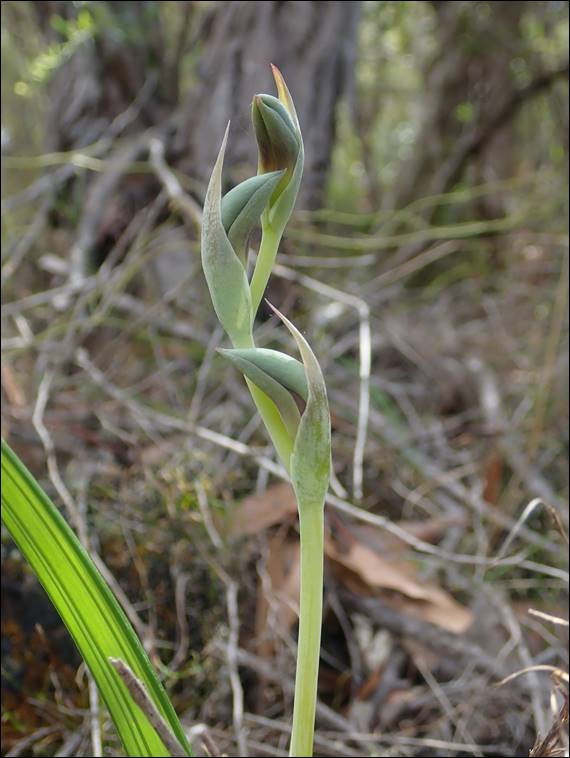
With all this talk of donkey orchids I’m getting behind. After the four wheel drive track we followed a fire break. As the images above show the vegetation included low trees and had thick understorey, and this section of the walk had the most flowers. It was very beautiful, and hidden in the understorey I spotted the same three orchids I had already seen. There were also a few greenhoods that were past their due by date, and the one below that was yet to open, which is a Beak Orchid:
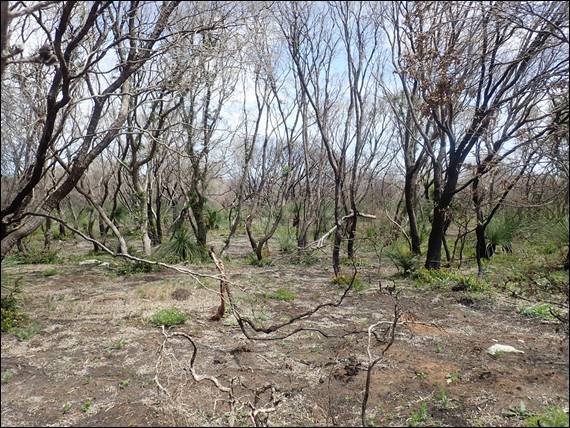
The fire break varied from a reasonable path to a bit of a bush bash, so it was obviously no longer maintained. But it was a great section and we spotted heaps of cool flowers and also the odd fungi that was still hanging about. The understorey seemed to change quite a lot and we saw areas dominated by acacia, banksia and sword grass. There was also one section devoid of any understorey. This recently burnt area seemed quite eerie but beautiful in its own way, the only probably being that it seemed the weed species were coming back first:
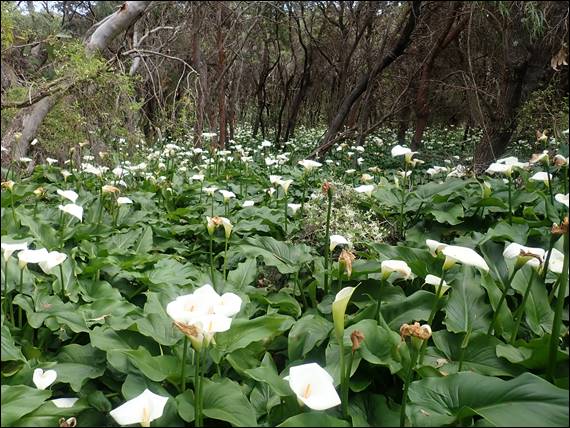
On the last stretch of the firebreak, before we popped out at the paddock we started from, the understorey was nothing but Arum Lilies. This is a plant I have mentioned in previous posts and one that is a really invasive pest. Yesterday Dan asked me if I knew where they had come from. I was unable to tell him, but I can now advise they were brought over from South Africa in the mid-19th century, as an ornamental plant. In South Africa the fleshy tubers when boiled provided a starchy food source but they are poisonous when eaten raw, a real risk for livestock:
 Sandbagged