It is the last weekend of the winter school holidays, which is both good and bad. It meant another three day weekend for me but also signals that next week Lisa heads back to the classroom. At least it won’t be another gruelling eleven week term for her like the last one. Today we headed off to a place we haven’t been before, providing unknown terrain for Lisa’s boots and unfamiliar country for us to explore. It was a bit more of a drive this time, close to two hours heading inland and south:
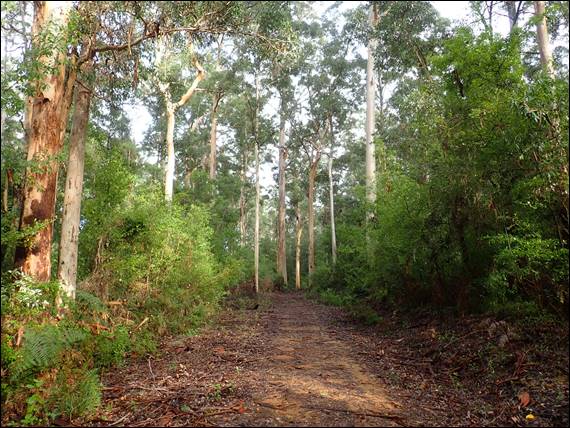
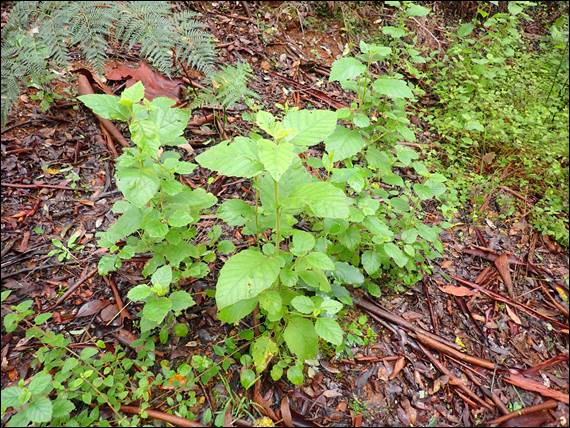
The Warren National Park offered a reasonable loop walk comprising a ten kilometre hike that took us on a journey through the Karri forests and along the Warren River. The vegetation was very different to what we had experienced up near Collie, and the undergrowth was thick and lush with ferns, grass tress and many shrubs. We came across the same saplings we found in Collie, the ones that looked like a broadleaf and seemed in Collie’s drier landscape to be invasive, so we took this image and I hope Howsie may be able to let me know what plant it is:
The hike would take us on four sections, each with a rest spot that was adjacent to a road that also follows the same loop, allowing hikers and car tourists to equally access the area. We were lucky and only came across one group during out walk and with four young children they didn’t walk much of the hike, leaving us to enjoy the tranquillity of the place. Lisa was, from the start, mentioning she was ready for a snack. Understandable due to the two hour drive that meant it was already close to midday, but she held off until we had completed the first leg of our trek:

Despite the road being so close to the trail we didn’t hear many cars, we assumed that was due to being a Friday and not many people would be out. We did however see quite a few cars at the place we parked, and the reason for that will become clearer towards the end. Now while this may all sound a little selfish, and yes it probably is, during this walk we were continually serenaded by bird song. Another noticeable difference with our walk near Collie. The varied sounds echoed through the forest all the time we were there, and the only time it was drowned out was when other people were about:
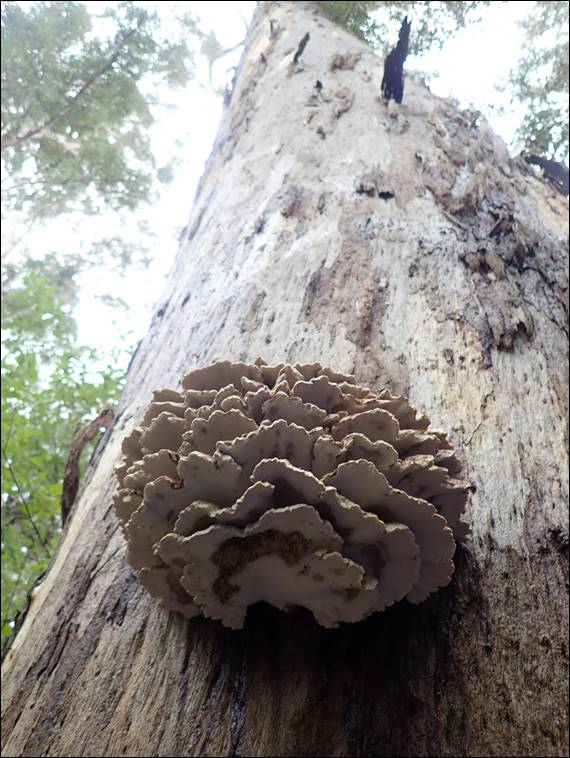
While I had in my last post promised to focus on flowers this week, this lush green and vibrant place was devoid of flowers. So I’m afraid it will be back to fungi again for this one, but I have moderated the number of images I have included to the most unusual or spectacular. The above looked like it could be a Rainbow Bracket Fungus, as the top surface had the same radial pattern and colours to resemble a rainbow plus the shape was about right. But from what I have read they are not supposed to grow as big as the one we came across:
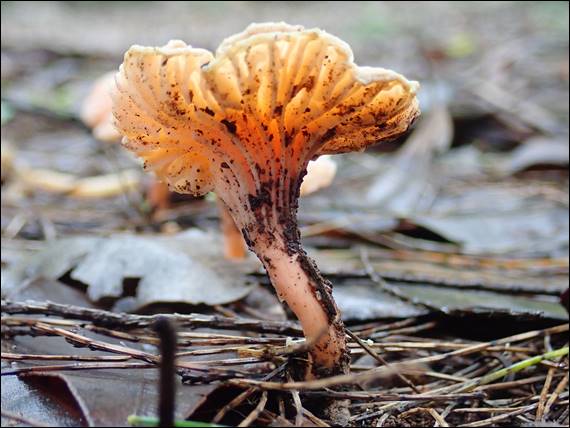
Next up above is one of several Golden Chanterelle we found, this is one of the most popular wild edible mushrooms… if I have correctly identified them. The funnel shape of the cap, distinctive bright colour and way the gills continue into the stem makes me pretty sure I am right, but we didn’t do a taste test just in case. Then there was this tiny single mushroom that like so many others I have found you would think was easy to identify, but alas I have not been able to find out anything about:
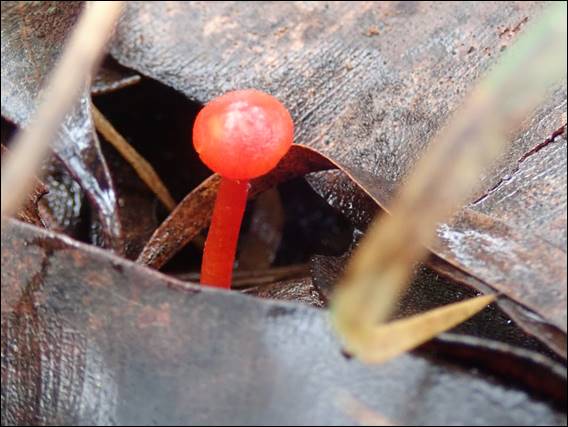
Leg two was soon behind us, and while we spent a bit of time to stop and look at a few fungi and other finds on the whole we had been hiking. The pace was certainly quicker today but with each leg we were slowing down a bit, which I’m pleased about as we hiked the first section so fast it felt like we may have completed the entire loop in two hours. On the second section we descended down to the Warren River. It’s a reasonably sized river being close to a hundred and forty kilometres long and having a catchment size of close to four and half thousand square kilometres:
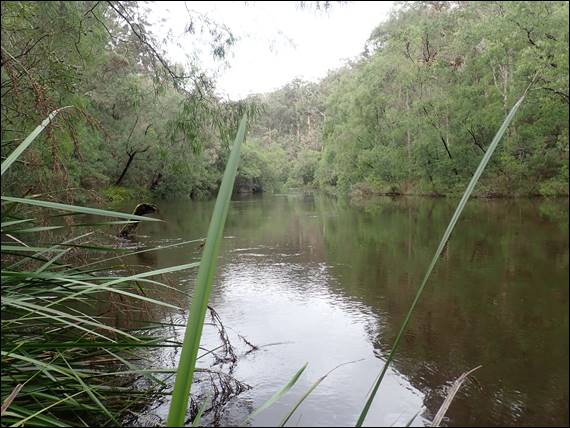
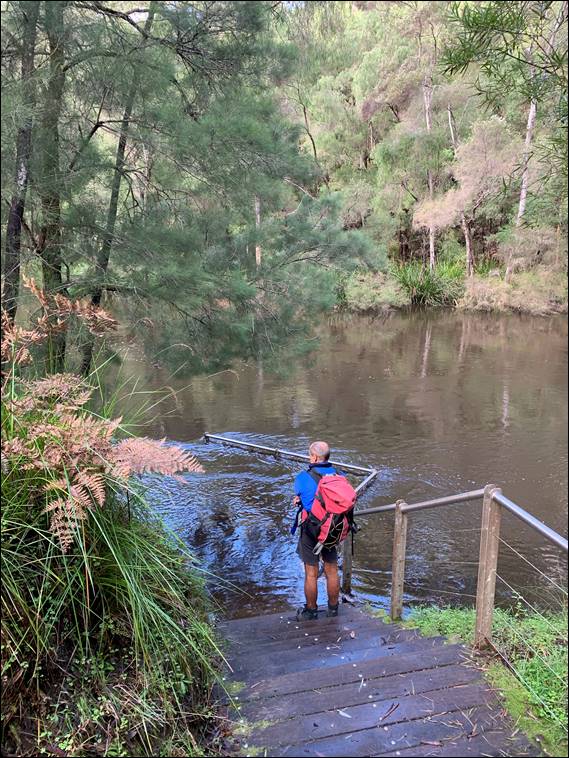
With all the rain of recent weeks it had swollen, but being the first time we had been here it was hard to appreciate that when we first came across it. We found some steps leading down to the water and sat there having a snack and another small cuppa, as we watched the water flow past. It may seem calm on the surface but there was certainly a bit of velocity in the water. At each stop I took a bit of time to look about and at this one I found a small cluster of Fairy Inkcaps. The stem and shape, pattern and texture of the cup making it a pretty safe bet:
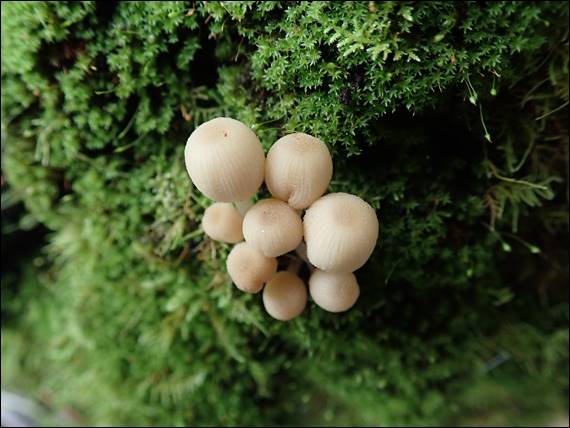
I feel like the fungi field guide Verity put me onto, along with a few others I have dug out, are starting to become more useful. Maybe also my eye is becoming trained of what to look for. As we were about to head off a laughing kookaburra swooped down from its previously unnoticed perch, and scooped up a worm. We sat and watched it for a while as it wasn’t afraid of us. Hinting that it was used to people being about and we wondered if was waiting for us to leaving something tasty behind, which we didn’t as there is plenty of natural food about for it. If you look carefully in the image below you may see it:
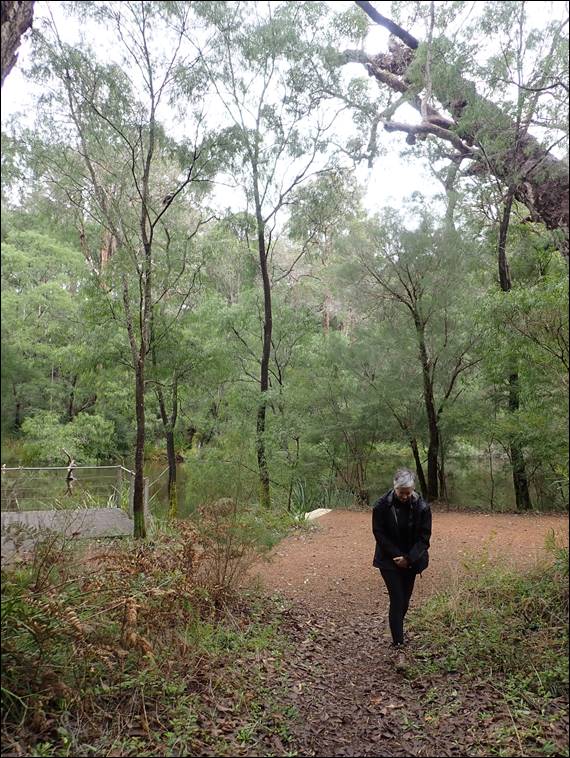
This next section followed the river, and at times got pretty close to it. There were heaps of fallen trees on this walk, many blocking the path and it became a bit of an obstacle course. On the previous wider track they were relatively easy to get round but here the track narrowed to a small trail and some of the obstacles proved to be quite entertaining. Something that did surprise us was that despite all the rain we have had the track was mostly dry and in good condition. We had half expected to come across big puddles and flooded section like last week, but we didn’t:
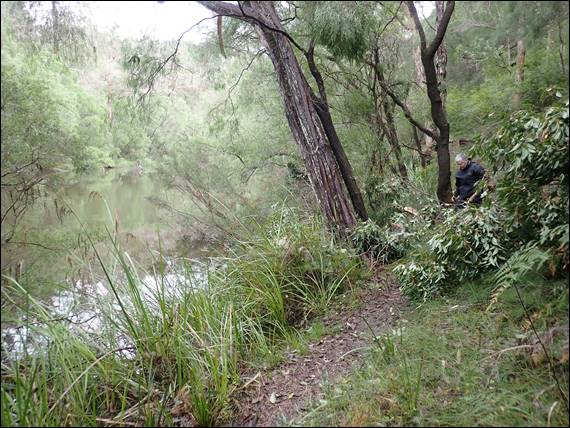
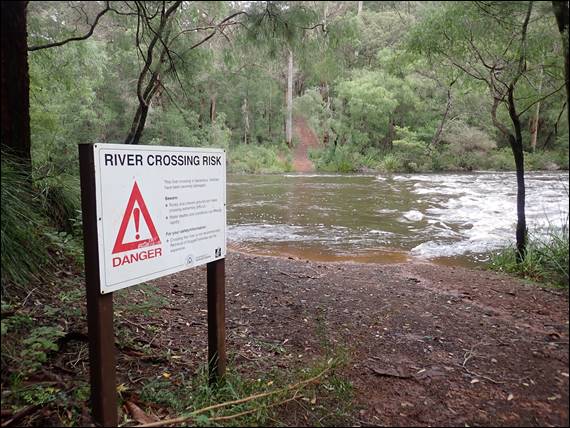
The only car we heard while on the walk was doing a U-turn at this point. I imagine that they had thought they might get over the river crossing, but you’d be pretty dumb to attempt it today. Despite being flooded the road crossing did however provide a shallower and rougher surface over which the water bobbled and gurgled providing sound, unlike the silence we had observed for the rest of the river section. The path carried on and so did we, and we felt lucky to have had the place almost all to ourselves in such peaceful conditions. It would no doubt be a whole different experience during busty times:
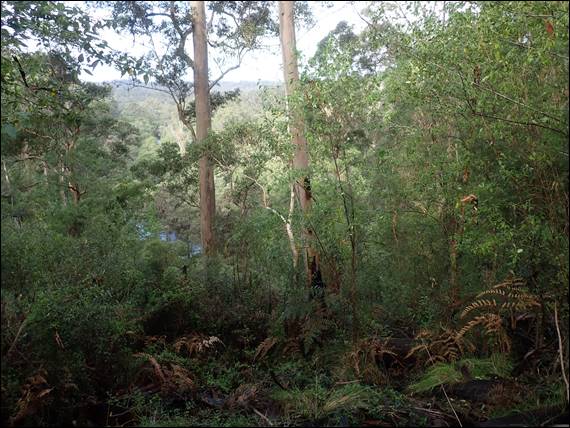
I mentioned earlier this walk went thought the Karri forest. While I had a good knowledge of the trees in England and didn’t do too bad in central Australia, here I am a bit of a numbskull. I find the shear variety a tad overwhelming, that said I have started to build up my fish and now fungi knowledge, so maybe I should attempt to become a bit more aware of the trees. In the first image of the post and towards the end the Karris stand out, they are the tallest trees here and can grow to ninety meters high. The giveaway feature being their tall straight trunks with smooth slivery bark:
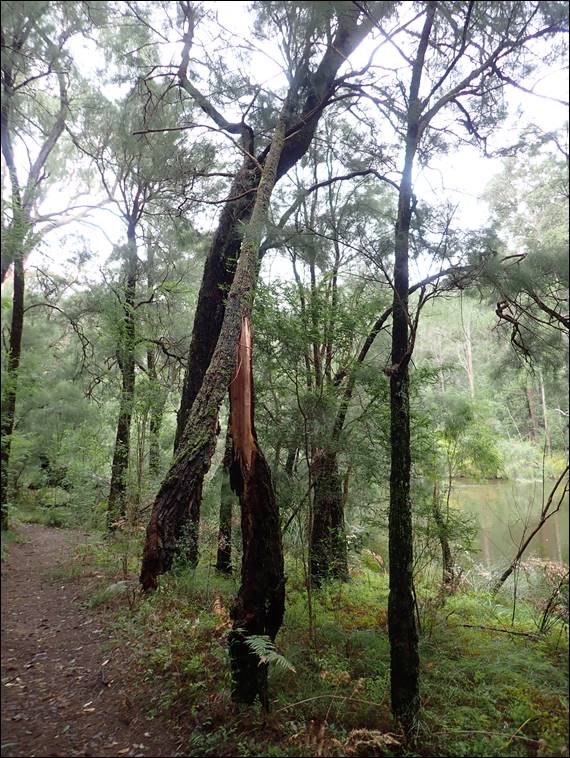
The forest also had many Marri and Jarrah trees, in fact the Jarrah (above) were more prominent along the river section. Only growing to forty meters these are again distinguishable by the trunk, which comprised a vertical deep grooved texture that looks to be fibrous in nature. The one above gave into the winds, in part as the lower section looked to have been munched on by termites reducing its structural integrity. I’ve got no image of a Marri in this post, maybe next time but for now back to the track, which at this point disappeared under water:
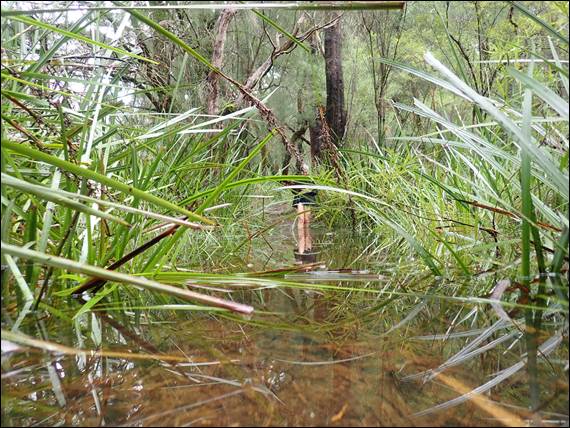
There were numerous locations where small tributaries flowing down the side of the valley joined the Warren River. To help cross these logs had been placed, with the upper section flattened, some with hand rails and some without. This one without was the only one fully submerged, knee deep for me and closer to thigh deep for Lisa. So we had to not only take our shoes off but also bear our legs, as we waded across. I’m always keeping an eye out for finds great and small, and while I appreciate it is winter it does surprise me at how few insects I see. But I did somehow spot this two millimetre long spider, as it floated across to and then latched onto this reed:
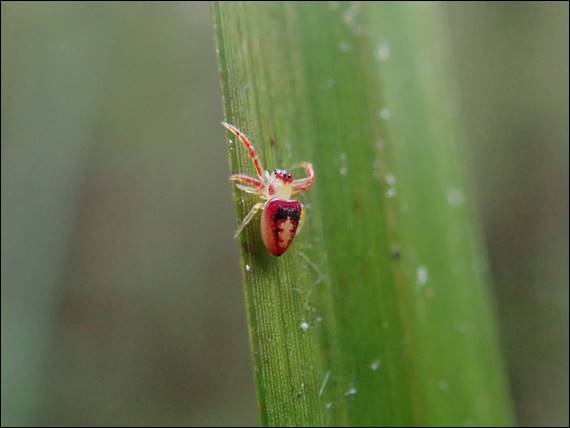
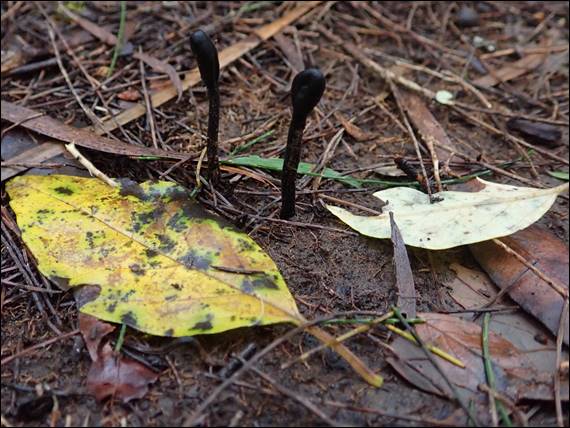
There is little point in me trying to identify the spider, but hopefully QuestaGame will help. That said I have had very little response from them on the numerous fungi I have put on the App. Luckily I do not need their help with this next one which is an Earth Tongue, it looks a bit like a couple of antenna poking out to see if it is safe for whatever lies beneath to come out. While fungi can be a sign of disease in woody plants, they are also a forest recycler and play an important role in decomposing matter to make it more available to other plants and of course some of them also provide a food source:
We eventually reached the end of the river section, and while the whole walk had been really good that section was by far the most fun and varied. We had intended to stop and take in the calmness that being by water seems to ooze, but the single bench was wet and covered in slim so we decided not to stop there. We did potter around for a short while to check out what was about and I must admit I lingered a bit long as it felt a little sad to leave the river. So I have included one more image, again an indication that the river was indeed higher than usual:
The last few kilometres of the hike would take us up the valley side to a lookout before then returning to where we started. Half way there was supposed to be a look out but the view, while nice, was somewhat obscured. Again we found the single bench here to be wet, slimy and uninviting. So after looking around and taking in the view from on high we soldier onwards, back on the wider tracks to where we started. We did come across one flower as we crossed the road before the final stretch back, but I’m sure that it was an invasive weed species so decided not to include it:
The sun started to come out as we got back where there was still a bit more to the journey for me, as I was keen to see the sight from the top of the Bicentennial tree. This used to be one of three fire trees that the public could climb, I have been up the Diamond tree but that was sadly closed in 2019 as the tree became diseased. This one however is higher at 75m whereas the Diamond tree was only 49m and a third fire tree called the Gloucester tree sits at 58m. The Diamond and Gloucester tree climbs and platforms were built in 1939 and 1947 respectively, and were used as lookout locations for fires:
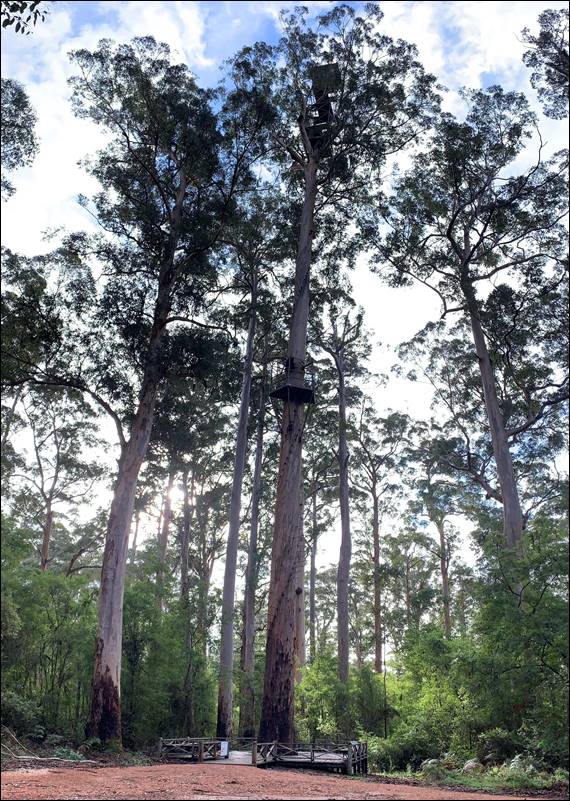
This one was built in 1988 to celebrate Australia’s bicentenary, so in some ways is more of a tourist attraction than the other two. But that said the way it is constructed is the same, metal pins driven into the trunk with a wire mesh round the outside. At times these pins become almost vertical and there are no other safety features. Needless to say Lisa, sitting way below on the bench, didn’t fancy coming up. What I find interesting is that every Tom, Dick and Harry has a go at climbing these trees with a potentially fatal fall, yet they are quick to say that rock climbers are reckless and dangerous:
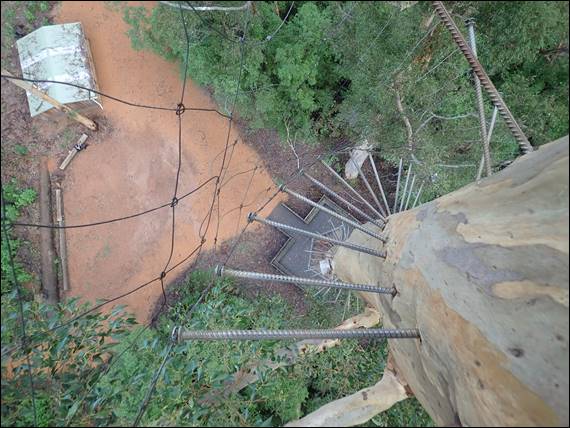
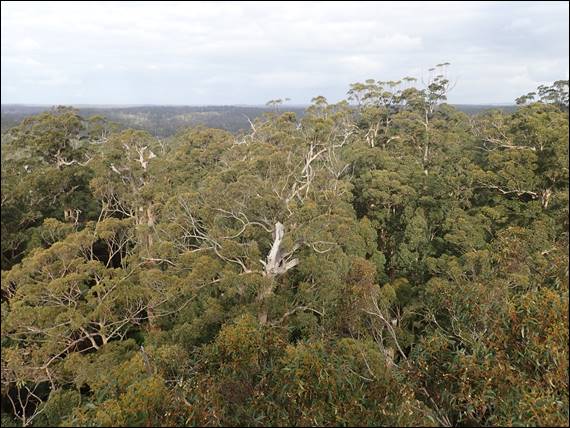
Still I am glad that these places exist and we can have these experiences. It was here that most people came and parked up, some but not all climbed the tree and others just looked in awe. Today at least, very few had wandered into the great Karri forest as we had. Our timing had worked quite well and I only passed one person coming down, which is fun on these narrow pins. This meant I had the lookout to myself and just like the entire walk even up here the bird song sang out. I tried hard to spot my feathered friends but was unable to see any of them in the high canopies:
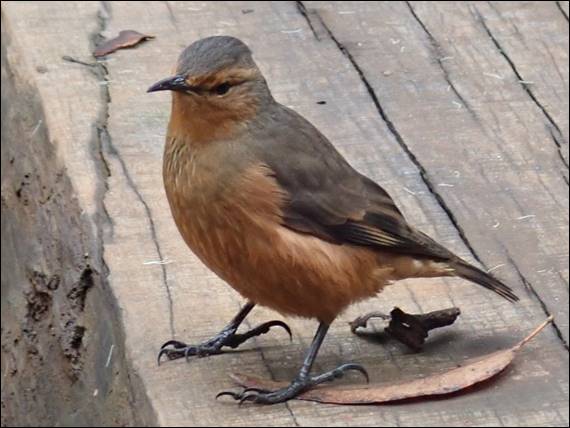
Down on the ground however Lisa was spotting heaps and while I won’t recount all the ones we saw I will mention a few that we haven’t seen before including a Blue Breasted Fairy Wren, White-Naped Honeyeater, Western Thornbill and this very bold Rufous Treecreeper. The last one coming right up to Lisa, no doubt like the kookaburra having become accustomed to associating food with humans. We sat here and finished off our tea and last of the food while watching the birdlife around us:
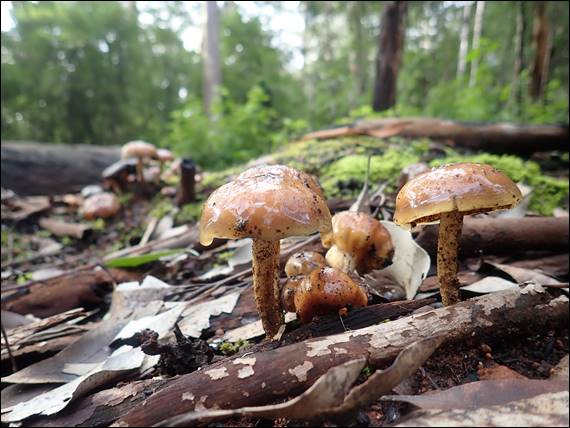
Lisa has definitely got the bug, and is keen to continue our weekend walks during school term time. We shall see how her energy levels go, what with going back to work and early weekday morning fitness classes. But that said I’m keen and there are plenty of new places for us to still explore, and then go back to at different seasons to see how they change. For now I will leave you will these Golden Tuart Cortinar, and you’ll have to wait and see if and where we might get out to next weekend:
 Sandbagged
Nice long walk and plenty to see into the remote unspoiled nature reserve to enjoy peaceful.
LikeLike
Thanks Dad 😊
LikeLike
Looks like a great walk! Plant in image #2 could be karri hazel or soap bush?
LikeLike
So a native eh, even more evidence I need to brush up on my botanical knowledge 🤣
LikeLike
Great stuff. We have seen some of the very large Kauri on North Island NZ
LikeLike
So good to walk through the tall trees. Strangely this area reminded both of us of forests in England. Reckon it was all the thick and lush green understory.
LikeLike