Friday night after work Lisa and I took the poodles for a walk down to the beach. The sunset was incredible, tendrils of the sole cloud bank stretched across the sky and turned yellow, orange and finally a fiery red as the sun dipped below the horizon. We stood watching the amazing show but I also had one eye on the water and noticed it looked reasonably clear, raising my hopes that I might get another dip in before the close of the shore based snorkelling season. I say that as no doubt the scuba diving conditions further out would remain for a while yet:
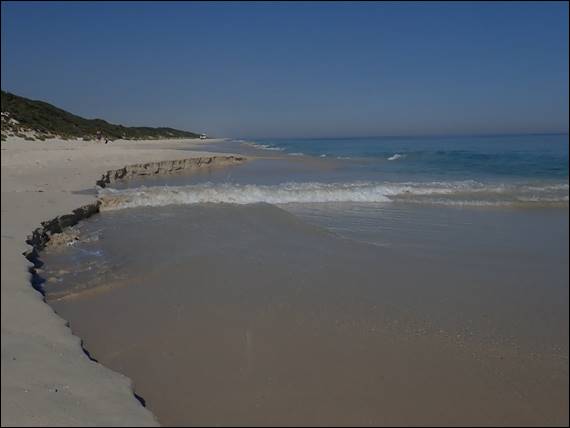
I had taken the quick detour over the hill to check the water, on my return from Wilyabrup yesterday. The colour distinction in the water was reasonable, which is a good sign that the water is clear enough to see the difference between the sandy bottom and reef. It was however a little choppy and I was feeling pretty beat from the climbing, so decided to postpone it till today. I went in mid-morning and as shown below the surface was glassy, but there were also a few tell-tale signs such as the beach starting to erode and eddies in the deceptively still looking water:
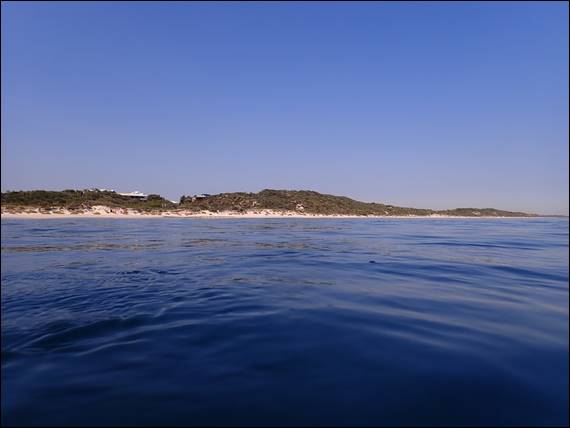
Added to that that the sun is not as high in the sky anymore, reducing its penetrative power. These combined factors all resulting in the visibility being on the decline. I had guessed this may be the case and as such headed out in my boardies, only expecting to be out for a short while. The water felt cold as I went in, was it changing, was the lower sun having less heating effect on my body, as I bobbed about on the surface, or maybe I was just tired. Despite immediately feeling cold and the low visibility I stayed out going up and down to see what might be lurking, which really wasn’t much:
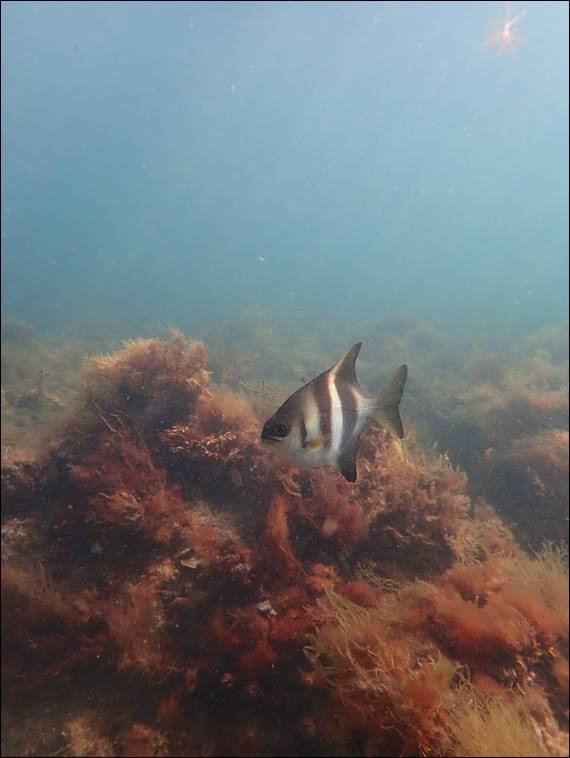
It was pretty hard to spot anything from the surface. I did see a few fish, mostly wrasse and sweeps, and also some lovely sea stars. I then saw what looked like a black bin liner. I come across plastic bags out here more often than I would like. No doubt allowed to get washed in by some inattentive beach goer, thrown away by some careless fishing folk or possibly blown or discarded overboard from the many boats that cruise up and down the coastline. I felt like I couldn’t pass it by so decided to head down to pick it up, and then probably head back to shore:
Instead of a plastic bag I’d come across a sea hare, which are probably best known for being toxic to pets. Dogs have been known to die after ingesting the toxic slime that they exude. These creatures graze on algae and it seems they only live for one year, despite that this specimen measured from the tips of my fingers to my elbow, so about half a metre. There are nine genra of sea hares and I’m going to guess that this was Aplysia, which can grow to 60cm and is the largest species. I’m going to take a further stab and guess that the species is Gigantea, my reason being that this species at least 3 times the size of most other species of Aplysia:
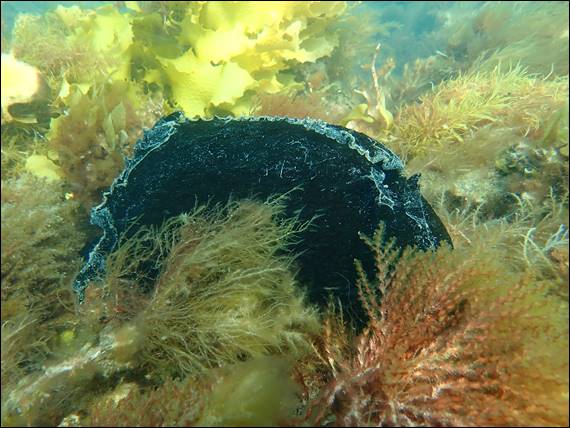
Despite the glassy surface above, the water below was moving quite quickly. Being pushed back and forth by the swell, and if you look closely you can make out the sediment as it rushes past. This resulted in the weed getting in the way of a good image of the head. But with patience and lots of diving down I got a few in which the tentacles at the base of the head can be seen, these are located on either side of the mouth. The smaller antennae like appendages higher on the head are called rhinophores, which are scent or taste receptors. On the ridge along the back, it is hard to see but there is an opening visible by the flaps of flesh:
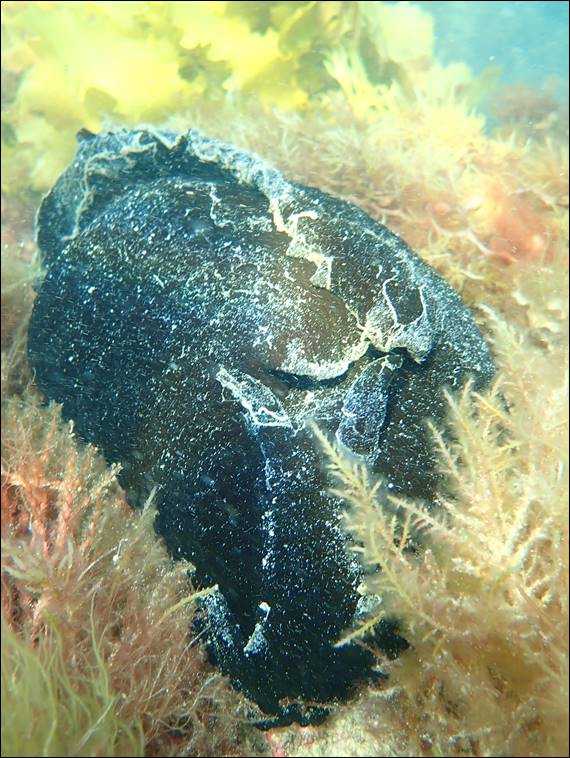
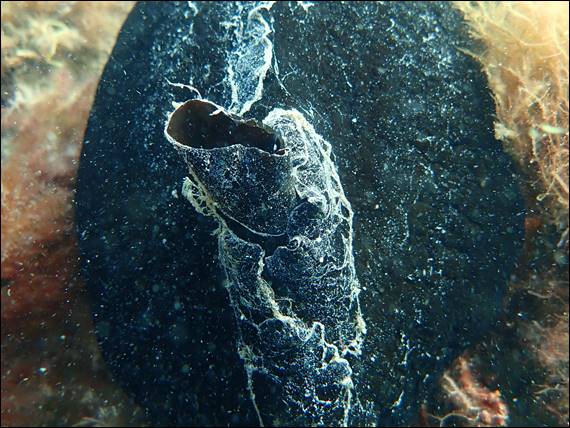
These flaps are called parapodial flaps of which there are two, which can open and close at will. They close up to help protect the gill and other organs, which previously would have been protected by a shell. Something that these creatures have discarded overtime. The flaps also protect two siphons, one to allow fresh sea water to be pumped over the gills and the other for removing deoxygenated water and waste products. As I watched this gentle giant grazing the second siphons released an excrement in the form of a pellet, something I’m guessing not many would I have seen:
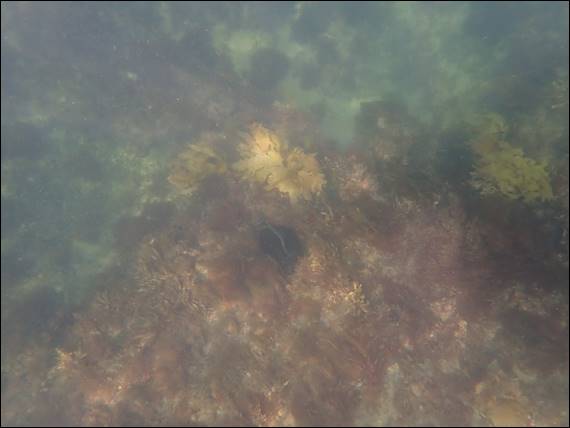
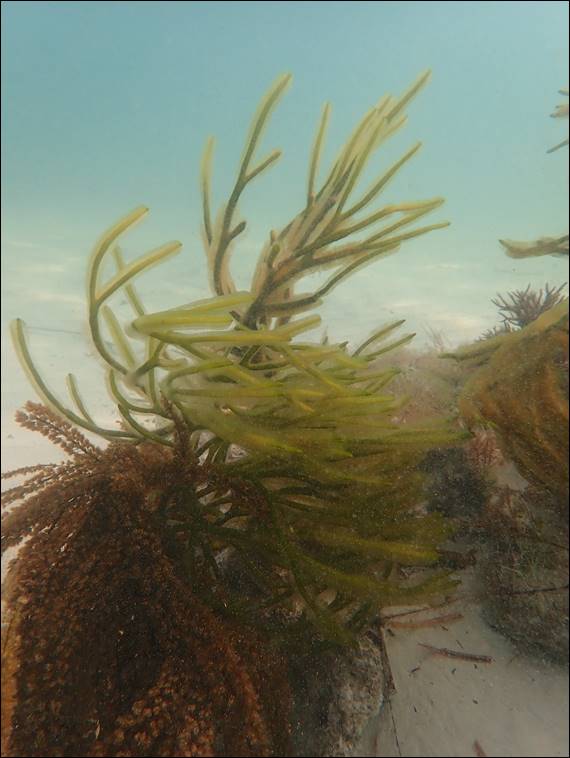
I spent quite a long time observing the sea hare, before moving on and eventually the cold got the better of me and I headed to shore. On the way I came across this plant, which I have included in a previous post. I’ve managed to have it identified as the Clifton’s Garcilaria Alga. In shaded areas it is a pale pink but in open conditions, like this one, it is usually a pale green. The coating on each branch is a microscopic single-celled algae called diatoms. They are the only organism on the planet with cell walls composed of transparent opaline silica, so they actually live in a glass house:
 Sandbagged