Midweek, on arrival home from the climbing trip down south it was unusually humid. Cloud hung in the sky each day and it felt sticky. It seems that our summer and now autumn will continue to be a bit out of character. Humidity is the type of weather that I struggle with, making me feel weary but on the plus side there wasn’t a lot of wind and the ocean was reasonably calm. I was relieved and happy when Saturday arrived with a clear blue sky, the air was once more crisp and felt dry and it was time to don the wetsuit and head out:
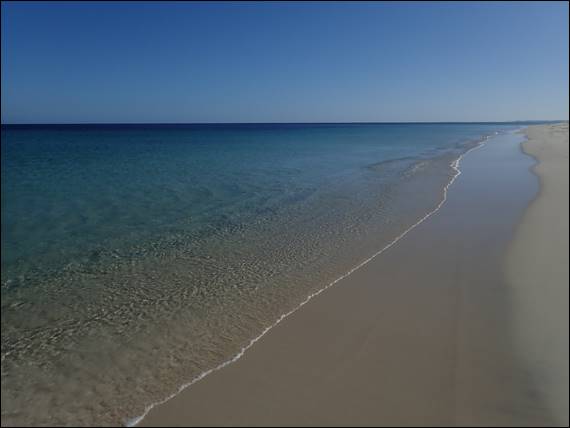
In contrast to a couple of weeks back when autumn arrived, today was picture perfect. Not a ripple on the crystal clear water. There were hardly any people about despite the fact that I had headed out for a slightly later dip at nine o’clock, and also not one stinger in sight. A positive of the weird weather being that it has kept these pesky creatures mostly at bay. Today was election day in Western Australia, which may have accounted for the absence of people but due to the changing way of life over a third of Western Australians had already voted before the big day:
The conditions were amazing, so calm and clear. I had been offered to join a trip to Wilyabrup for a climb both Saturday and then again Sunday, but seeing I had the week off I had hit Welly Dam pretty hard on Friday and so opted to have a more relaxing swim with the fish. You may wonder why a climbing session had passed and I hadn’t written it up. Well I’d gone solo with my top-rope gear and so I decided for the first time since I started this blog not to write a session up:
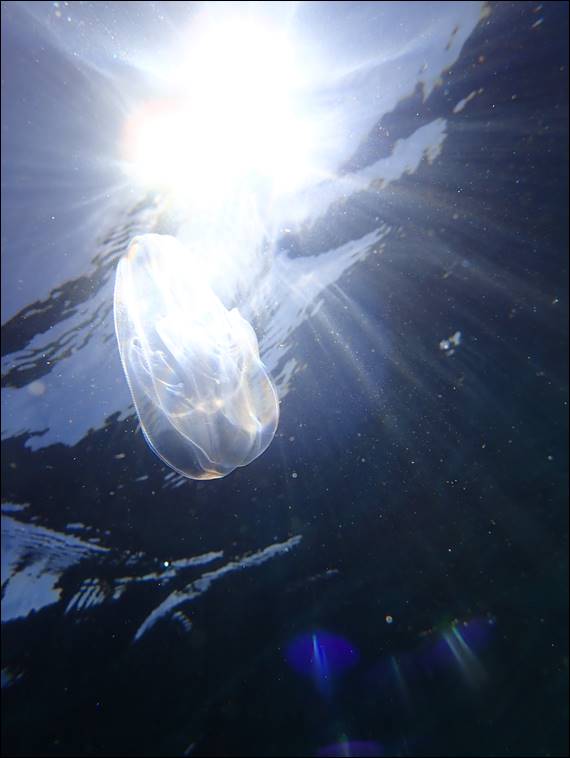
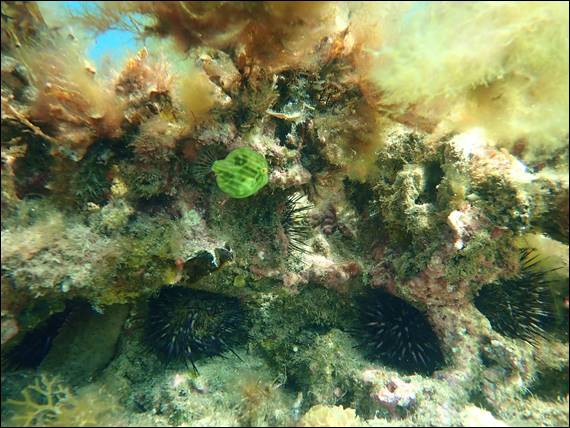
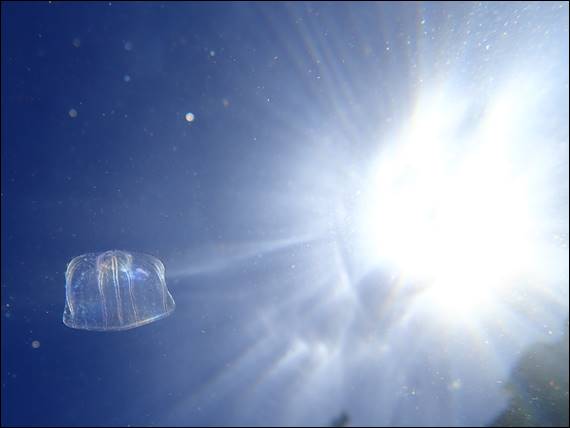
It was probably the right choice to not climb again and the water felt lush, as I slowly bobbed about looking down. It seemed reasonably quiet underneath but I felt content with just lying there not expecting to see too much today. The little green fish in the second image is one that I’ll one day hopefully get a good image of and identify, I’ve only seen it a few times and again today it was in a hurry to get away. While the stinging jelly fish were not about, there were a bunch of Comb Jelly Fish and the best way to get an image of them is with the light behind them as above:
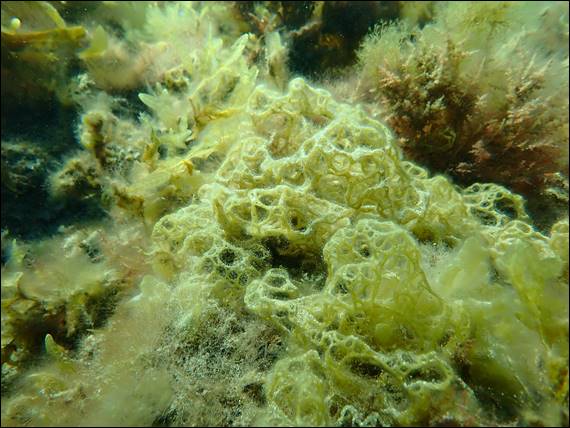
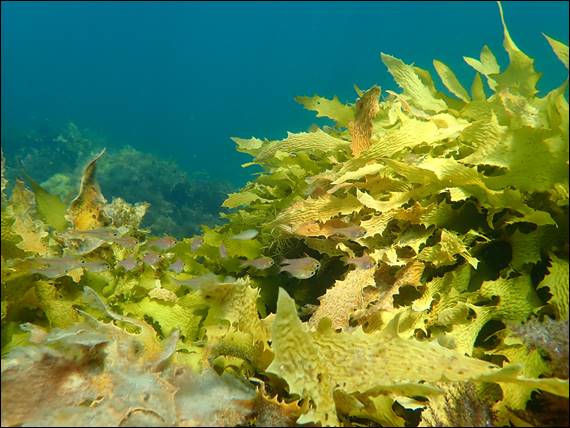
Being so calm the weed was almost stationary, creating a feeling of stillness in the water. Something I haven’t felt much of this season. I also came across a few other coverings on the sea bed today that I hadn’t to date paid any attention too. The above looks like a lattice and I’m not sure if it is a type of soft coral or it may even be an algae, something I’m having checked out. Small huddles of fish were about, but I left them alone most of the time unless there was something a little different that I noticed:
The Comb Jelly Fish come in a variety of shapes and today I found three or four variations. It is also possible some were the same but just at different stages of life, as they were sized from one to twenty centimetres. This was a small one at just over a couple of centimetres, and it looked to have brown coloured combs. These small filaments are called cilia and they run along the more defined lines or edges of the creature. The scientific name for these creatures is ctenophore and they can grow up to one and half meters making them the largest animal to make use of cilia to swim:
While I didn’t actively chase a lot of fish today I did head down to check out the caves, I’m pretty familiar with the ground off my local beach now and a few of these areas are inhabited by the same creatures so I know beforehand what I will see. That is not to say I might come across an unexpected find, I came across an amazing and large Triggerfish under one ledge but that was in no mood to be seen and disappeared deeper into the maze that the limestone bommies create:
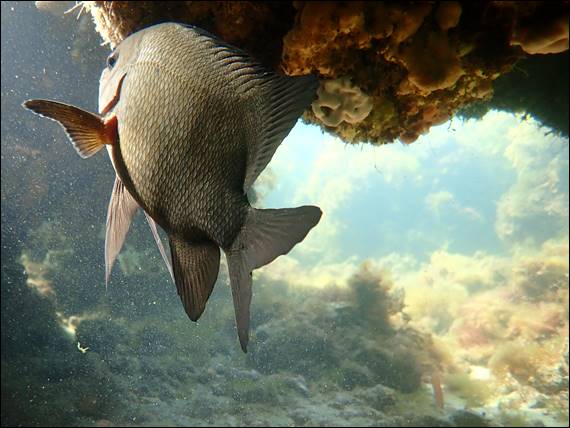
Above however the McCulloch’s Scalyfin that I regularly find in this tunnel was more than happy for me to say hello. It didn’t make any move to get away and even did a few pirouettes for me allowing for some lovely images. I particularly liked the one above, as I don’t often get images in which the scales are so clearly defined. Even the patterning on the fins and tail stand out really well. Moving on and in a recent post I included an image of three hard corals, all the same species but each one a different colour (https://sandbagged.blog/2021/02/14/deja-vu/):
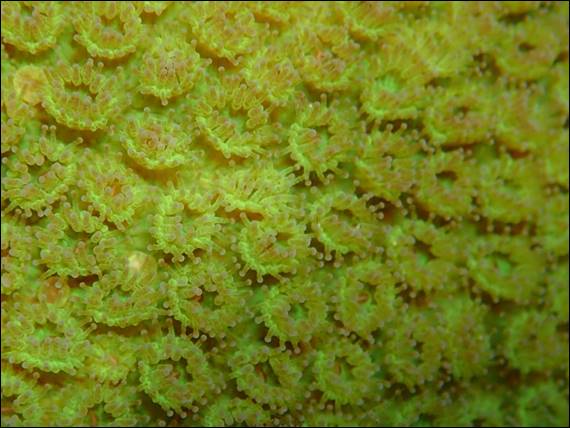
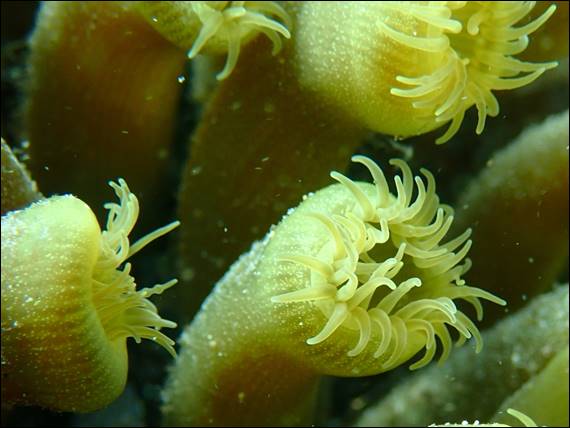
I should have already known this coral, as I have in the past identified it. While the name escaped me as I typed, Nana and Rongy were quick to get back to me and tell me what it was. It was a hard encrusting coral called plesiastrea versipora, and today I came across a green variety so took a close up of the little polyps, as I had said I would in that previous post. These polyps are related to sea anemone and jellyfish and can live individually, using the hard base that created the coral as a protective home:
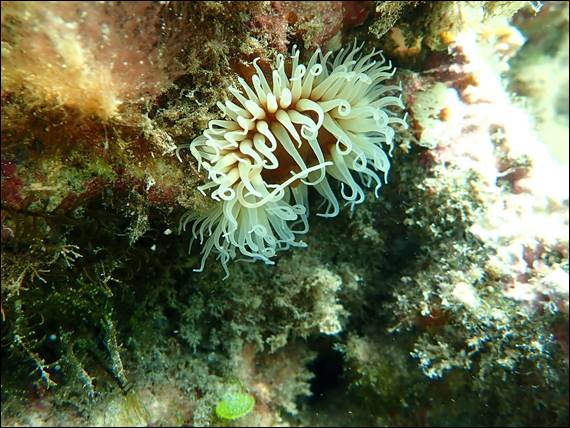
Polyps create energy by using the sunlight to make sugar, creating most of the nourishment they need. The tentacles can however be stinging and as such can also be used to catch zooplankton as an additional food source. Sea anemone like the one above are very much individual creatures, they find a home attached to anything from a rock, the sand or even on a shell. It is not uncommon for them to have symbiotic relationships with other creatures. I also came across another colony of zoantharia, which may be the same type as I found a few weeks back (https://sandbagged.blog/2021/03/01/autumn-arrives/):
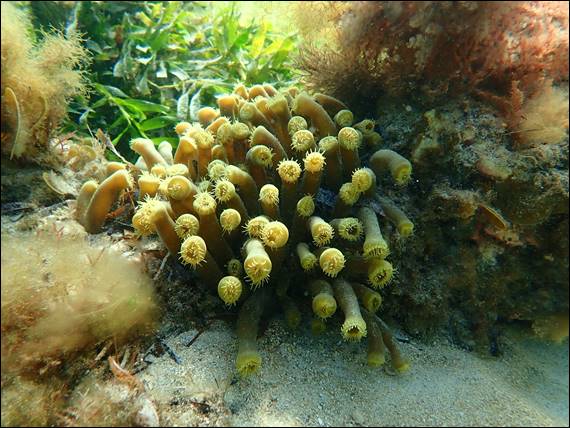
The colouration and patterning certainly make it look that way, but these had much longer bodies and they seemed to have more structure to them. Standing more upright, instead of flopping over each other. Looking into these a bit more it is possible that these are Finger zoanthid (zoanthus praelongus). The opening on these seemed wider but that may also be due to the conditions, the last ones only had a few open when I found them, whereas for this colony they were all open. They also looked to be tubular in nature, making me wonder if they draw water through them, sadly again I have struggled to find any information out about them:
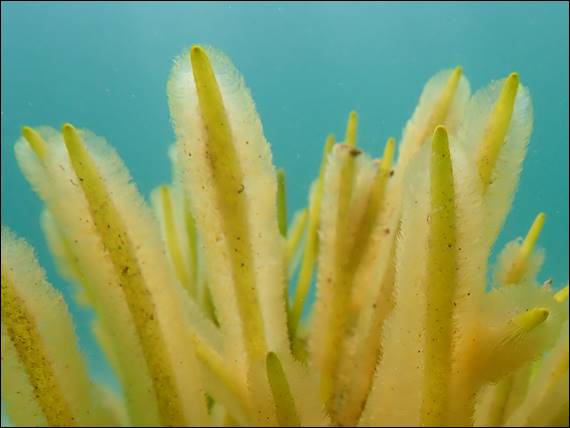
As I headed back in I did my usual detour over the sand but there wasn’t a lot to see. I had bumped into the neighbours, Esky and Cath, on the way down and they had been fishing. Schools of herring were abundant, dolphins had been cruising past and rays were swimming in the shallows, all no doubt in part attracted by the burley that is thrown in the water to bring the fish in closer. I didn’t see any of these animals on my dive, but did stop to check out another coral or maybe algae that looked particular pretty in the light. One more to have checked out:
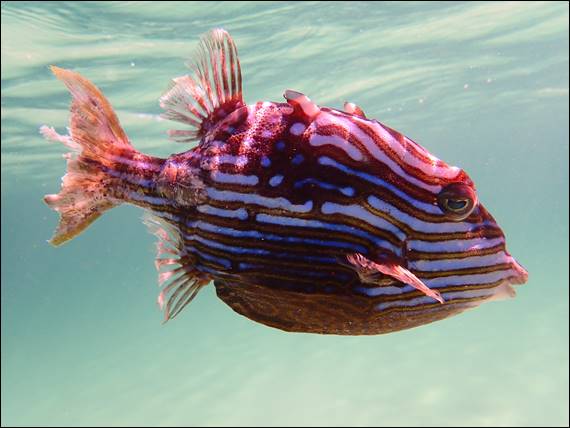
On the final leg to shore I came across a battle weary or simply aging male Shaw Cowfish. It was in the shallows right off the beach and didn’t have the will or energy to get away from me. It was also not fussed about being on the sea bed where I would normally find these usually majestic looking fish as they search for food. This one was near the surface looking disorientated and ready to throw the towel in on life. I was still warm inside but my fingers were tingling telling me it was time to get out, so I left this sad looking fish in peace and headed home:
The conditions held out all day so a bit later in I went back in this time with Esky, who came armed with all his catch gear… just in case. Normally I would walk down the beach a way and head in from a set point, there is some really good ground and I’ve seen heaps here over the years. It is because I head in at the same location, most times, that I am so familiar with the ground round there. On this trip Esky was up for swimming straight out as soon as we got on the beach, it was flat and for the most part and barren with the floor littered with broken limestone:
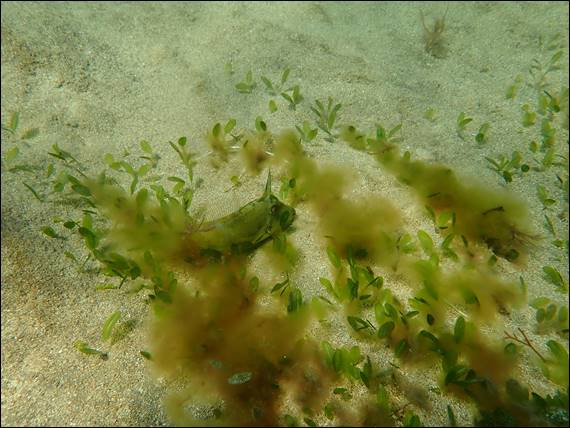
We went in much deeper water than I would normally go, maybe six meters or a bit more. The deeper depths make it more tiring to duck dive down, not that I saw much that was worth investigating. I have made a mental note to myself to start training to be able to hold my breath for longer, in preparedness for next season. I hear a lot of it revolves around training the brain, and I’ll see how I go. The only find of note from all the barren ground we covered, and we covered a lot, was this leatherjacket. From QuestaGame the first suggestion that has come through is a Sixspine Leatherjacket and second is a Rough Leatherjacket, and the latter looks more likely:
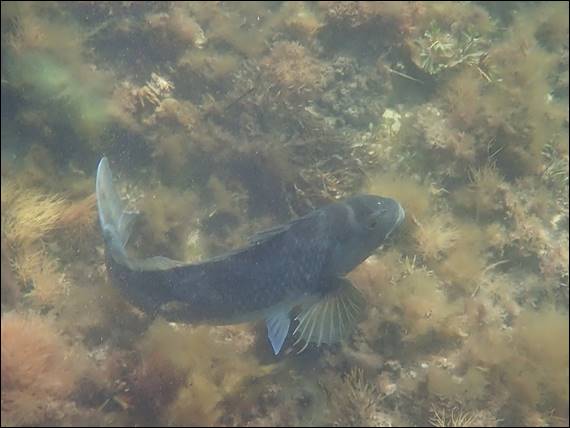
As we had first gone out we did come across a large fish, maybe 80cm long or possibly a bit longer. Large scales across it’s long heavy body, mostly dark grey with lighter bands visible when the light was right. The head, tail and fins, especially the fanned out pectoral fin, were all quite distinct which is why I am surprised at how my I have struggle to figure it out. I plumped for a juvenile Samson Fish but Geoff and Nana have suggested it’s more likely to be a Dusky Morwong. While in the deeper water the image I got of this fish wasn’t great I was lucky to come across it a second time:
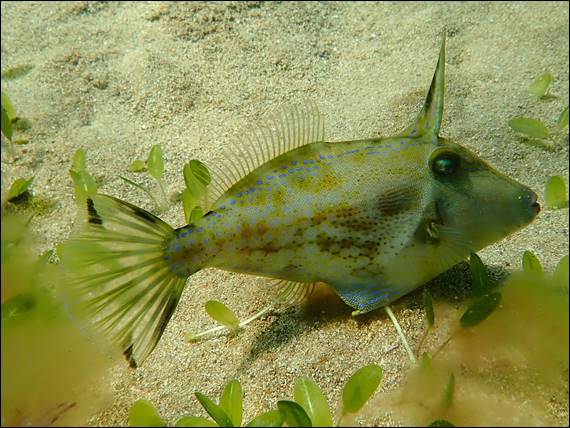
After we had swum out some 100m we tracked along the coast well beyond my normal spot and then come back in to shore further down the beach. The whole time it was barren and pretty well lifeless. So instead of coming out of the water like Esky did I headed for my usually spot which is where I found the Samson Fish was lurking in shallower water. I also found a few rays and other fish, including this very pretty Silver Yellowbelly. I was a bit slow on the camera with this one. Intent on watching a fish I haven’t seen very often, until it started to swim away:
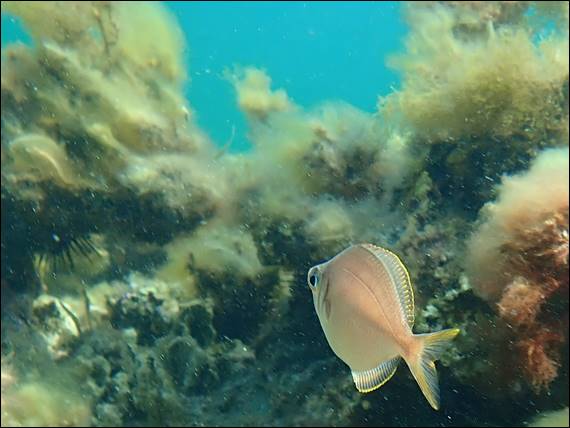
Sunday came and I couldn’t resist a quick dip. And after being a little disappointed of the barren ground I headed somewhere different. Going straight out from the river mouth there are a load of bommies with sandy patches in-between. Some of the bommies are small and quite bare of weed but others are huge with lots of weed and little caverns. To get there I walked along the beach from the cark park at the far eastern end of Peppy Beach. I was hoping to find some nudibranchs or sea slugs here and almost immediately found one. It was only a few centimetres long but moved surprisingly quickly, so I only managed a couple of average images:
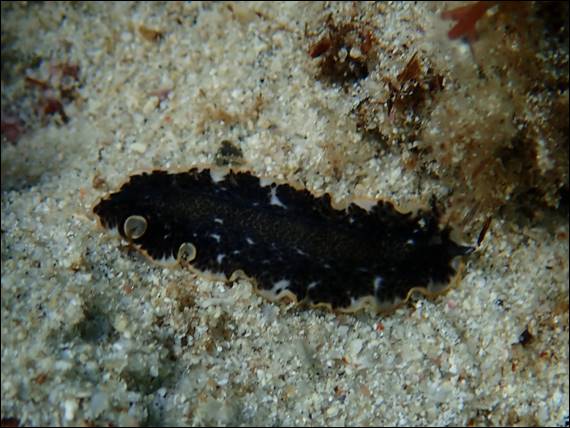
I believe this was a sea slug, as oppose to a nudibranch as it didn’t have any visible external gills. Two black antenna can just be made out on the right hand end, and you would think with obvious white patches and orange lining round the outer edge I could figure out what sort it is, but alas not. Soon this fella was out of sight and I moved on from bommie to bommie but didn’t find anymore. There were however lots of Western Pomfret, I recall previous dives here when I was surrounded by them and it felt like that today. There were also lots of good sized shoals of Gobbleguts, Sweeps and numerous other fish:
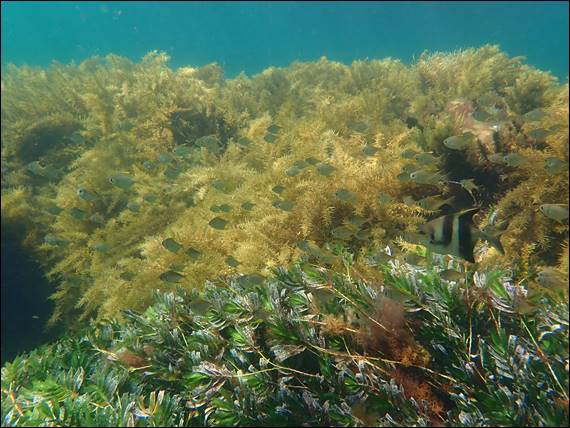
While there were several nooks and crannies to check out, this tunnel was by far the most interesting with lots of small orange bullseye floating about. I tried my best to stay down and get some improved images of some of the larger fish but struggled. The two that stuck in my mind were a solitary big twenty centimetre long bullseye and a beautiful green wrasse, and the latter can be seen in towards the back of the tunnel in the image below. After repeated attempts I gave up, unlike yesterday there was a bit more of a swell pushing me about despite the forecast indicating it should have been the same as yesterday:
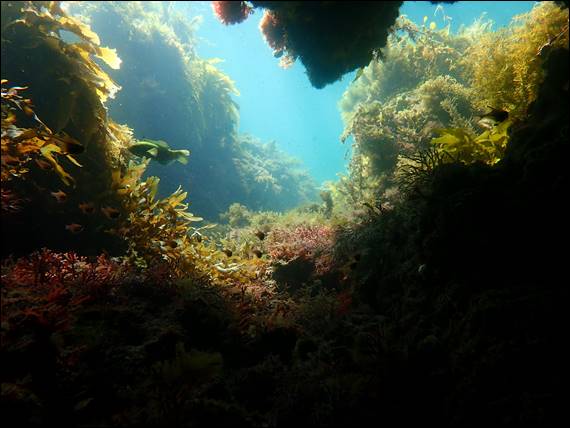
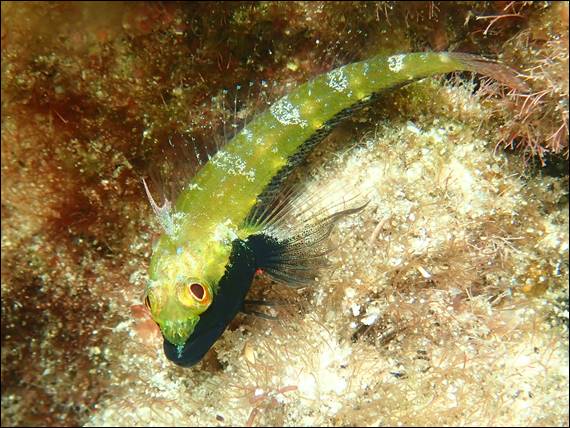
Maybe it was because of the more open bay or the stronger easterlies cutting across the bay, but regardless of it feeling that way the visibility was still amazing. I was however starting to get cold and tired, so began the long swim back towards the access track onto the beach spotting heaps along the way. Of all my other finds the last image I’ll include is of this Black Throated Threefin, I saw several of these but this one unlike the others seemed happy for me to intrude on its personal space. Being only five centimetres long I had to get pretty close and was surprised that it didn’t dart away. I might have to come back here again soon:
 Sandbagged