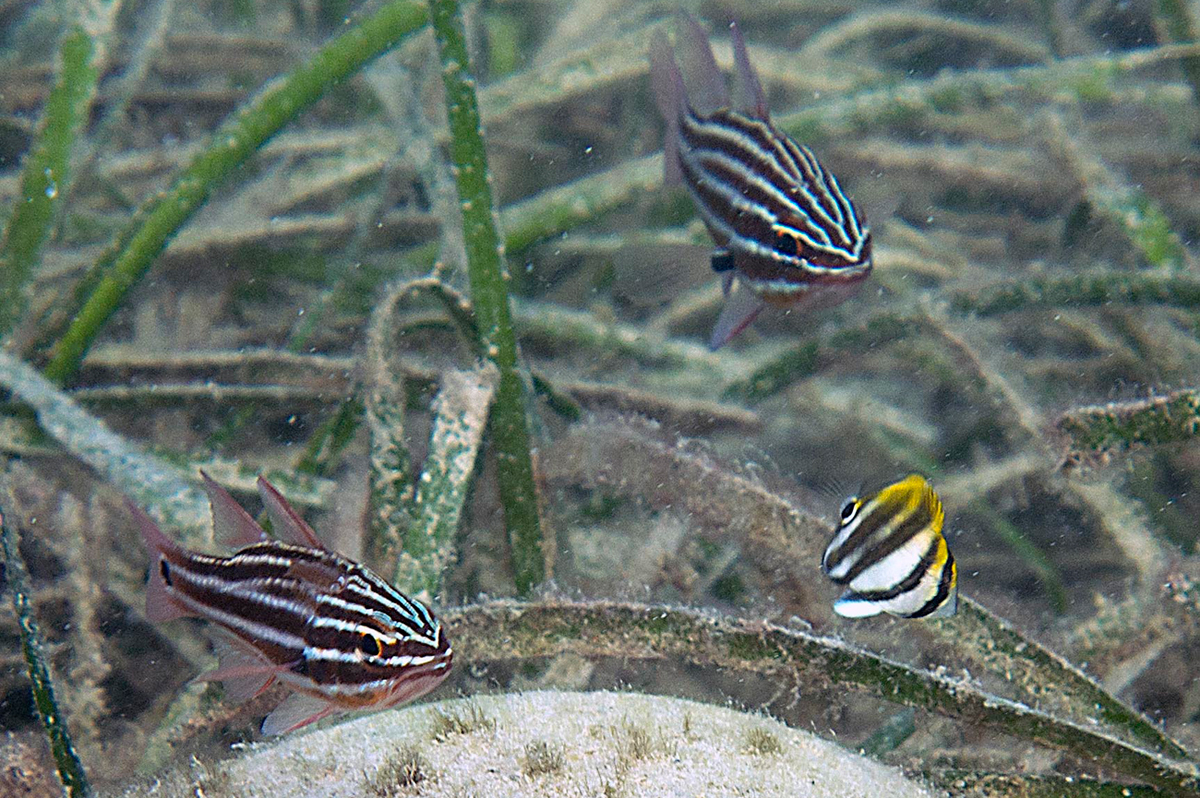
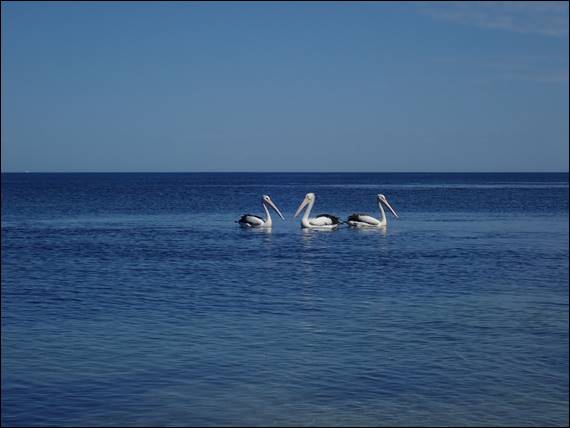
The same troop of us headed out past The Point as last time and as we drove out we finally came across a bay that was free cars. Each bay seemed to have occupants already set up, and in the bay we chose we were nestled between two parties. Behind us a couple were fishing and ahead of us was one of the commercial fishing crew. Their boats were just coming in and they started to pull in the drag net, meaning they would soon be one their way. A few pelicans were drifting about, maybe due to the presence of the commercial fishing crew as I have not seen them swimming along the coast before:
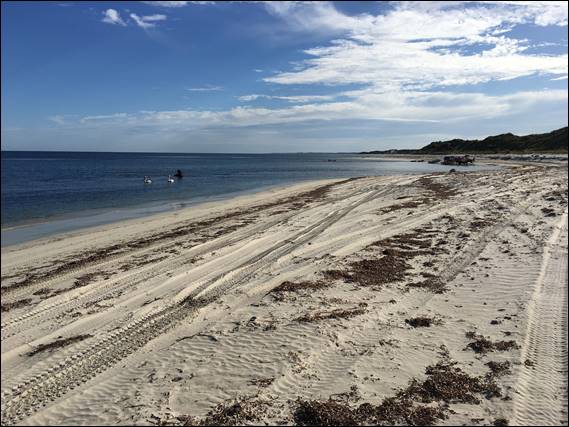
I was first in leaving the others to kit up and catch up, the water near shore was murky but I took my time as you never know what might appear. I spied these three corals close together and I was really taken by the different colours all in one spot. It is not uncommon for us to find these hard corals washed up on the beach, and I have some vague recollection of trying to identify them before. I’m not even going to try this time, but did like how the filaments are clearing visible, feasting on all the sediments that were stirred up in the water. Next time I will have a bash at getting some more detailed images, which will also help with identify them:
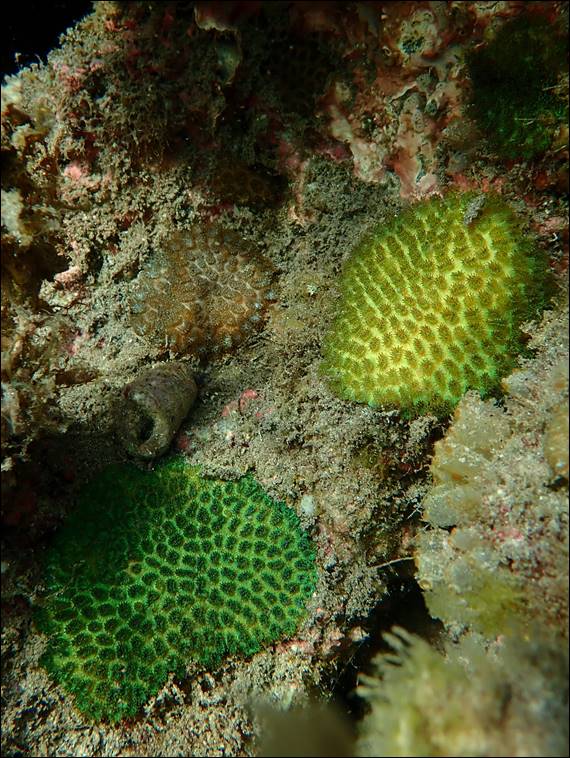
Last weekend I posted about what I thought was a Feather Duster Worm. I have since discovered that it was a Southern Australian Fanworm, reputedly to be the most impressive of all the fanworms: https://sandbagged.blog/2021/02/05/playing-hide-and-seek/. Today I came across what I believe really are Feather Duster Tubeworms, a patch of about ten clustered together. I was careful not to get too close to avoid them shooting back into their protective tube, one of which you can see without the worm sticking its feathery branchiae out. Hopefully, this time I have correctly identified it:
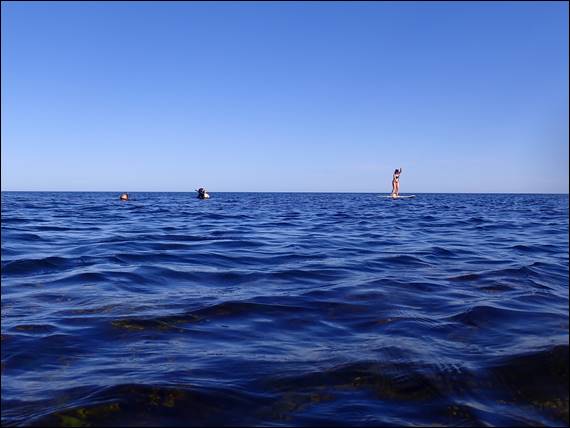
I came across several large Southern Eagle Rays, which I am guessing were fully grown adults. I had called them Australian Cownose Ray, in the same post that I linked above. While it seems that I am mistaken I am struggling to accept this, as the Eagle Ray has a variable pattern of spots while the Cownose Ray is plain on top like the ones I see. While we were continuing to search below, Lisa and Monica had decided to head out on their stand up paddleboards, carefully avoiding the shallow reef areas in case they fell off. As I continued my journey I came across plenty of shoals of small fish and isolated larger ones. Sadly the larger ones I really wanted to show you were just too quick:
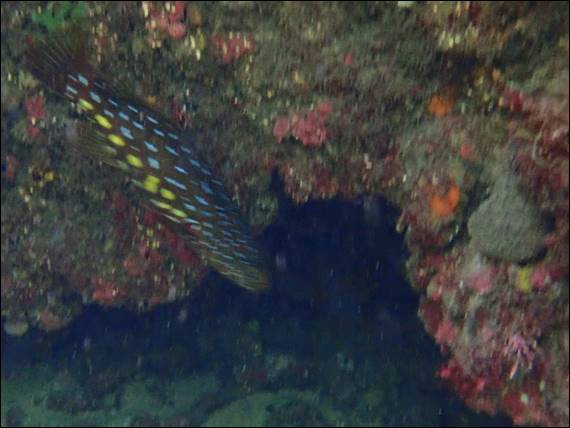
As soon as I saw them they were off, and while I caught each of them on camera, it was never a clear image. This area had heaps of interconnected caves and swim throughs, more than any area we had previously been too. This allowed these fish lots of places to quickly get away often way too small for us to follow. The first one was a Spiny Tailed Leatherjacket, a fish I have been hoping to see for a long time due to four distinct yellow spines near the base of the tail. The next was what I believe to be a Rock Cale, the shape, mottled patterning and spotted tail is what makes me sure of this. And the last one I that I simply have to include was the spectacular Harlequin Cod, and I do wonder what my chances of seeing one of these again is:
In my post yesterday (https://sandbagged.blog/2021/02/13/a-splash-of-colour/) I included what I believe to be a juvenile pipefish. The first and only other time I have seen this was on Australia Day 2016, and during that same snorkel five years back I also came across a Batwing Sea Slug. So it seems really uncanny that today I came across my second sighting of a Batwing Sea Slug. The image is taken from below making it look like it is flying through the air, and as I watched it the reason for its name was pretty obvious. I studied it for ages and of course simply had to take a video, as it flapped about in front of me:
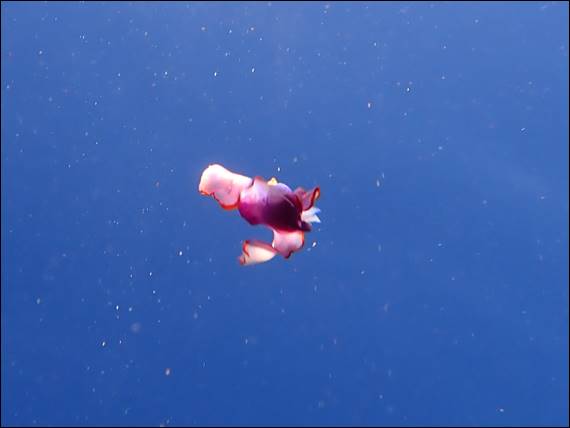
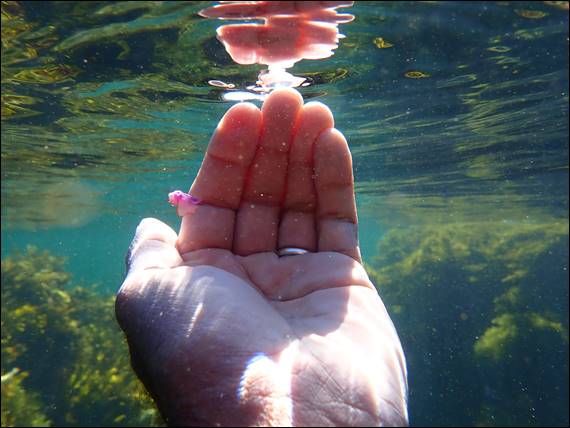
If you watch the weed behind, more so towards the end of the video, you’ll see how the swell was pushing the water back and forth. It was pretty impressive how this little creature managed to stay mostly in one spot with all the water pushing me about this way and that. To give you an idea of the size of some of my finds I quite like this mage, it just goes to show how you really have to keep a sharp eye out for all sizes, shapes, colours and movements. Today there was more that got away from me than what I managed to catch on camera, but those are the breaks and it was still lovely being out there:
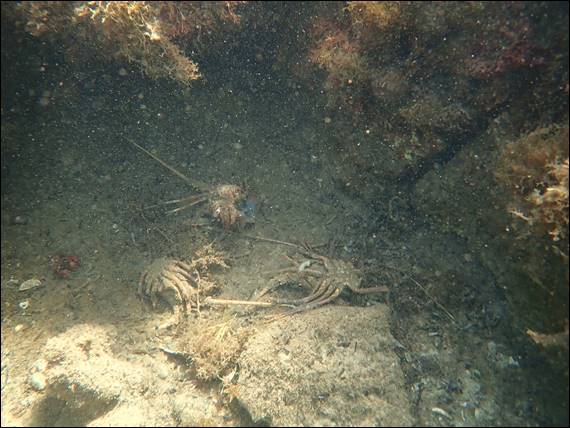
As I drifted about I came across a rock lobster graveyard, the remnants of others who had been in luck during their dive and had taken home a feast. You may also be able to tell that I was heading back to shore as the water was getting murky again. Unlike these previous people Gav and Geoff however came in empty handed, what they found was either undersized or too quick to get away. The latter being a bit like how I had faired with the fish today, just too many escape routes for the critters. Still they too came out smiling, as we all did:
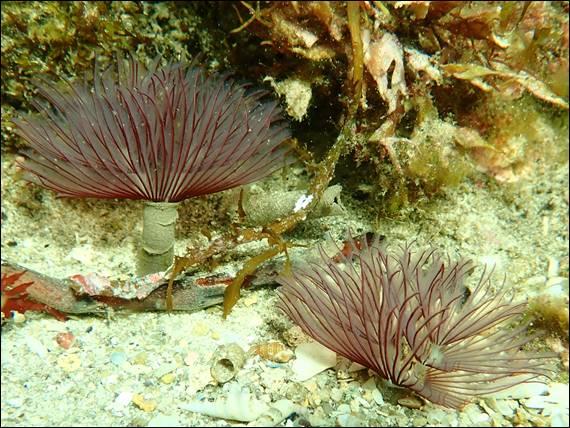
My last find was a small shoal of what I believe to be Blue Weed Whiting, which happens to be the same as that little green fish I snapped yesterday only that one was a juvenile. I’ve also had the other two small juvenile fish identified, Rongy was right with the juvenile McCullochs Scalyfin. The other one that I guessed may be a Coralfish or Bannerfish really surprised me and is a Ocellate Butterflyfish. You would never guess it from the look of the adult but on the Fish of Australia website there is also an image of a juvenile that is identical to what I found. These fish don’t usually venture this far south, so it was a really good find:

In the image above I was so focused on the Blue Weed Whiting, which I followed round for ages trying to get a clearer image, that I didn’t even notice the Gobbleguts and Western Pomfret to the left until I got home. It had been another amazing swim and as we packed things back in our cars the wind died and the water went flat. Much as it was tempting to warm up and head back out, one by one we drove off. The pelicans were still bobbing about in the shallows looking like they were having a good feed, so we left them in peace and took a leisurely pace driving out past the increasing number of cars:
 Sandbagged