I’ve only had one full week of work since mid-December and that was working from home, so it really didn’t feel like a full week with all the snorkels I got in. This week was also short, as Lisa and I drove up to Perth to help our daughter settle in at University. As a result of the restrictions in the Perth area and despite being back home, we are now required to wear masks if we leave our house. That is until midnight on Saturday, as long as no more COVID cases are identified. This was however not going to stop me heading out for a before work climb on Friday. But I do realise that heading back to Welly Dam will soon become tiresome for you to read about:
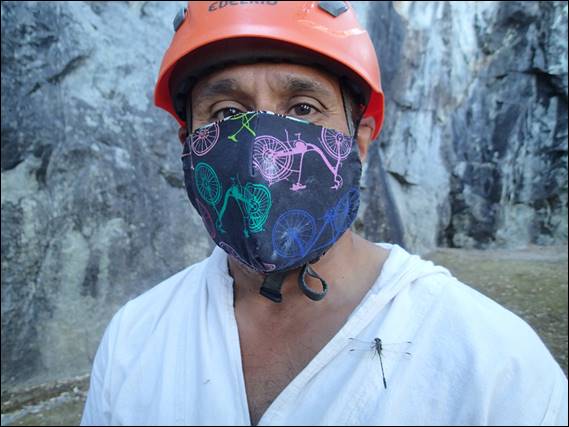
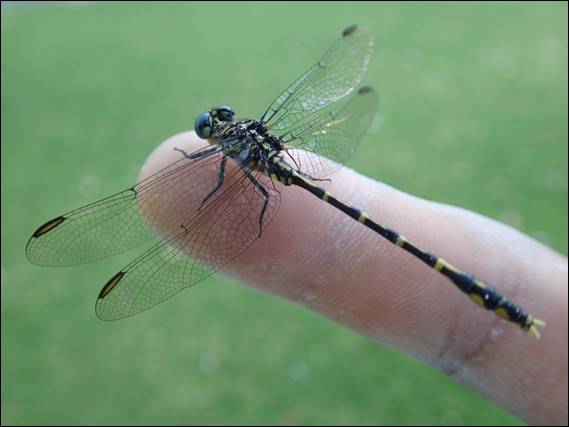
So I do not propose to tell you about how well organised we were climbing with three, using two sets of gear, each of us leading each route, keeping the grades respectable and still managing to squeeze six climbs into a three hour session! I do however, want to mention this beautiful Damselfly that was on the rock, as I climbed up, and then when I came down it went onto my top. Supposedly the way to tell dragonflies and damselflies apart is that the former have different sized rear and fore wings. Based on the colours I have guessed it may be a Australian Duskhawker Damselfly, and am eagerly awaiting to find out if I am right:
Rather than head to the office I worked from home on Friday. This allowed me to be mask free and also to have the accompaniment of music, with a compilation of 80s singer song writers. This morning being Saturday there was no work. So after a few domestic duties had been seen too, and seeing the conditions looked primo, I headed down to our local beach. Near shore I saw more stingers than before this season, but they soon parted and I drifted safely to the thankfully stinger free deeper water. Here I found a curious creature a mere 15mm long, when it was stretched out:
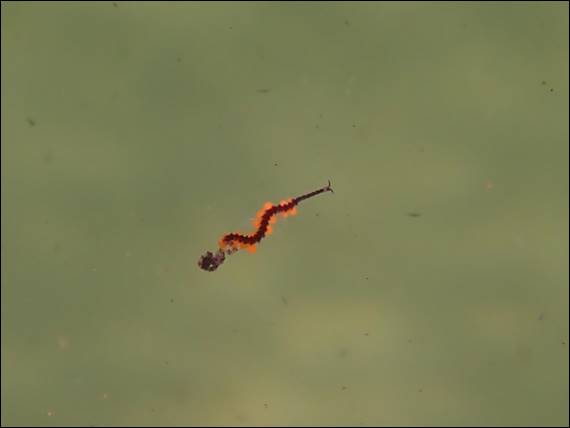
I have seen this before a long time back and got in touch with a local marine scientist working at the Busselton Jetty. I was told that it could be a juvenile pipefish, but they were not able to identify it any further than that due to the images not being very clear. So I spent a while snapping loads of images of this one in the hope that at least one would come out clear. I also took a short video if you are interested to see how it moves through the water. I also took a video of this Eleven-Armed Sea Star, the reason being so you could see just how quickly this particular sea star moves:
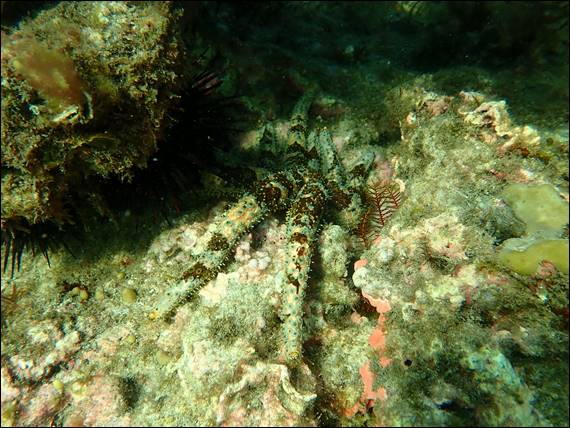
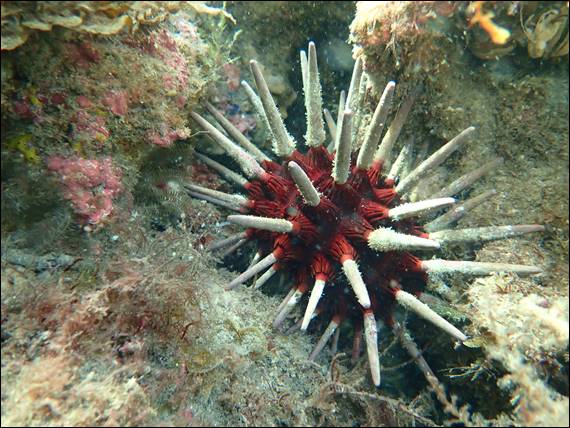
Being a carnivorous sea star it feeds on small crabs and marine worms, and is different to most sea stars as it has four rows of tube feet on the underside of their arms. Most other sea stars only have two rows. I’m guessing, but this may be why it is able to move so much quicker or it may be so it can hold onto its prey. I also came across another Western Slate Pencil Urchin, and this one was in a brighter location allowing a clearer image. Due to not having as many spines as other urchins these are more vulnerable and as a consequence wedge themselves in cracks. This in turn rounds off the ends of their thick spines:
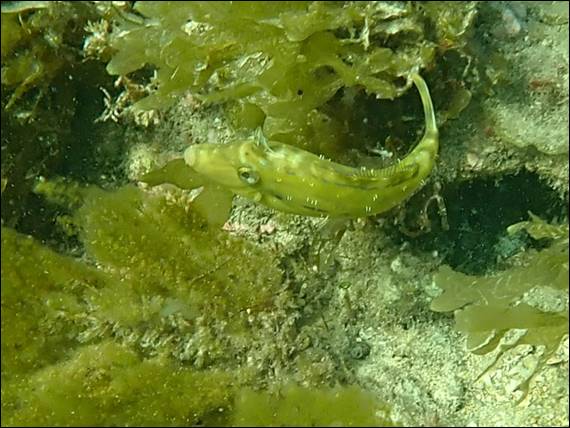
As I looked from above I spotted a small trigger fish, today I had donned my short wetsuit and weights. This allowed me to stay out a bit longer, and also duck dive down more efficiently and with less bodily movement. It still wasn’t enough to prevent this fish spotting me early on and making a dash for the weed. But after waiting patiently, it came out again and I got a good enough image to identify it as a juvenile Horseshoe Leatherjacket. The patterning gives it away, but what really struck me were the small spines along its side. I don’t recall seeing these on the adults:
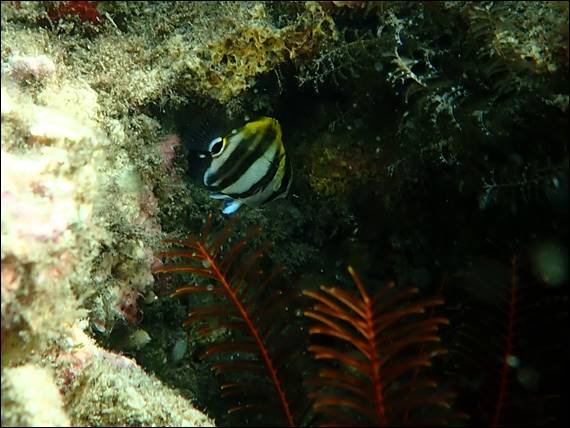
My next spot came from the slightest splash of colour, this tiny fish would have been no more than 10mm long. The size of it becoming apparent when you compare it to the hydrozoan, which looks like a fern type plant but is in fact a colony of very small predatory animals. They are ready to give you a surprise like a jelly fish might if you get too close. Back to this fish, it is again a juvenile making it hard to identify. I’m really not sure but the shape and markings makes me think a Coralfish or Bannerfish:
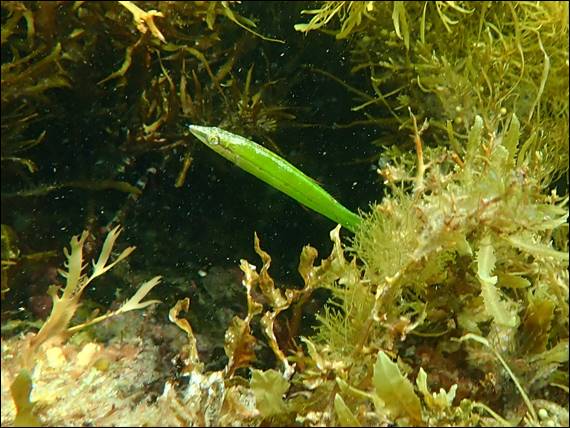
My discovery of small beautiful fish continued. Next I spotted a short, maybe 50mm long, slender but distinct stripe of green that stood out and seemed to be moving. The green was fluorescent and mesmerising. I was able to dive down away from the area and sneak up from below. While I didn’t move or moved very slowly it was fine. It did however dart for cover a couple of times, and as I sat there waiting patiently it popped back out again. Yet another juvenile and again I’m stuck between two species, either a Weed Whiting or Cigar Wrasse:
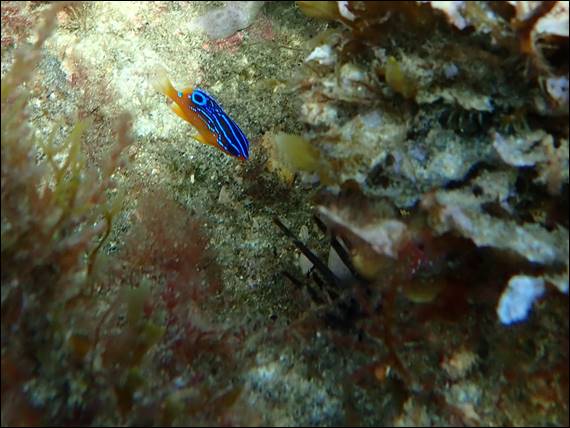
While I saw lots of other juvenile including Hulafish, Gobbleguts, Pomfrey, etc. these were all in small shoals and I have included images of these previously. The last fish that I wanted to include in this post was again solitary, and looked simply stunning. The blue patterning certainly didn’t help it hide and despite the depth it was at, how could I miss the blue dot moving about. Another tiny find maybe 20mm long that looks like a Fire Damsel, but they do not come this far south. So the search continued and with a bit of help from Rongy it has been identified as a juvenile McCullochs Scalyfin:
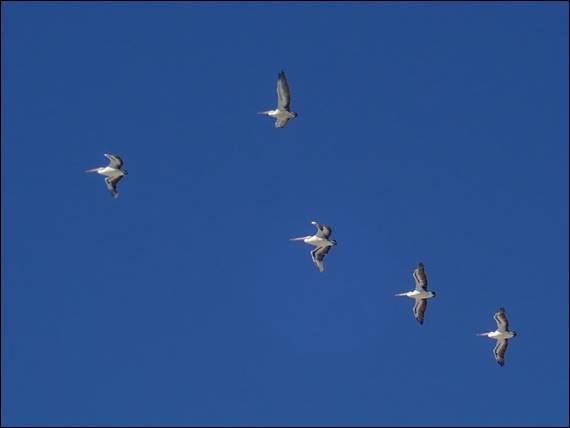
Along the way today I spotted a small ray, plenty of fish and sea stars so overall it was a great snorkel. The conditions look to continue today so I warn you I might be popping out again this afternoon and will almost certainly be back out tomorrow. The latter trip will be down past The Point so I’ll be taking the full length wetsuit for a longer dive if the conditions hold. Coming out of the water and just to prove I’m not solely focused on marine life, I took a quick snap of a few pelicans soaring on high, which was a little how I was feeling after all my finds:
 Sandbagged