With a cyclone bearing down on the northern parts of Western Australia a weather change was on the cards for us too. Clouds were forming in the sky, the temperature was dropping by double digits, the winds however were not changing and if anything seemed to be less intense that previous weeks. I chanced a dip in at Wave Walk yesterday but due to the cloud and a bit of a swell visibility was horrendous. I stayed in hoping to chance across something worth reporting about but came out without having snapped a single image, which is a first:
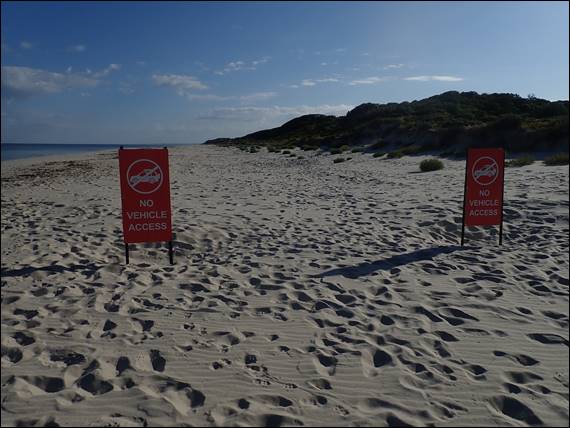
Today it was a much clearer sky and there was but a whisper of wind, so I went down to our local beach. The beach sported two new and very visible signs warning people where they could and couldn’t take their vehicles. I’m guessing, as I type this, that the beach will be overrun with 4WDs and big family setups. No doubt everyone will be doing the traditional trip to the water on Australia Day. While it would have been good to wait probably an hour for the sun to get a bit higher in the sky, the high probability of crowds was a good reason to head down early:
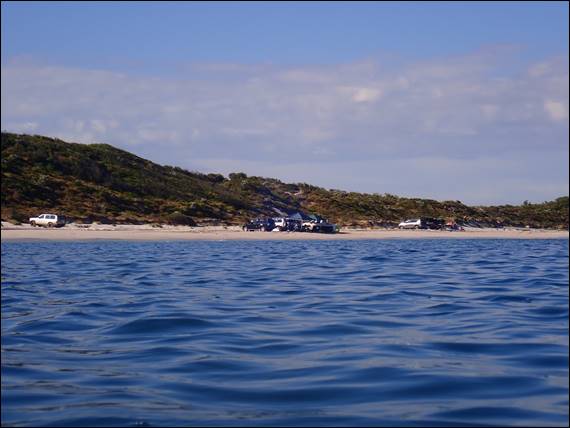
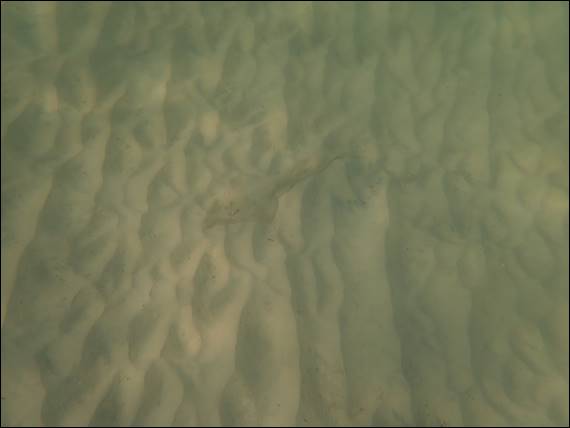
The beach was already starting to fill up with cars coming down, and it looked like at least one party had spent the previous night camped here. Underwater the visibility was way better than the previous day, but with a relatively low sun the light was struggling to penetrate the water. As I crossed the initial sandy patch I spotted the shape of a Western Shovel Nose Ray, blending is beautifully with the sand. I dove down a couple of times to have a closer look but tried not to disturb him too much:
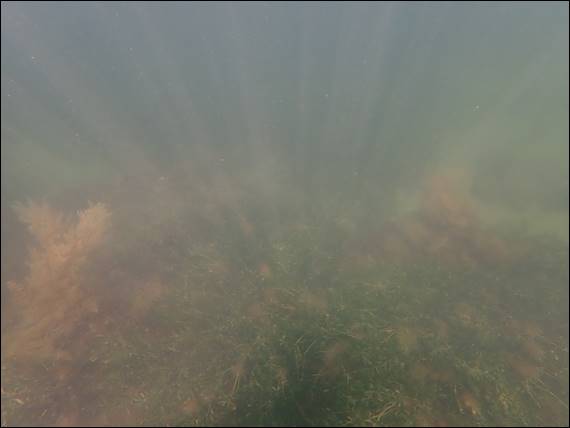
When the visibility isn’t so great the water feels so much deeper. Admittedly it was three hours past high tide, and the encroachment of a full moon was making the tidal variation more pronounced. But even with the greater tidal range is only a matter of a metre. The low sun was sending its rays down and they were reflecting of the sediment that was floating about in the water. A swell was still about but it had eased off from yesterday. So with little chance of seeing much from above it was time to start going down for a closer inspection:
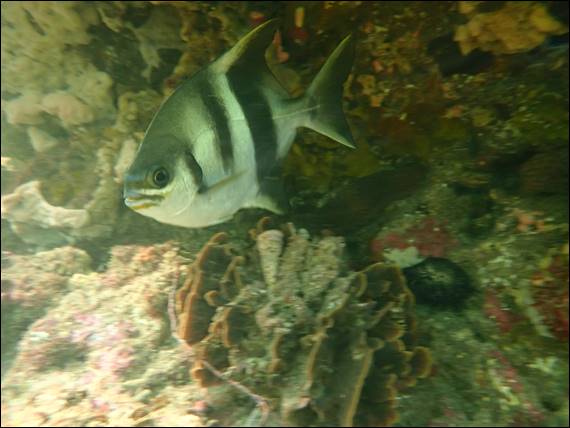
There wasn’t too much to see, the nooks and crannies all looked quiet and while I saw a few fish there was nothing particular exciting. Also when the light is low trying to get any decent images under the ledges is pretty well impossible. It is about time however that I included a picture of the one fish that without doubt I am guaranteed to see on every dive. The Banded Sweep is quite a large heavy set fish. They will follow me round no doubt hoping that I will dislodge some food, as I unintentionally but at times unavoidably disturb the sediment:
Yesterday due to the water not looking great and thinking I might not be in for long I didn’t bother with a wetsuit. Entering the water it normally best to just dive in rather than slowly creep out as the water inches up your body. But the water had felt so much warmer, almost bath like. So today I didn’t bother with a wetsuit and again it felt warm. I have mentioned that I am starting to see more shoals of baby fish, which I should technically call juvenile fish. And I wonder if the water warming up might be partially responsible:
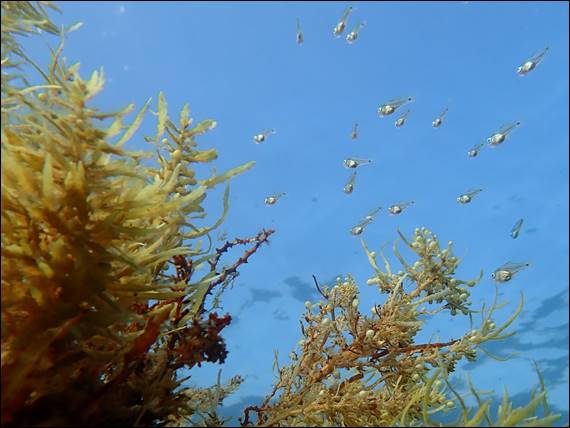
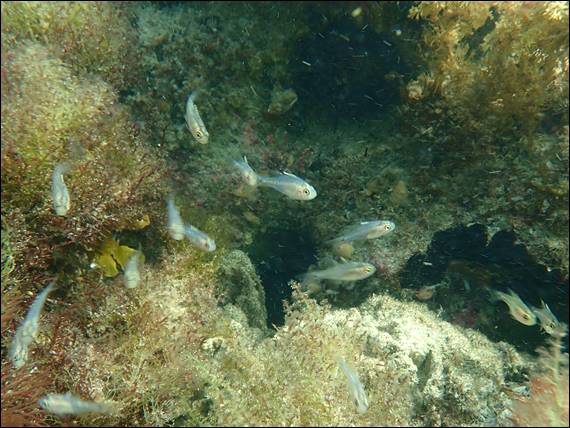
I find the above variety bobbing about near the top of the weed. Allowing me to dive down and come up from underneath to get much clearer images. With a small round silvery abdomen and transparent tail, they seem so different from the juvenile Western Gobbleguts that I find hiding under rock shelves (below). The body of the fish below being silvery with black dots starting to form along their sides, making them easy to identify. That said in the image above the distinct black spot at the tail and similar eyes makes me think they too are Western Gobbleguts just younger:
Maybe I haven’t been l noticing it in previous years, but the weed this year has got lots of nodule like growths on it. The 3-5cm, light brown, knobbly growths almost looks like an infection. A bit like when a fungus is growing out of a tree trunk. As yet I have not got a clue as to what it may be and whether it is or is not a sign of poor health. I’m hoping not as if the weed starts to suffer most of the life I get to see would likely move to other areas. Something for me to check on QuestaGame and report back on:
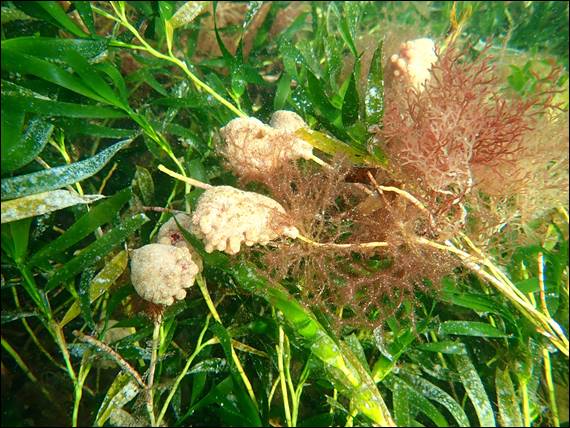
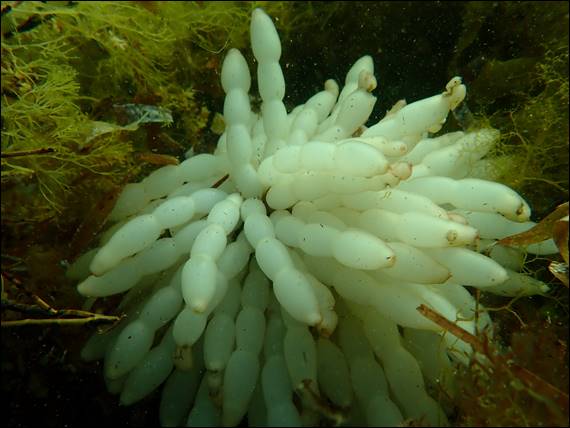
As I scoured the weed I came across two collections of eggs. Initially passing them off as Southern Calamari Squid eggs, the same as those I recently found off Higgins Cut. Those were confirmed as Southern Calamari Squid eggs using QuestaGame. These however where not straight cylindrical shaped, but instead looking like one of those oddly shaped long balloons that narrow and then widen out multiple times. I think these may be Bigfin Reef Squid Eggs, and will test my theory using QuestaGame to see if I am right:
Despite only being in my boardies I wasn’t feeling cold, but I was approaching the 45min mark and we were due to head to the neighbours for breakfast. Time to head in, and as I usually do I took a leisurely pace scouring the sand. I was again rewarded finding a Sparsely Spotted Stingaree, and this time I did duck dive down several times and get close. The thing that fascinates me most about rays being their eyes, and I wonder how well they can see and what I look like to them:
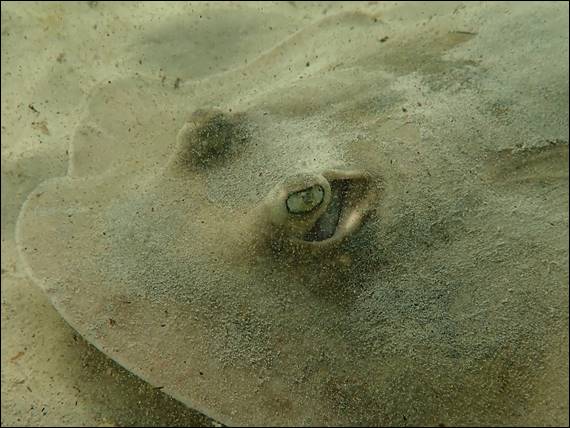
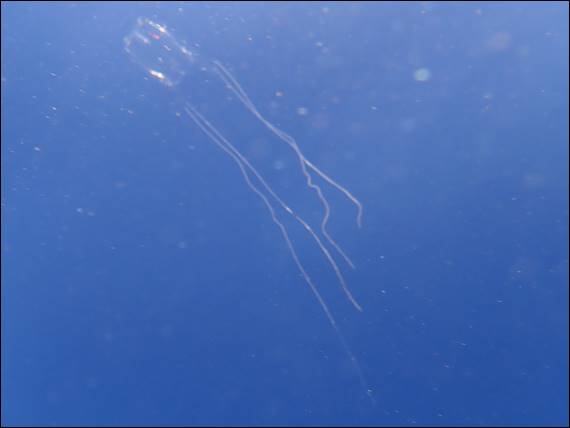
I was obviously not completely terrifying as I headed down several times and got really close. I persisted and kept going down I must have become sufficiently annoying, as it finally decided to swim off. Based on its rate of departure, which was not fast, I would say I was more of a nuisance than a threat. I was however warry as I headed back to shore, yesterday a stinger got me across my chest and I didn’t fancy a repeat performance. While not around in great numbers they are starting to become more abundant:
 Sandbagged
Don’t do a Steve Irwin!
LikeLike
No fear of that. I always approach these gentle creatures from the side at a slow pace. Never from the rear or going over the top of them 👍🏽
LikeLike