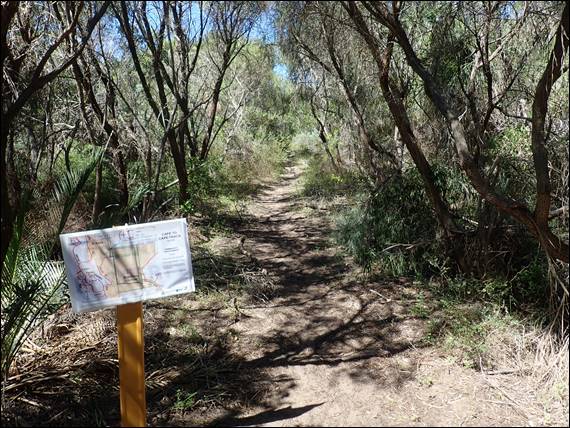
I’ve been told off once or twice before when I have included an image of something that some people have been less than comfortable with seeing without prior notice. So this is an upfront warning that there is a bug or two in this one, including one of our eight legged friends. Yesterday I handed Lisa our book on local walks and suggested she might like to pick one, so it was we headed out today for a circular walk at Blackboy Hollow near Prevelly. The book is aptly called “Walking Round in Circles”, however on arrival we discovered that part of the Cape to Cape trail that we were supposed to use had been redirected only just recently in August this year:
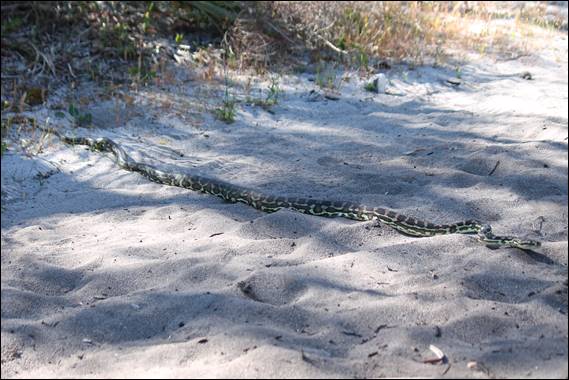
As such we couldn’t complete the intended circuit, but not put off we instead followed the realigned Cape to Cape trail with the intention of walking there and back instead of in circles. Early on Lisa spotted a beautiful four foot Carpet Python crossing the sandy track. I was too busy looking in the adjacent bush scouring for orchids to see it, but she promptly told to me to stop in my tracks and just in time so as not to frighten it away. While it would have been possible for this python to give me a nip, it is harmless so I was never worried. Both the snake and we stayed there motionless, we watched it until it quite literally decided to do a U-turn and head back into the undergrowth:
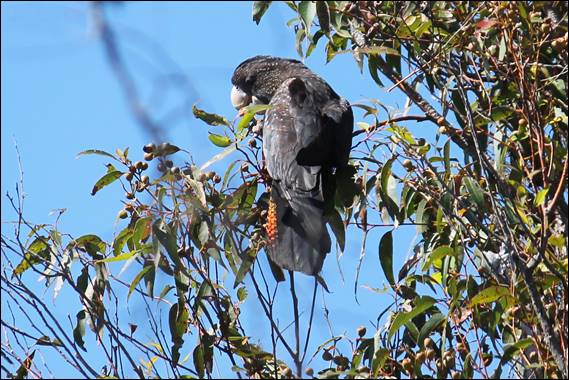
It was a cracker of a way to start the walk, and so now my eyes were tuned into not just orchids but also anything that moved. The next large creature we came across was a pair of Red Tailed Black Cockatoos, happily munging away on the gum nuts. Below is an image of the female, which you can easily determine due to the speckled white pattern on the head, abdomen and upper part of the wings. The male, which was also clearly visible on another tree being all black. If you are keen, you may like to try to spot some of the differences between this and the similar Long Billed Black Cockatoo, other than the tail feather colour, by flicking back to my post Fire and Water. For example the white patch over the ear-coverts for the latter:
While the focus started out on orchids for me I was also taken by the stunning banksia flowers. So far on our walks we have only seen the dried up cones after they have flowered and while very cool to see as this image shows, they are even more impressive when in flower. This is the Bull Banksia, with one of the largest flowers and as such called Banksia Grandis. Sadly many of these trees lay fallen, presumably having being struck down by phytophthora dieback. Spread by us people trudging our way along this trails:

As we went on our way we spotted many of the seemingly ever present Cowslip Orchids. We also spied a number of other repeat finds including Purple Enamel, Donkey and a variety of different coloured Scented Sun Orchids. These were not in the same great numbers that the Cowslips Orchids could be found and in fact we only saw a couple or even one of each. The other repeat find was the Forest Mantis Orchid (below), which we saw quite a few of during our walk. The reason for including it this image was not just so I could have an orchid image in this post, but due to the insect that I spotted:
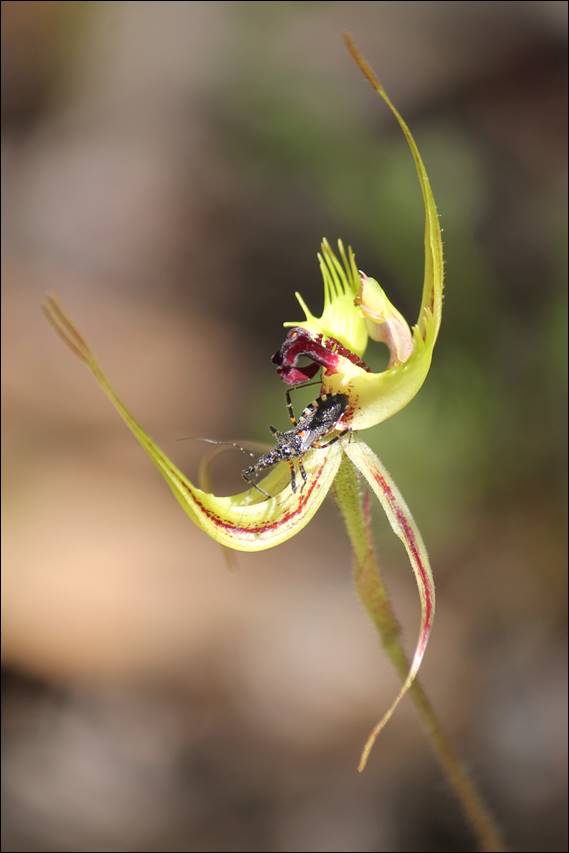
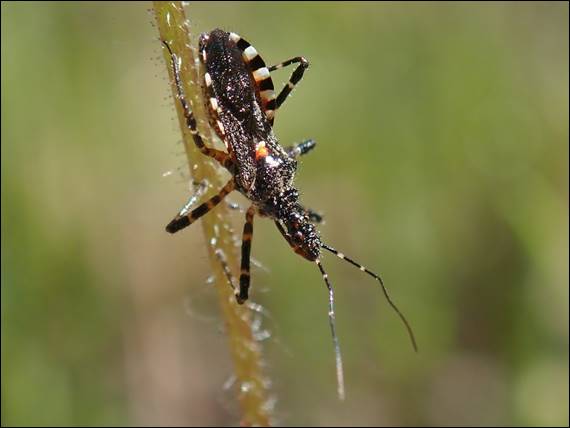
If you check out my post from a few weeks back called Flower Power, which set off this great Orchid hunt, you will find an image of a Cowslip Orchid with a few bugs on it. There is a beetle with its head buried in the flower having a feed and some much larger bugs. Well this find is the same as those bigger ones. It is called an Assassin Bug and in that previous post they were attempting to catch the beetle, which they didn’t manage to do. Narrowing it down further I believe this is a Kissing Bug, sometimes called a Vampire Bug, as it uses its long rostrum to pierce its prey to suck out blood. You can see the rostrum folded back underneath it’s head:
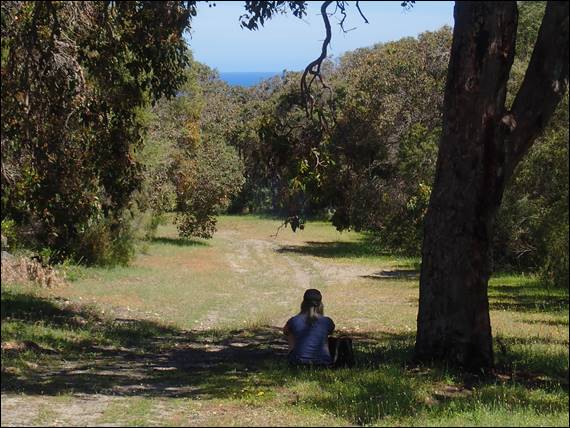
Due to the rerouting of the Cape to Cape trail the section of the circuit that was supposed to have the ocean vistas was not accessible, which was a bit of a bummer. While seeing all of the wonders on offer was amazing, we both also enjoy coming round the corner to be greeted by a great expansive view out to the beyond. As it was due to deciding to go there and back again, we picked a number of steps and when Lisa’s Fitbit indicated we had reached our target we stopped for a snack. At least at this point we got to see a bit of the ocean:
Like the magnificent Carpet Python it was our turn to do a U-turn, and head back from where we came. While we saw heaps of them on the way out I’ve included this particularly lovely clump of Swan River Daisies that we spotted on the return leg. This is in part as Lisa really liked them, but also just because they are so bright and cheerful looking. Unlike so many of the native flowers over here, these plants reminded the early European settlers of the flowers from their homelands. As such they have become a popular garden plant:
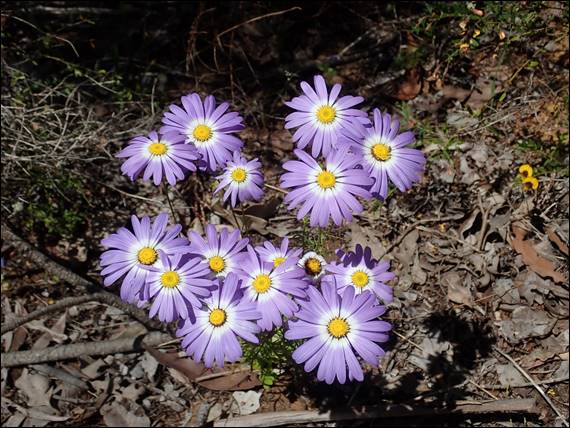
In the background of the image above you might spot some of the yellow-brown pea flowers, which are commonly referred to as Egg and Bacon. There are loads of different types of these flowers, and they are all very striking with their neat symmetrical shape and very clean cut lines and colours. Now, Lisa will often remark that it is not a bad thing to return the same way as you came, as you tend to spot things that you would otherwise have not seen. This was very true and we spotted more and more Forest Mantis Orchid, as well as the only Donkey Orchid we could find:
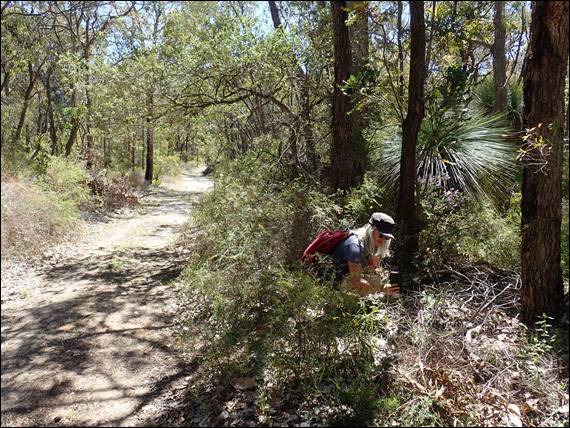
As I was carefully getting into position to check the Donkey Orchid, which ended up being the same Common Donkey Orchid we have seen on several other walks, I spied something that looked quite different. It looked like a sun orchid, so named as they only fully open in bright sunlight, but from the solitary flower that was open it was obvious this was not one we had seen before. While it is a member of the sun orchid species, we had stumbled across a very cool looking Leopard Orchid. Needless to say this made me even happier than I already was:
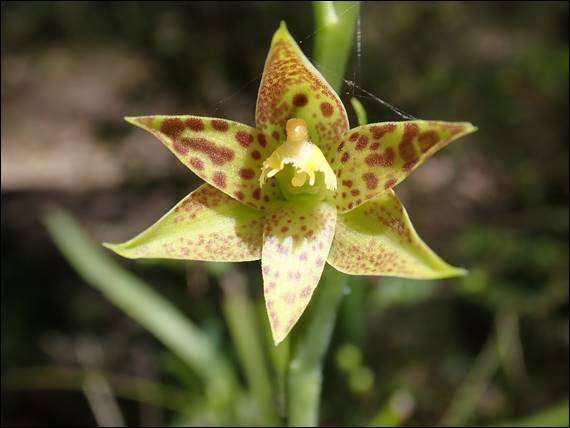
As a result of the diversion sadly much of the walk followed firebreaks. While this meant we could walk side by side, there is something nice about following a narrow trail that weaves through the vegetation, resulting in the sight that you may see round every turn and twist being unknown. Still it was a lovely day to be out and we had seen a heaps of great finds. We even got to have a bit of a vista towards the end as we descended back down into the gully valley to return to the car:

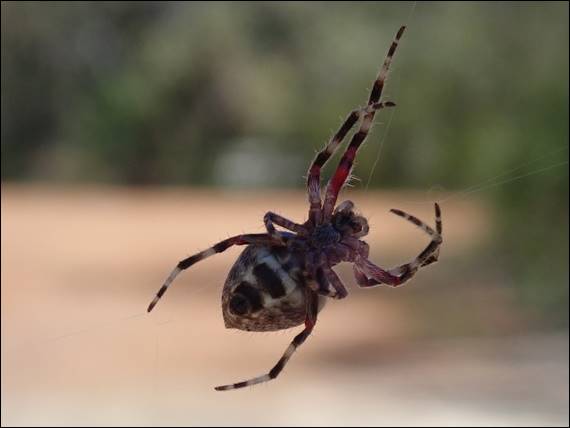
Seeing I made reference to an eight legged friend, I had better include it in this write up. I told you in the post about our last walk about (Fire and Water) how I have joined QuestaGame. This has made me curious to find things that I can put on the App to test the experts, who verify your finds. It is through information I got via this App that I was able to confidently name the Assassin Bug, but I am guessing and quietly confident about it being a Kissing Bug. It will be interesting to see if the experts can help me identify this spider:
 Sandbagged