All fired up after a couple of great walks and good number of orchids under my belt, I decided to test what the home turf had on offer. So jumping over the back wall of our garden I trudged through the small reserve to see what I could find. There were lots of Pink Fairy Orchids about but no other ones. We live on a sand dune and so the next day I thought I’d try out the lower lying local Tuart Forest National Park and see what that had on offer:
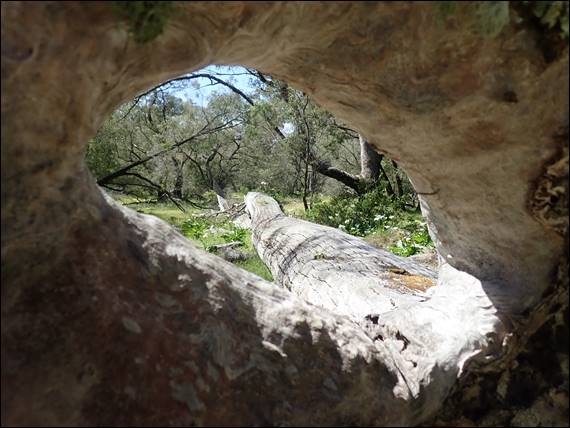
We drive past and through the National Park to get in and out of Peppermint Grove Beach, and it is the largest remaining pure forest of tuarts. While it is a very special place it is overrun with Arum Lilies and pasture grasses, just like the little reserve behind our house. It is possible to find small pockets where the wildflowers managed to survive, and these areas spring to life with colour:
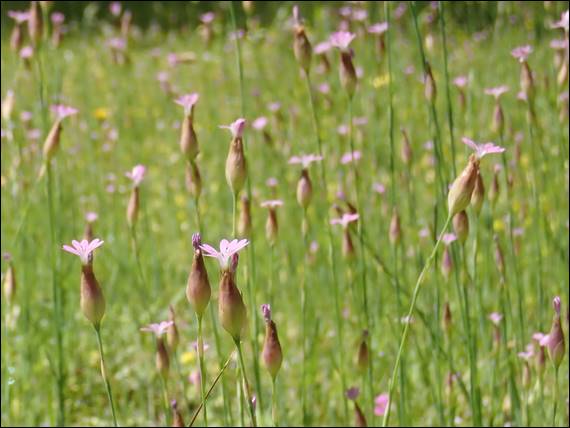
I’ve worked in river restoration for many years and a key aspect is the rehabilitation of the banks with appropriate flora. The biggest struggle is managing the weeds, which grow at such a rapid rate. We have spent close to 200 years perfecting the landscape for agriculture, and with these successful grasses and clover abound, it is incredibly difficult to reverse the process to give the native plants a chance:
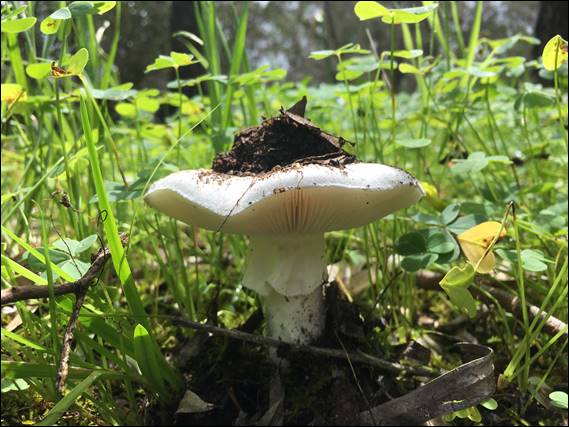
Undeterred by the battle of the lower storey, which is mostly won by the invasive weeds, I wandered under the tall tuart trees checking out what I could find. I’m sure these two flowers are related, both with stripy and spiny receptacles and five similar shaped petals. The flowers are less than one centimetre across so had to get down on my knees and get in pretty close to get the images. I only found the one on the right in one location, whereas there were more places with the left hand variant:
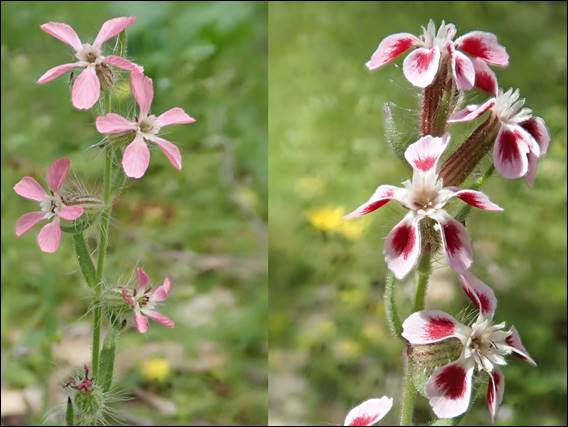
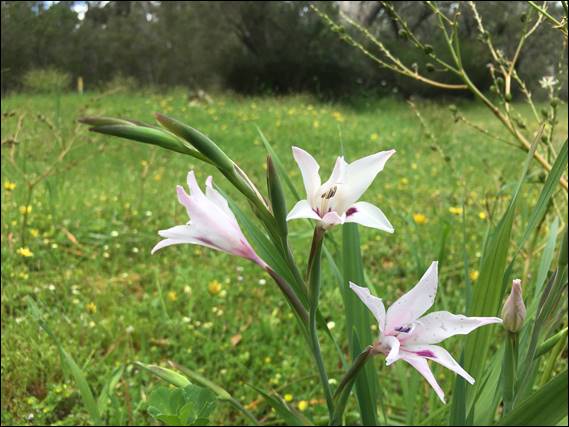
With so many weeds over here it is hard to know what is and isn’t a weed. Quite often the more leafy plants with larger flowers are weeds, such as this Long Tubed Painted Lady. Originating from South Africa and introduced as a garden plant, it is now viewed as being high on the priority list for removal due to its ability to spread quickly. Something pretty evident in this National Park:
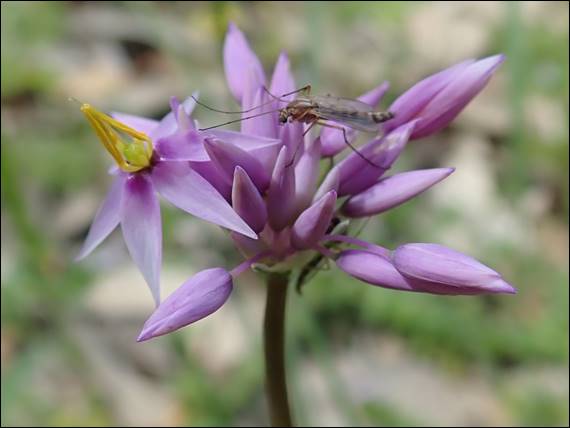
Now it may seem that I was having a fine old time of it in the tuart forest, but… there was one pest here that really was very aggravating. The mozzies. It seemed like there were none about but as soon as you stopped moving they would close in. Wasting no time in landing on any exposed skin, ready to stick their proboscis in to suck out some blood. They even dive bombed a few images such as this one of a Purple Tassel Flower:
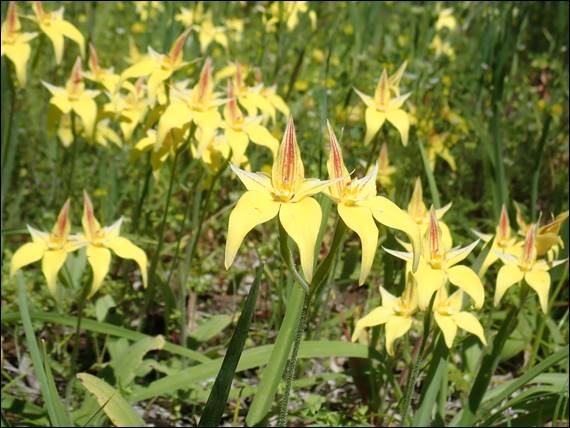
The purpose of this walk was once again to see if there were any orchids, and indeed there were. Lots and lots of Pink Fairy and Cowslip Orchids. Having seen a fair few already I didn’t stop to observe them due to the clear and present danger of being attacked by clouds of mozzies. I did however have to take this image, as there were bucketful’s of Cowslips more than I have ever seen in one spot:
Lisa was wise and didn’t join me on the two backyard walks. She did however tag along today for a wander up to Cape Naturalist. There were two very good reason for why she was keen to head here. Firstly she has some new walking shoes that needed a test run to see how they treated both her fused toe and the other arthritic one. The second reason was to get a chance to spot some whales:
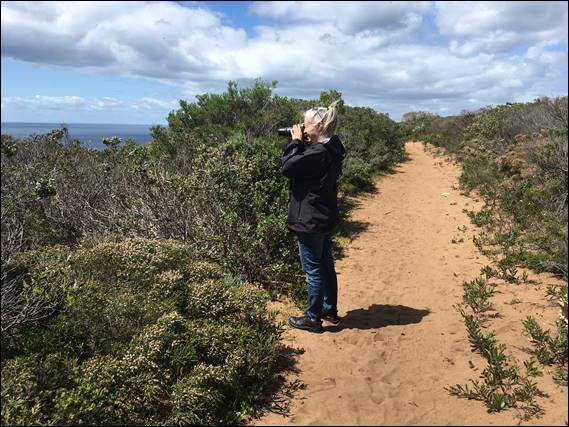
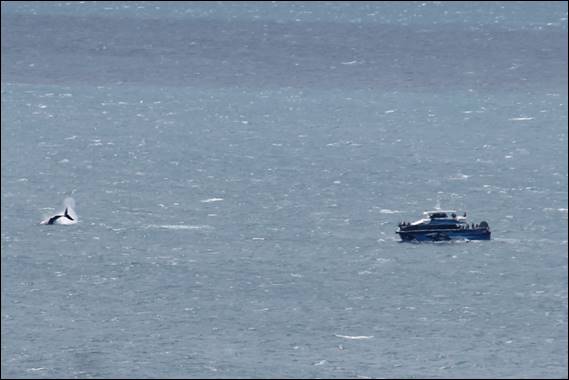
Sure enough they were out there, quite some way off but we could make them out with the naked eye and with a 200mm zoom could just about take an image that was worth including here. The Naturalist Charter whale watching tour was out on the water and finding plenty of flipper and tail action and the occasional breach. Maybe one day Lisa and I will jump on board to get a bit closer:
Being school holidays and a weekend the carpark was packed, but we managed to avoid most of the crowds and even lucked the lookout to ourselves for a period. Unlike my last few wanders there were no mozzies here to annoy us, but on the flip side there were also no orchids to be found. Some flowers were out but I’ll spare you any more close up images in this post:
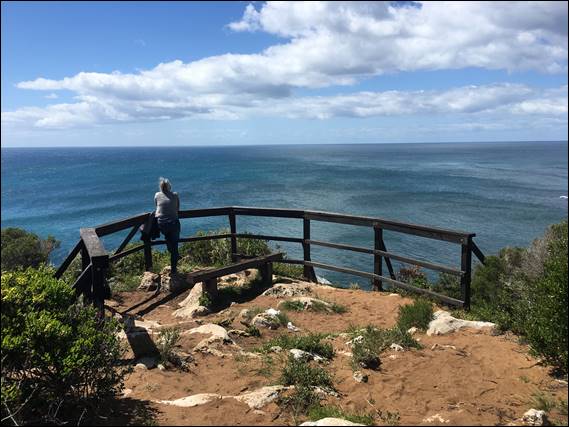
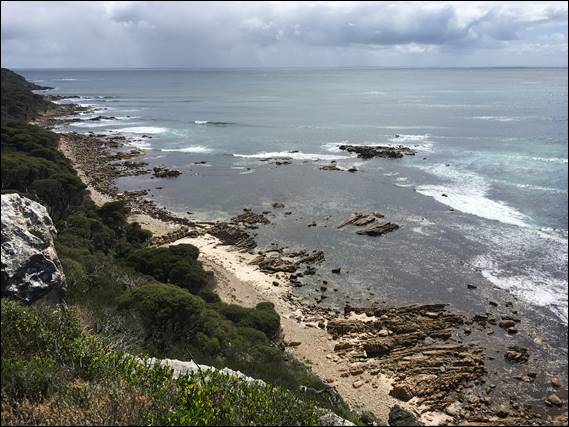
From the lookout there is a large rock outcrop that is far enough out to always be surrounded by the ocean. This rock is home to a seal colony, and with seals about you tend to also have a good chance of finding larger sharks. It’s not surprising to therefore hear that sharks sightings, near misses and attacks in this area are not uncommon. This doesn’t seem to stop people taking to the water for a surf in relatively close proximity to this area, and they say I’m crazy climbing rocks:
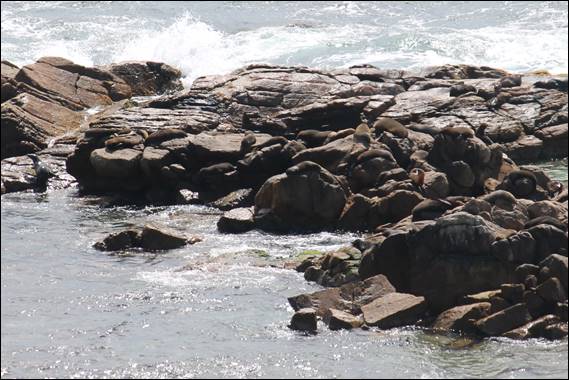
I got all excited when I could see a sea lion swim towards the rocks, clamber up and waddle along. You can make it out on the left-hand side of the image below. The image, like that of the whale, is not great but I had to include it. Both Lisa and I were very surprised when we got home to see how many fur seals, which we had not noticed while out there, were lounging on the rocks. We are home now and it our time to lounge about:
 Sandbagged
Is there any afford being made to get rid of those lilies? Pretty bad in whole of the southwest….
LikeLike
The plant is a declared pest under Clause 22(2) of the Biosecurity and Agriculture Management Act 2007, so there are requirements on land owners. It is a Category 3 pest so management is required (https://www.agric.wa.gov.au/declared-plants/declared-plant-requirements). However, I doubt very much that these requirements are actively enforced. Howsie will probably have a better idea than me…
LikeLike
The Category 3 pests are the landholders responsibility to manage and that can be enforced by the State Dept, however due to lack of resources they will only enforce on one pest each year which is determined by the local community led Biosecurity Groups which have formed in some regions – but not Geographe or Augusta-Margaret river. However the Catchment groups down there – lower Blackwood and Nature Conservation Margaret River, have nothing had some really good Arum lily control incentives, offering 50/50 funding to landholders wanting to control the lily. So some good results on private land but unfortunately the crown land is still problematic. Actually quite easy to kill with the right chemical but needs year after year of treatment and the seeds will always be spread by birds
LikeLike
That should say the catchment groups have “both” had some really good incentives. (Not “nothing”) 😖
LikeLike
Thanks Howsie
LikeLike