While I realise this isn’t about climbing or snorkelling I didn’t feel there was any harm in diversifying the topics of my blog. So after coming across my first orchid of the season down at Wilyabrup yesterday I thought Lisa and I should do something we haven’t done for a while and that was go out for a wander somewhere new. I’ve had a place in mind for several years that isn’t too far away and is renowned as a great wildflower spot:
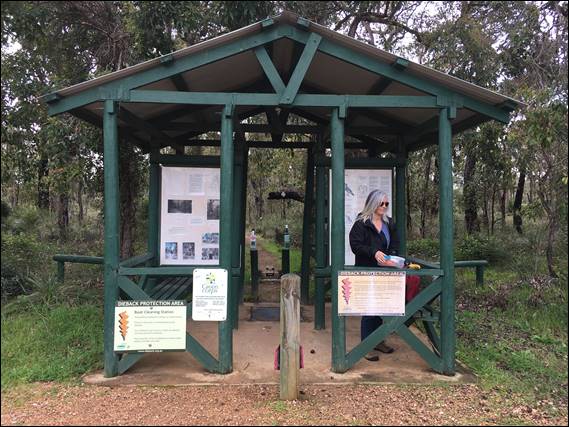
So it was that we found ourselves at the Ambergate Nature Reserve. I said in yesterday’s post that I do not have a wildflower guide for this area, but I do have an orchid guide and this place is quite well known so Google has helped with a couple of images but not all. Our first find was a spider orchid, and for those that know there are heaps of different spider orchids so I’m going to take a stab and say this one was a Carbarup King Spider Orchid:

The main reason I took the above image, which didn’t turn out as great as I hope, was due to the spider that that was sleeping inside the labellum. It had also craftily used its web to pull the petals and sepals together to create a more protective house. In the image below Lisa went off the beaten track to check what was hanging in a tree, which turned out to be a bat box:

Stepping off the path you do need to watch where you step and it probably not a good thing to do, but this place had little goat tracks all over the place so at times it was hard to resist. No doubt avid orchid and general wildflower hunters scour every inch of this 75 hectare reserve, which volunteers have helped make accessible with a 4km circular track:

Above is a Red Ink Sundew, one of the many types of sundews we saw. Most were of a creeper variety but this one was a ground dweller. It could be found lurking in the undergrowth and leaf litter awaiting unsuspecting insects foolish enough to be attracted by the sweet sticky meal that exudes from the hairs on the leaves:
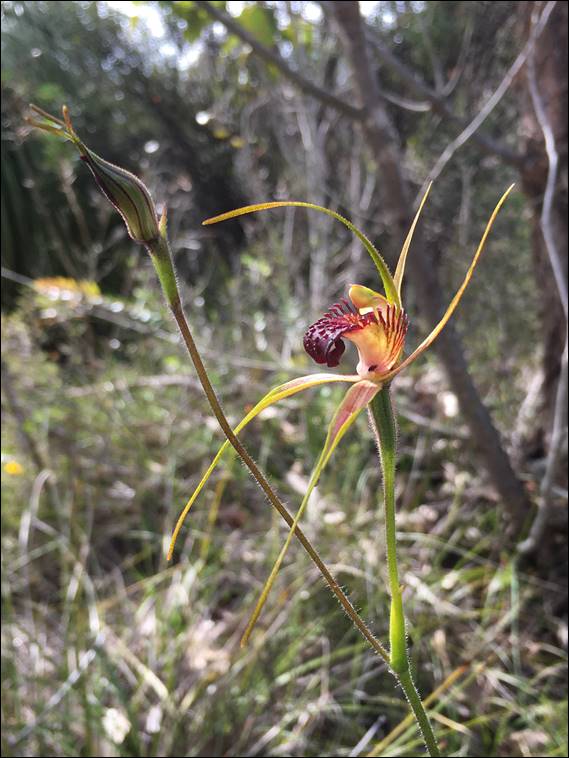
I have to confess that while we saw lots and lots of spider orchids we didn’t pay enough attention to identify the different varieties. The above is a Karri Spider Orchid. You may be thinking I’m just spouting names, but for each image I have carefully checked the leaf and sepal configuration, size and colours, as well as that of the fringe and calli (the parts of the striking centre piece):

We also came across heaps of variety of what I think are pea flowers, there were way too many of them to take images of and then try to identify. Lisa and I love these small but striking flowers as they remind us of our time in central Australia, not the same variety but similar in shape. It was then we came across a completely new orchid, the Rattle Beak Orchid:

In days gone past it would have been me slowing us down on our walks. Checking for new finds and then when I had discovered one looking at it from every angle trying to get the perfect framing for an image. However, times are changing and Lisa also seems to have started to follow suit, even hinting that she might convert some of the images into artworks at a later date:

As I type this post Lisa is rearranging the “art room”, so hopefully she will spend a little more time in there creating some more amazing artworks. Back to our walk and below is an image of a flower that I can’t identify, but I liked it due to the insect that for once wasn’t camera shy. The sun was fully out now and as it heated up more bugs were starting to show themselves:

We started to spot more and more of them feasting on the nectar that the spring weather was bringing out. These beetles are no more than a few millimetres long, but on such a sunny calm day I managed to get a pretty neat image of yet another unknown flower. The reserve is split by roads to form four quadrants and each one had a very different feel to it:

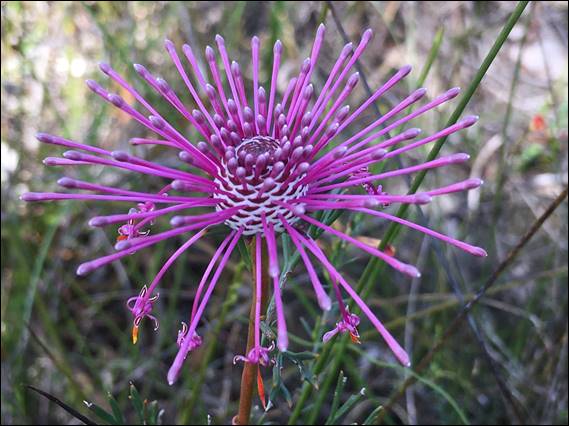
The variety of upper, middle and lower storey varied and this diversity resulted in us finding new flowers and plants as we continued on our journey round this magical place. We then came across this Rose Coneflower, probably the most stunning flower we found. At the end of each what I assume is a sepal a small flower sprouts from the bud, with some just starting to come out:
One of the orchids that Lisa likes the best is the Purple Enamel Orchid. While I agree the purple coloured petals are stunning and even more so when the sun hits them, I was more taken today by the back of the petals which have a great pattern that I have never noticed before. It took us a while to find one but after seeing one they seemed to pop up everywhere:
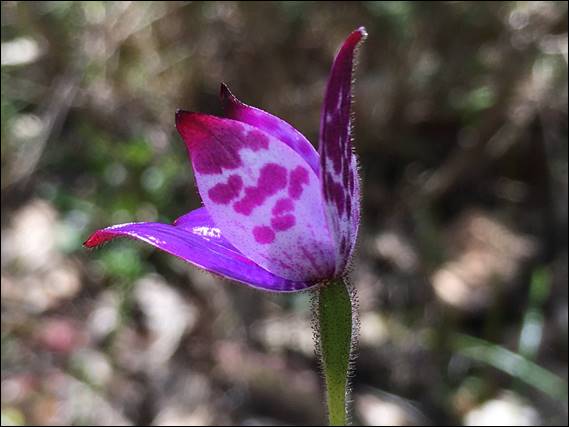
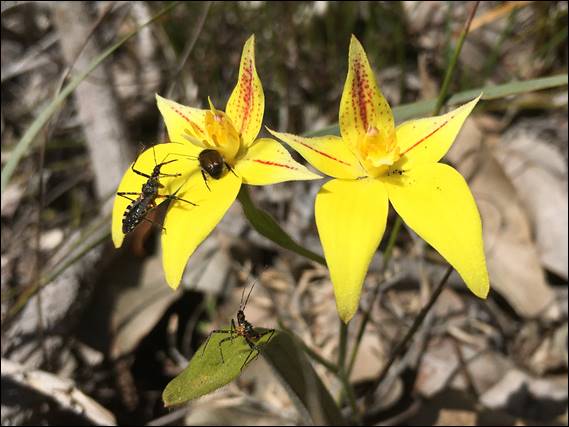
The Purple Enamel Orchid is almost as common in the south west of Western Australia as the Cowslip Orchid. Not that the bugs seemed to mind that it was so common. We watched the two larger critters fighting over possession of this food source knocking each other off, like playing king of the castle. Meanwhile the small beetle simply buried it’s head deep into the flower and gorged away, ignoring the other two as they carried on:
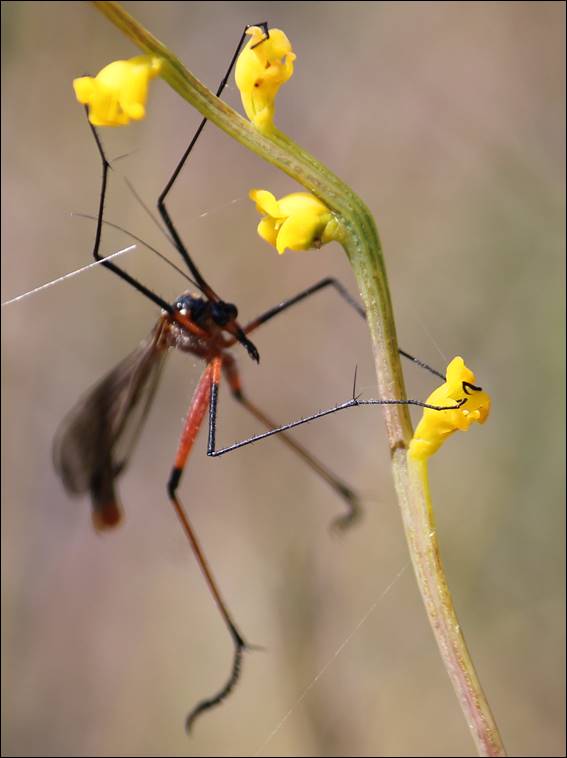
One last image of what I first thought was a dragonfly, but now I am not so sure. I don’t even have the foggiest as to what the flower it is hanging off is. It was pretty amazing to see how it would hang off three flowers with its gangly legs, which this would then position it perfectly to get a feed out of a fourth flower. It was no fluke, as we saw it fly to the next plant and do the same thing:
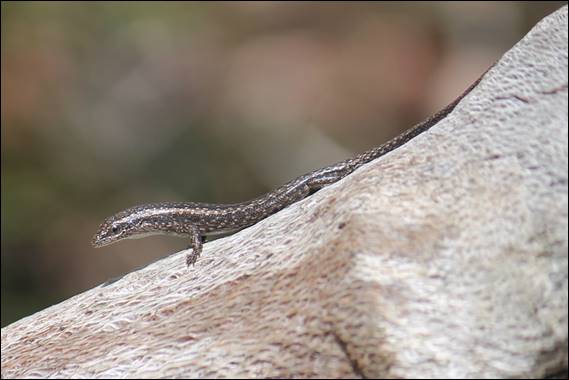
Of course where there are bugs, there are the next creatures in the food chain. We didn’t see too many, but a few small skinks did cross the path and hurriedly scamper into the undergrowth as we approached. This one didn’t see me as I crept closer and closer, while it seemed to be sunning itself. It was a great walk and the 4km took us three hours to complete, but we both spent a lot of time checking out the sights above and so many more:
 Sandbagged
Now I’m thinking I should probably take a camera for the Family camping trip next week at Mt Trio Bush Camp… Another enjoyable read Krish, enjoyed the change of pace
LikeLike
Enjoy Mount Trio Bushcamp a top spot! And if you see John and Margot as they do the morning or evening rounds say a big hello from Lisa and I 😊
LikeLike