For a few months now Howsie and I had a plan to head to Mount Frankland, and the timing coincided nicely with a south coast trip that Rongy and Wiggins had concocted. Howsie’s got a plan to hit grade 20s and Hannibal was in his sights. However, in the week before the trip Howsie was forced to self-quarantine due to someone he recently worked with having flu like symptoms. During that work trip he also managed to get ravaged by ticks and then to rub salt into the wound he was attacked by bees and ended up with an inflated foot, so needless to say he couldn’t make it:

The others were still going and I was, of course also keen. However, both Lisa and I really look forward to our tradition of fish and chips on a Friday night after a week of work, and it was a shame to miss that. So that is how I found myself being woken up by the alarm at 2:45 on Saturday morning, and ready to start the three hour trip by myself. Rongy and Wiggins had gone down the day before and so I made a beeline for the campsite. Half way there and the drizzle came, then it rained and finally it really rained. This continued on an off until I was almost there, and I nearly turned back because of it:
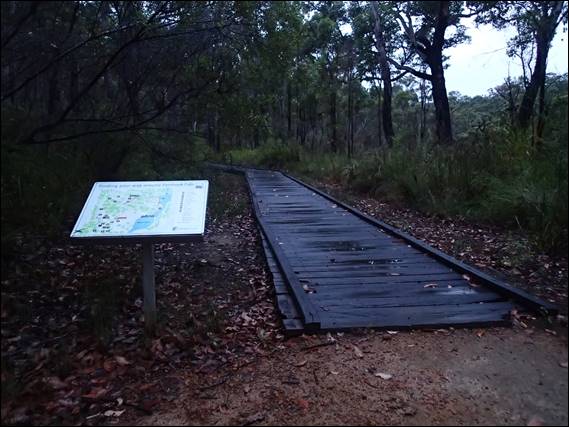
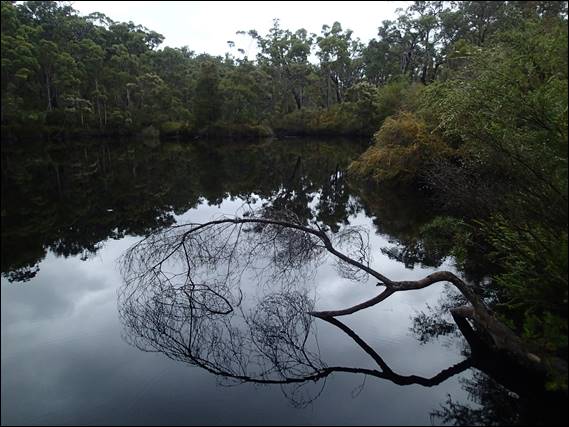
I arrived at first light, quite literally. It’s a dodgy road to be driving along in the twilight hours and the chances of seeing a roo are high. But I managed to get there without any incidents or near misses, and only three roo sightings plus two Tawny Frogmouths. Rongy was wandering about as light entered the world, but they had yet to really wake up or have anything to eat. So I left them to it and went for a walk to explore Fernhook Fall campsite, through which Deep River runs. Being the end of summer there were no river flows and the falls were dry and silent, but the pool was full and serene. It really was a beautiful place:
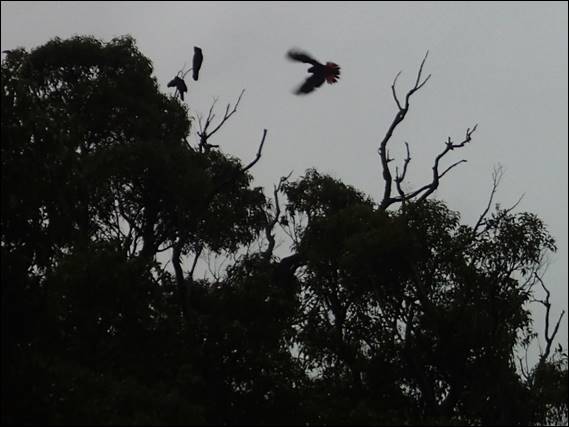
As it is nestled miles from anywhere in remote patch of native forest with towering karri, jarrah and tingle trees the only noise was that of the morning chorus, birds chirps and chattered. I would occasionally see a glimpse of them, large and small, as they flew between perches. Both the lower and upper storey was thick and with the low light it was hard to make out exactly what birds I saw. Up above was the familiar sound of the red tailed black cockatoos, it felt like I was back at Welly Dam, they were flying high above and I watched them circle round and land on a perch some thirty to forty meters above the forest floor:
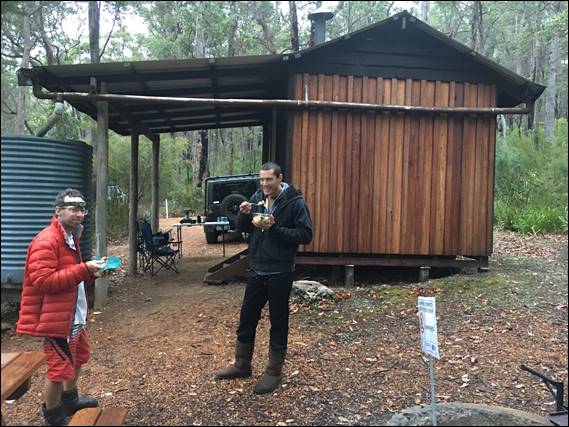
When I got back to the campsite where the boys had settled the night before, they were tucking into their breakfast. The campsite was empty bar for them, and that was lucky as they were able to nabbed one of the two cabins that are available at this location. It’s a first come first served basis, no prior bookings. After the night of heavy rain that had fallen they were quite happy to have had a cabin and not to have been in a tent. There was certainly no rush to get to the crag, as we already had a very good idea of what to expect. So I made myself a cuppa, as they got themselves ready to head out:
It’s about 25km from the campsite to the crag, on a mostly straight gravel road that cuts through the towering trees. Unlike the campsite which had lots of understorey and stunning grass trees the forest floor on the drive was mostly a reedy or flax grass. This is where we needed Howsie so he could tell us what we are actually looking at! While it was overcast and still relatively low light the grasses were still a vivid almost fluorescent green, making the forest floor literally light up. So much so that we stopped along the way and Wiggins and I were attempting to capture this impressive sight:
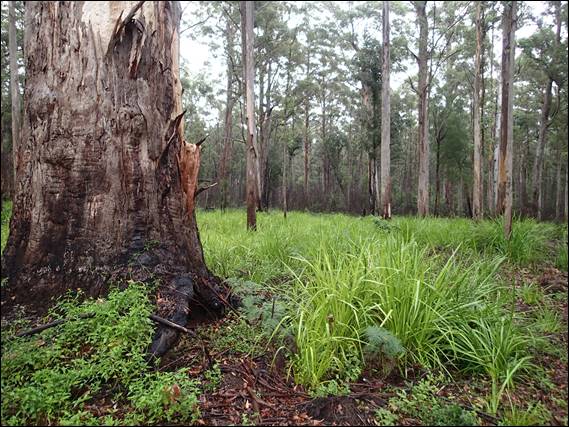
This forest is part of the Walpole Wilderness Area, which was established in 2004 and is an international biodiversity hotspot. The centrepiece of this particular national park, which is called Mount Frankland, is not surprisingly Mount Frankland. An enormous, for this landscape, granite monolith that sits high and proud at 411m above sea level and offers 360 degree views of the landscape that it sits below it. Being the highest peak in the area, and while it dampened the spirits just a touch, it was not surprising to see it shrouded in mist. The walk in is short only ten minutes tops, and as we skirted the base Wiggins got to work:
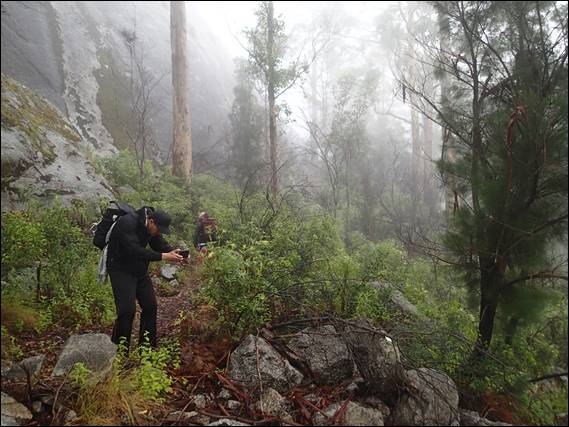
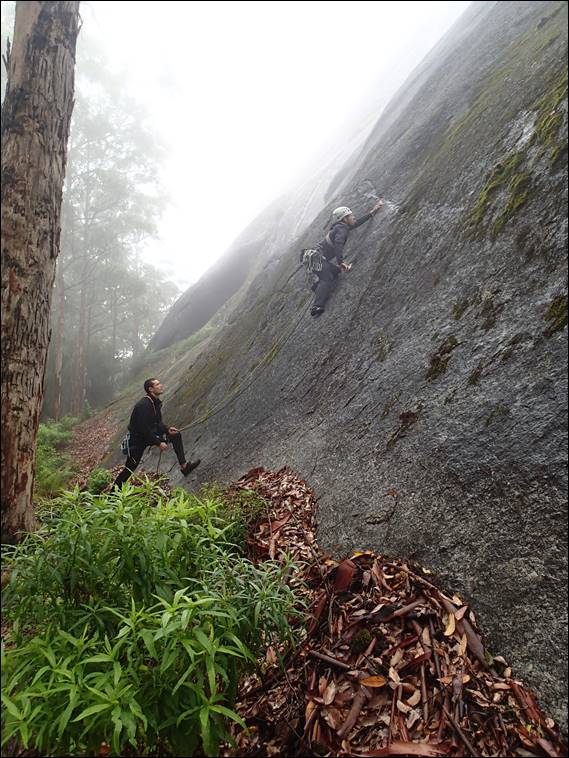
The climbs are all on the western side of this massive granite dome, a number of two and three pitch climbs some of which top out. The climbs generally have long pitches up 35m upwards so offering an opportunity to really work out those calf muscles and punish your toes. There are a few vertical walls and even some overhangs but on the whole this place is all about slab climbing. Having to start from the bottom up there was a need to tackle the lower slabs that are in the shadow of the trees and get less sun. This plus being the place where all the water ends up, makes them less than inviting on days like today:
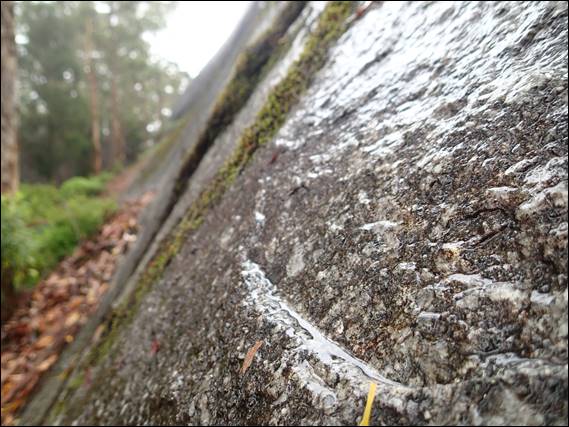
I was a little surprised when I looked back at images in my archives to find just how long it had been since I had climbed here, almost six years back. It was in winter (June) and the rock was in really good condition, much better that what we were facing today. Despite being at the tail end of summer it felt like we were in the heart of a wet winter. There were no dibs put in to take first lead, so I started the climbing on a route that I thought I had not climbed before called Free Willy. As I slipped (quite literally) my way up the wet rock I wasn’t sure what the day would hold for us:
The crux is half way up on this route and I had managed to get there without a fall, the route felt familiar and sure enough I had climbed it before. Despite prior knowledge creeping back into my mind I simply couldn’t get the rubber shoes to stay put on the rock, with its thin coating of moss nicely moistened up to make it feel like ice. Others however were quite at home and enjoying the conditions, such as this slug. It made a mockery of my attempts to get up the rock as it slowly and without any panic was solo down climbing head first. I eventually got up and was heartened when the last five to ten so meters felt a little drier:

Wiggins came up second, and found it challenging. He has not been climbing much of late and is certainly not at his ideally climbing weight (his words). We ribbed him a bit on that as technically with slab climbing more weight could arguably mean more friction based on the smearing technique required and basic physics. That said it was Rongy, the lightest of the crew, that seemed to be the master of these wet slabs as he made a clean ascent of every route whether on lead or second. While I pondered my slips and falls wise Wiggins said, as we sat on top, that it didn’t matter what happened as just being out climbing was the reward:

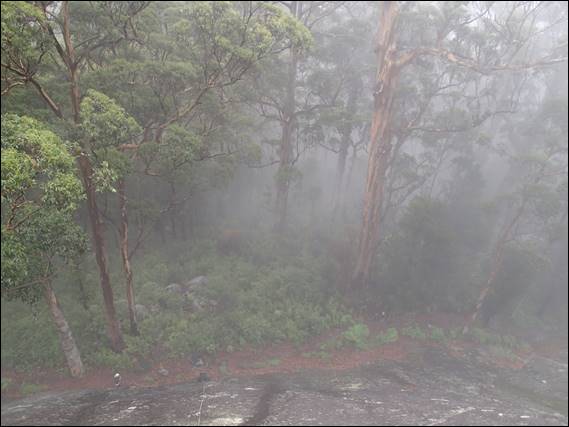
He was right I just needed reminding on that fact. The conditions brought character to the day and the mist continually rolled in and then out, making for an eerie but calm feeling. There didn’t seem to be much wind, which was unfortunate as that would have helped dry the rock. But enough to make the mist seemingly creep up from the valley and flow through the trees up the rock face. It only ever got as high as the first pitch, about 40m, before then tumbling back down the rock face and disappearing into the woods. Once we were atop the first climb Wiggins got a call for his dad to say happy birthday; I didn’t even realise that it was his birthday:
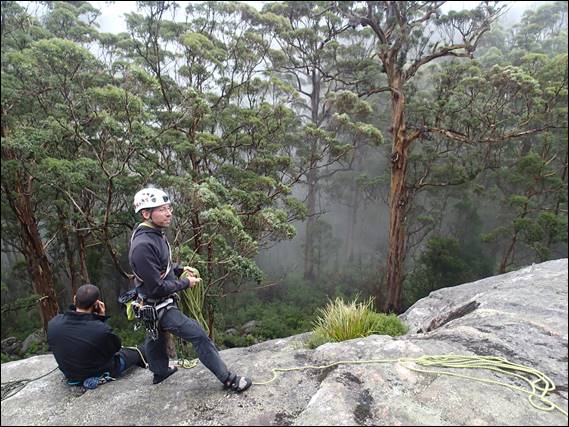
This first line was a one pitch climb, so now it was time to head back down. There are a number of routes that start from the terrace we had reached, but they are generally steeper and mostly harder routes so in these conditions we opted for another wet and slippery lower slab as the next climb. Rongy had indicated that he fancied climbing a classic traditional crack, called Silence of the Cams, but upon inspection the crack was running with water and thick with moss. On almost every trip that I have climbed here that route has been considered, but I am yet to climb it as it never has seemed to be in condition:
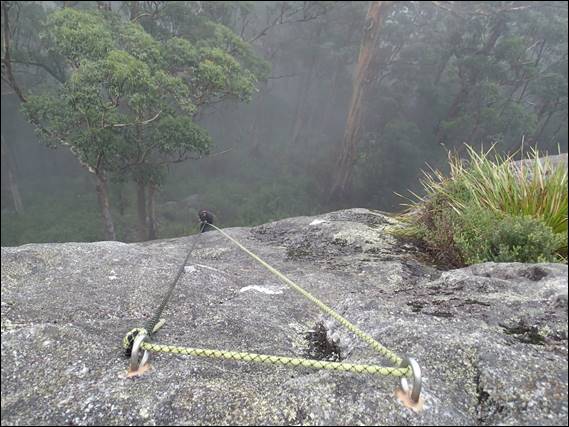
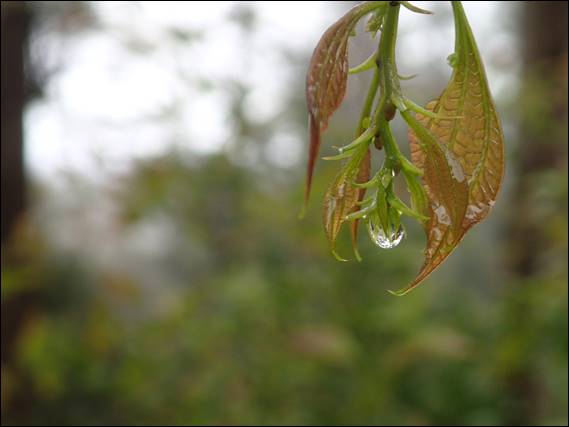
As Rongy prepared to lead on Burmese Tiger I wandered round checking out to see what else the moisture had brought out. I searched high and low but found nothing of interest or that seemed unusual. There were some very fine and small cobwebs with water droplets on them, Wiggins had tried to capture them earlier but the camera just wouldn’t focus on them as they were so fine. I thought there may have been some fungi about, but again nothing in the area that we were currently in. So I had to make do with checking out the droplets that were forming on the vegetation, providing a miniature upside down view of the world beyond:
Rongy was however not at all interested in what I was looking for. He started up the base of the route, the wettest and slimmest part. Despite the time we had taken on the first route, the conditions weren’t really any better and the rolling mist that just kept coming wasn’t helping. He was certainly very focused and somehow managed to stick every hold and move, climbing in these conditions makes you work so much harder. Some ten meters up he said that the conditions improved, or was it that the holds got marginally bigger and there weren’t so many challenges. In these conditions it’s all much of muchness:
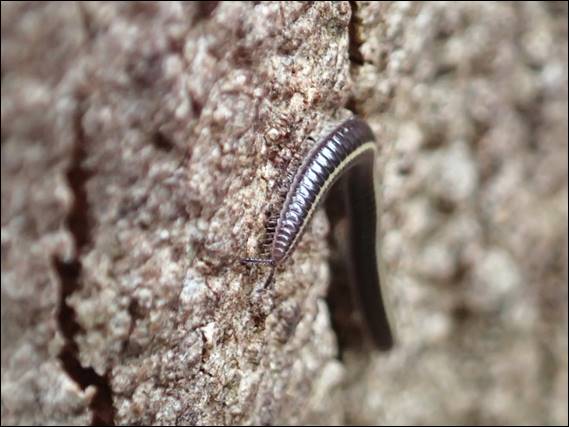
Wiggins went second while I continued to hunt for something different. It wasn’t until he had got to the top and the second rope was being pulled in and began to tug at my harness that I spied a little millipede. It worked its way across the flaky bark of one of the towering trees. As I was taking images as I watched it’s journey I could Rongy and Wiggins trying to figure out what I was up to. I was however in no rush to get onto wet rock I stayed for a while before finally having to commit myself to another slippery slab:
During Rongy’s accent I had chatted to Wiggins about whether to bring up the large cams, which the guide says were required for Dickheads and Dinosaurs. A towering 45m pitch on the upper wall, that provided steep slab climbing at a higher grade. My thinking from looking at it below was that it looked dry enough and that meant the cams came up with me. It sits above the tree line and the mist had not got to it, so I was hopeful. We wandered over and set ourselves up, and it wasn’t till I had tied into the ropes ready to set off that Rongy touched the rock and realised that it was not soaking wet but there was just enough damp moss to make it dicey. At grade 21 we thought it best to wait for a drier day:
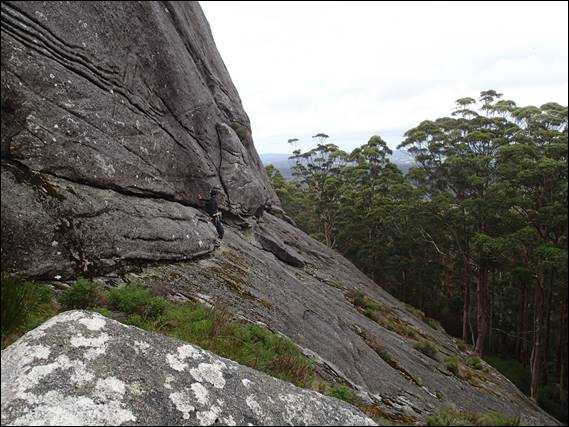
It was a shame and then I was faced with what to have a bash at next. The only line up there that looked in half reasonable condition and wasn’t a silly grade was Three Sheep Twice a Day. Well to be honest we only did pitch one which is called Sheep One, of course. We had all led this climb before and we knew it was a real puzzle of a climb, some long reaches, high steps, balancy moves and all this while you zigzag your way up to unlock the sequences. It took me an age but I hung on and made it up in one hit, and the others followed up thankful for some almost dry rock:

The only downside of the great pitch was that the last 20 odd metres was unprotected. The final slab was never too hard but did contain patches of moss that threatened to make you slip off if you made a sudden movement. It kept me very focused and we all three thought that it was a bit daft, maybe we had all climbed it before in dry conditions and hadn’t given it a second thought. The great thing about having done a second pitch was that we got to have a higher view of the trees below and landscape stretching out. This place really is stunning:
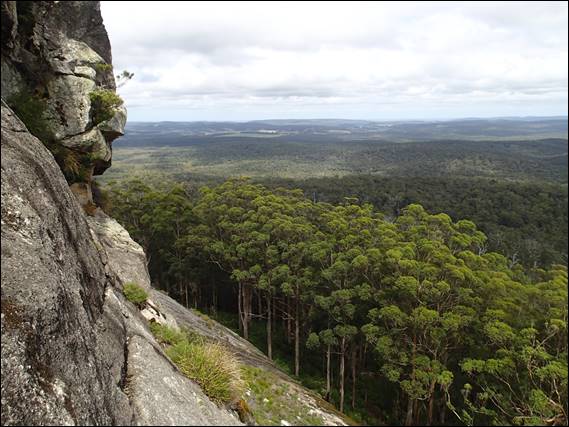
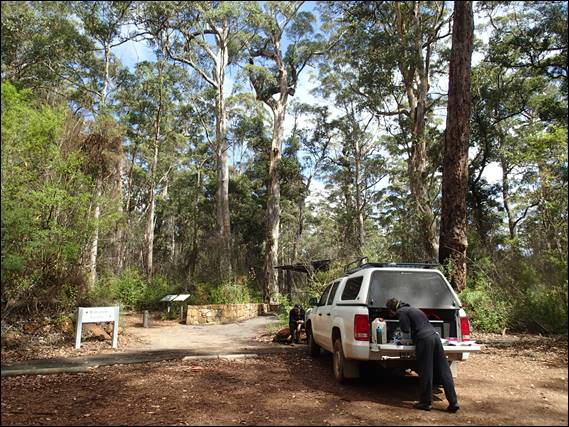
Three climbs in and it was time to get some tucker. As we walked out we had to pass Hannibal, which Rongy also had his eye on. So we walked to the base to check it out, but it was no use a coating of wet moss again told us it would be a stupid idea to attempt it. During the last climb we could see that the clouds were starting to break up. And by the time we got to the car blue patches were opening up and taking over the previously overcast sky. There was hope once more that the rock might improve, so we gave it a bit more time for the warming temperature to do what it had to do as we munched on wraps, bars and made a hot cuppa:
We had left our bags at the crag, and on the way back in Wiggins took his big back of toys. Due to the damp start to the day he wasn’t keen to take all his camera gear out for the morning session. Seeing things were looking up it was now time to bring out the fully array of equipment. He had already decided that with three climbs under his belt he was happy. Not being climbing fit these days and also due to the conditions he turned his attention to looking through the lens. I can feel another Wiggins production night coming on, if we are allowed to have such gatherings by the time he’s finished it:
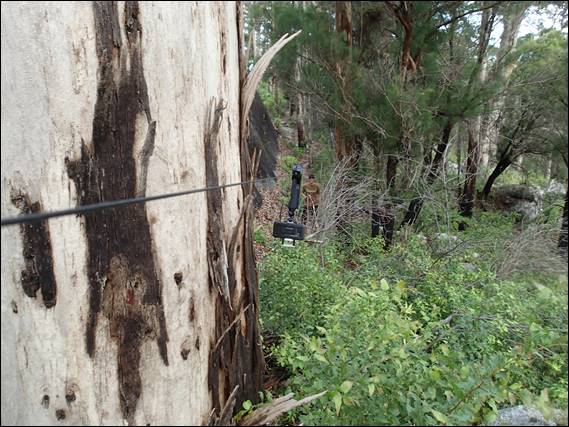
Rongy had chosen Where Eagles Dare for the next line, a stonking three pitch climb. Well the first two pitches are stonking the third is a bit of scramble to the top. So with slightly drier rock under his toes and the sun on his back he set off. The issue with all of these slabs is that the first five or so meters of rock are fairly well worn and as such the holds are super small and it is like climbing on razor blades. So for probably three of the four pitches we did from the deck the crux was on the wettest rock with the smallest holds:

That said, what makes this climb so memorable is that after the crux start the rest of the climb is wonderfully sustained. Great edges on steepening rock to a point where it almost feels vertical. Rongy was relishing this pitch as Wiggins was busily running back and forth with various filming devices catching a variety of angles. I meanwhile was content to hold the rope and look out for more bugs, and this time I was not disappointed as this colourful beetle no more than 5mm long crawled all over the rope:

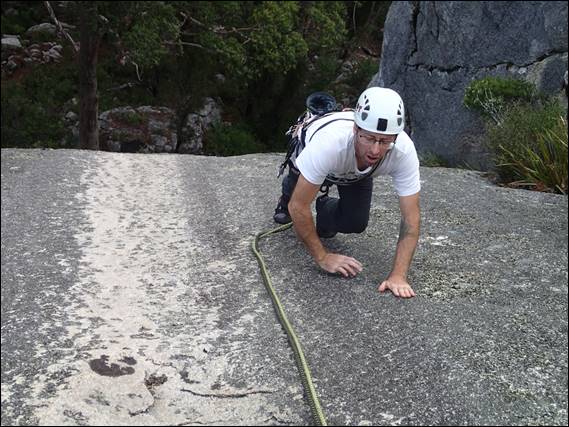
After following Rongy up we were both sat at the belay in the sun. I was wearing my buffalo jacket and starting to get pretty warm, so did something that I rarely do. The jacket floated back down to the deck as I set off in skins up the next pitch. The rock was warm to touch and dry, bliss! It’s supposed to be the crux pitch but we both agreed, and have also previously discussed, that the first pitch is harder. I almost ran up it, having to stop myself at certain places to enjoy the position and take it in. It was great fun and on the final few meters here is Rongy showing true slab technique by padding with feet and hands, just using friction and no edges:
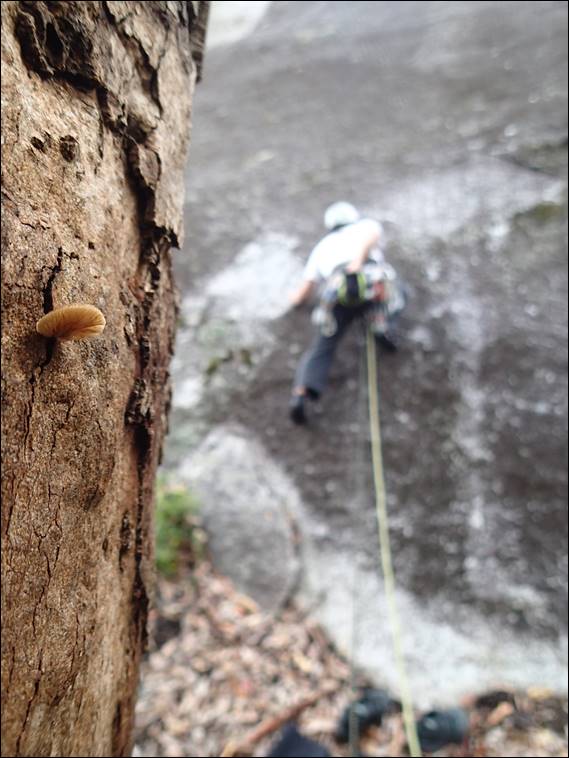
The next pitch was Rongy’s and he managed to land another ground up one, he did mention that he had an unfair amount of pitches of the deck. To which I replied, well you didn’t fancy the first lead… So after the wonderfully dry rock with super friction of the last pitch I’d done it was a bit of a struggle to get the head back into the idea of wet rock. I was glad it was his lead, and as he set off I concentrated on something far more interesting that was growing out of a crack in the bark. I got a little too distracted and Rongy was already going past the second bolt as I scrambled to put him on belay. I fessed up to my wrong doing and he just laughed and said he wasn’t surprised. Hopefully he will agree that it was worth it for this image:
Above the rock was much better, it was improving more and more now and he relished the pitch. We only intended to do the first pitch of the Granitarium, in part as it evened up the leads and also because the next pitch was described as a mossy slab that wasn’t very hard. I followed up struggling on the small holds, maybe due to the 3am start or was it that my toes were starting to hurt or that I had been pulling too hard on those holds. Whatever it was we decided that six long pitches was a good day considering the conditions. So we rapped down and started to pack things away:
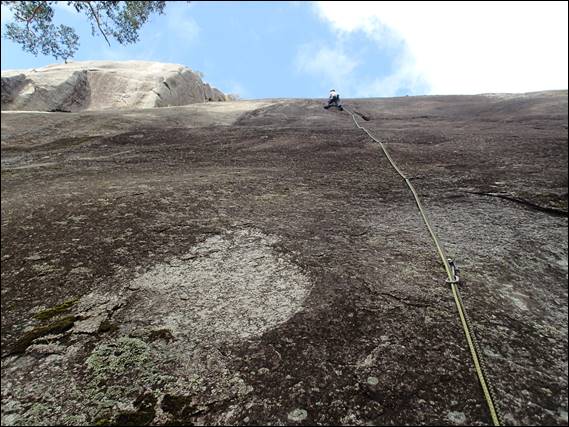
I had already hinted that I might drive back that night. Even if I had stayed I wouldn’t have climbed in the morning as I had to pick Steve up from the hospital. You can find out why he was in hospital in my fishy post. Anyway, I could tell that Rongy was keen he was looking up longingly at the blue sky and sunbathed rock above. So I folded and found myself getting ready to lead the first pitch of Well Stoned a true 50m rope starching pitch. Rongy then continued up the second much steeper pitch, and it almost felt like we could be climbing in Italy or Spain with the blue sky above:
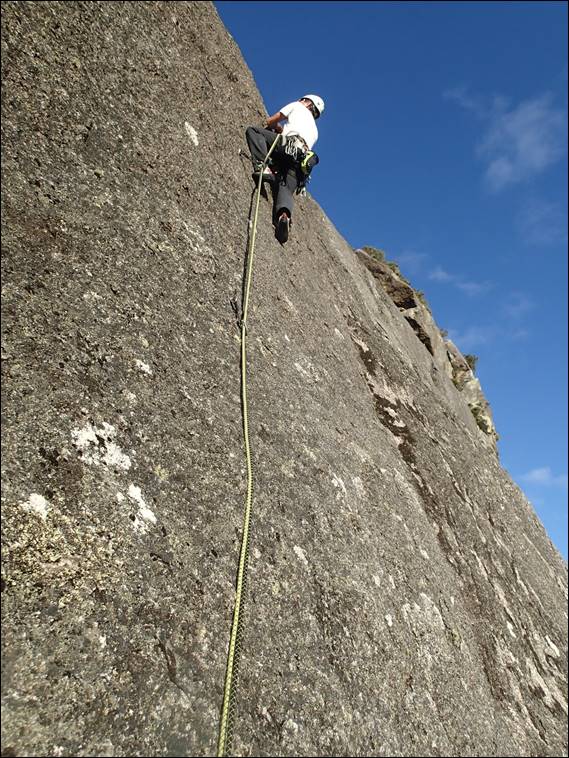
It was a good call, there was still daylight and it would have been a waste not have used it climbing. Plus the route was a lot of fun with both pitches almost completely dry and having a bit more steeper ground to shake things up. At the top of the final pitch Rongy reminded me that in the morning I had hinted at wanting to bag eight pitches, and he was not wrong, I just hadn’t expected to achieve it when we saw the conditions on arrival. But now my toes really had enough and the shoes had to come off, we admired the view and as the sun was starting to sink lower and finally rapped back down:
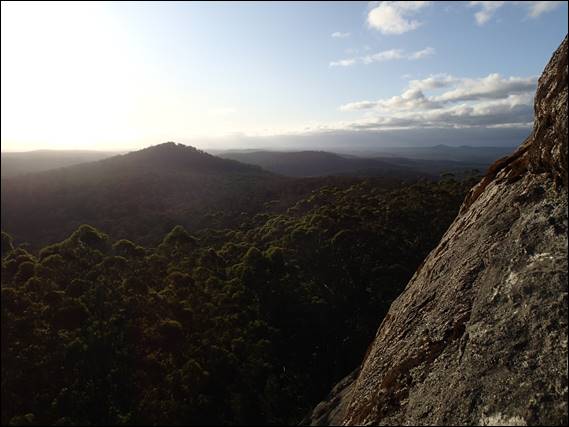
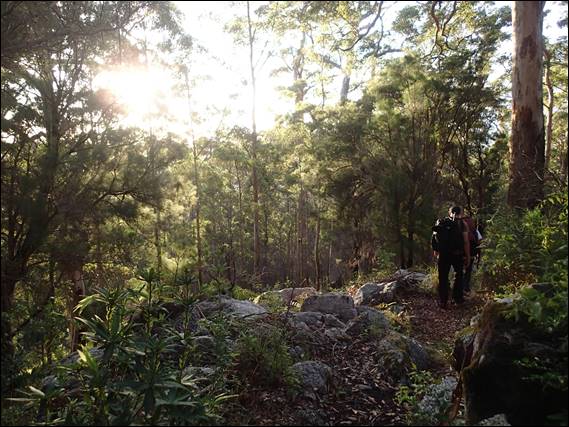
It was a quick pack up and then we walked out with the sun poking between the trees. Back at the car we threw everything into the back and drove out. It was a slow paced drive as it was again time to spot some roos of which we only saw one. I dropped them off at the camp twelve and half hours after I had arrived, we had certainly made the most of the daylight hours. Despite the sun dipping down and darkness creeping in I decided that I would still drive back home that night. So I left them to their glamping in the cabin and headed out:
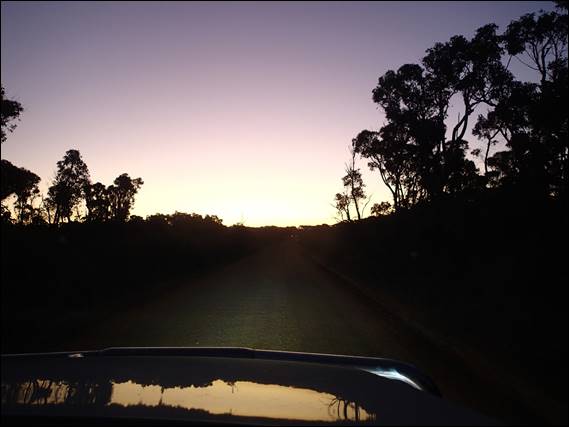
By the time I got off the gravel road it was dark, and so the three hour return trip started. Lisa was expecting me to stay over and I hadn’t told her otherwise. I counted down the towns as I passed them, the big milestone being the first one. Getting too Manjimup was the longest leg and once I was passed that there was less forest to go through. I called Lisa on the way home and chatted as if I was down at the camp. She never twigged so when I pulled up at the house I sent her a message to make me a cuppa and check the front door. As she popped her head out her smile and the hug I got was priceless:
 Sandbagged
3 thoughts on “There and back again a climber’s tale”