Howsie and I drove off for an adventure a few days back that took us some 600km east to the remote crag of Peak Charles. Despite this place being a bit of a mission to get too it happened to be my third visit, the first being in October 2007 with Craig and then again in April 2013 with Steve, Rongy and Wiggins. These kinds of destinations are as much about the journey as the climbing, and on this occasion we took that little bit more time to stop and check out a few things. The first was to take in the amazing vista of Lake Dumbleyung, almost full of water, which has been a rare occurrence over the last fifteen odd years:
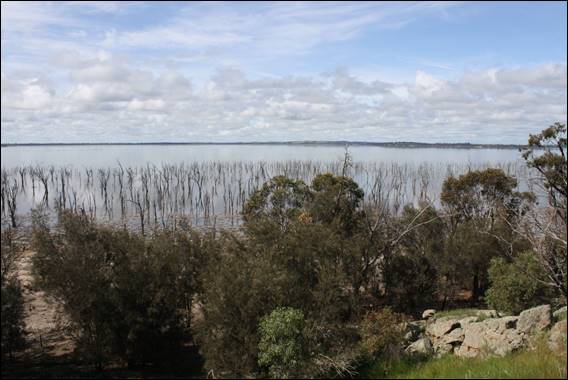
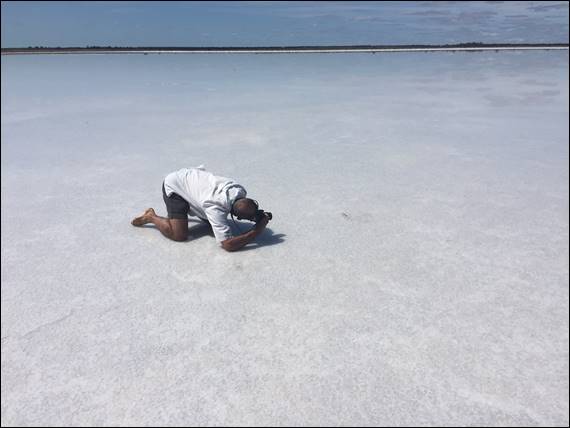
Lake Dumbleyung is where Donald Campbell’s famous 1964 world water speed record was set, reaching just under 445 km/h in his jet-powered boat called Bluebrid (version K7). Of interest the current official world water speed record is only 511 km/h so not that much more, which was achieved way back in 1978 at yet another inland Australian lake called Blowering Dam Lake in New South Wales. Lake Dumbleyung is a salt lake, and during dry spells becomes a flat crust of salt. As we approached Lake King we passed a number of much smaller such lakes that didn’t have water, and stopped at one to walk out on it and take a few images:
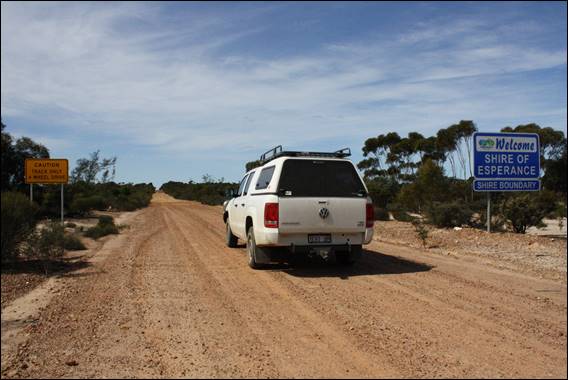
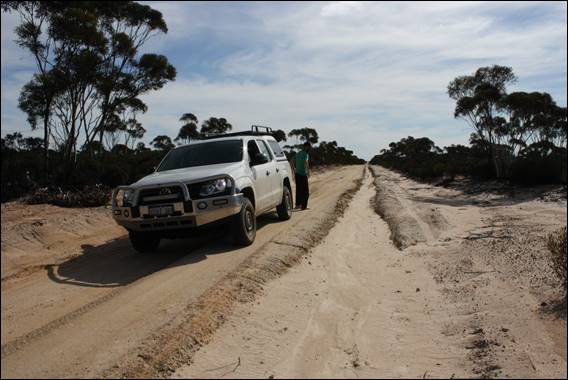
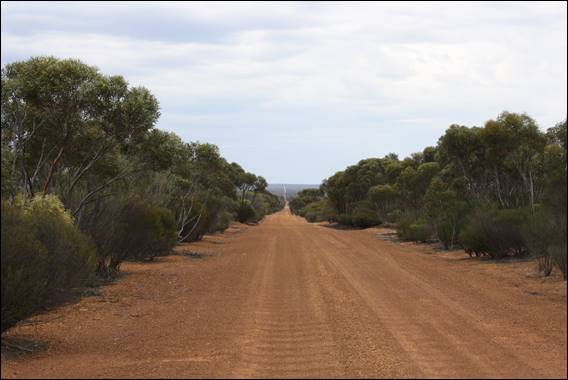
After Lake King there is another 200km’ish to go, of which 180km is a gravel road. The first 90km of this stretch is like a highway and you can cruise with confidence at 100 km/h. Then you hit the boarder where the Shire of Lake Grace meets the Shire of Esperance, and suddenly this awesomely maintained gravel road becomes an “unmanaged” track in the words of the Shire of Esperance staff. They even have a warning sign and state that they very rarely maintain it. Our speed dropped dramatically and we had to weave round numerous large potholes:
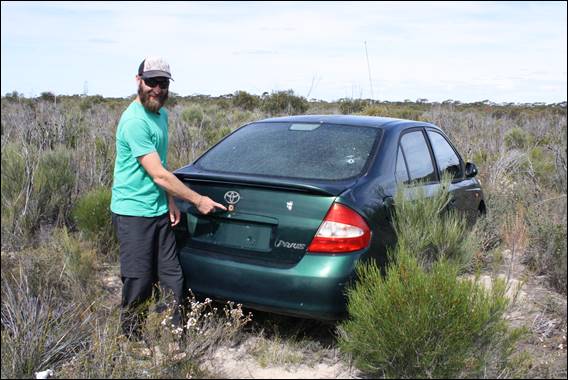
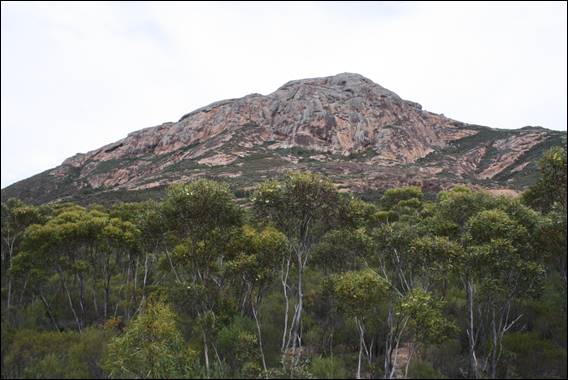
Just past the boarder we caught the first glimpse of our destination so we stopped to take an image and rest up from the potholes. It was still some 80km by road and approx. 60km away as the crow flies. We soon stopped again due to finding an abandoned car 30m into the bush, as we approached it we could see bullet holes. When we looked inside there were fortunately no bodies or signs of blood, so we carried on only pondering for a short time as to what had happened:
The road wasn’t as bad as I thought it may have been, there were two or three washed out sections but nothing most cars couldn’t negotiate with care. The corrugations were very ordinary and would have shaken a smaller car to pieces, but in our rig they didn’t worry us too much. The thing that slowed us down most was needing to keep a watchful eye out for potholes, most of which I spied and we managed to go round or through at a slow pace. When I didn’t spy them in time the shocks would bottom out which sounded hideous:
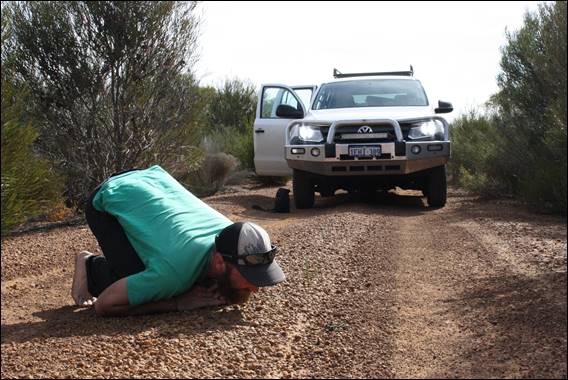
Then on a good part of the road where I was doing 80 km/hr I thought I saw something on the road. After stopping, in a controlled fashion of course, we reversed back to see if I was right. How I missed this little critter driving past and then reversing back on such a narrow stretch I have no idea. It was just a few inches from the tyre worn part of the road, a little more to the side and I would have squished it. I’m still staggered I even saw it but am damned happy I did:
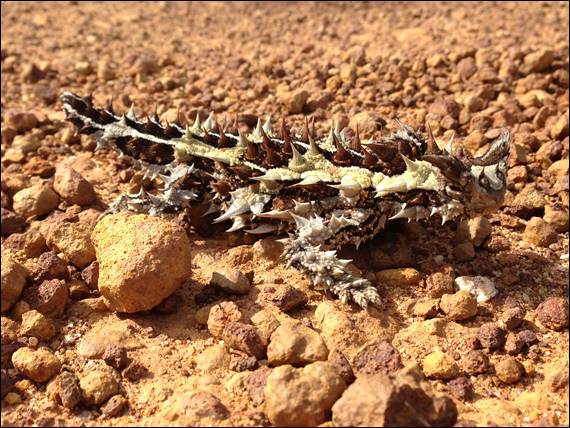
I’ve never seen a Thorny Devil in the wild, having only seen them at reptile parks. When we lived in Alice Springs it was the one creature that I would have given my right arm to have seen in the wild, but we were not lucky enough to see one. These guys walk like a leaf that is blowing in a gentle wind, swaying back a forward while moving slow forwards. The colours were very striking and it’s impressive armour giving it it’s great name. We spent a good ten minutes watching this fella before making sure he was safely off the road, then we set off again:
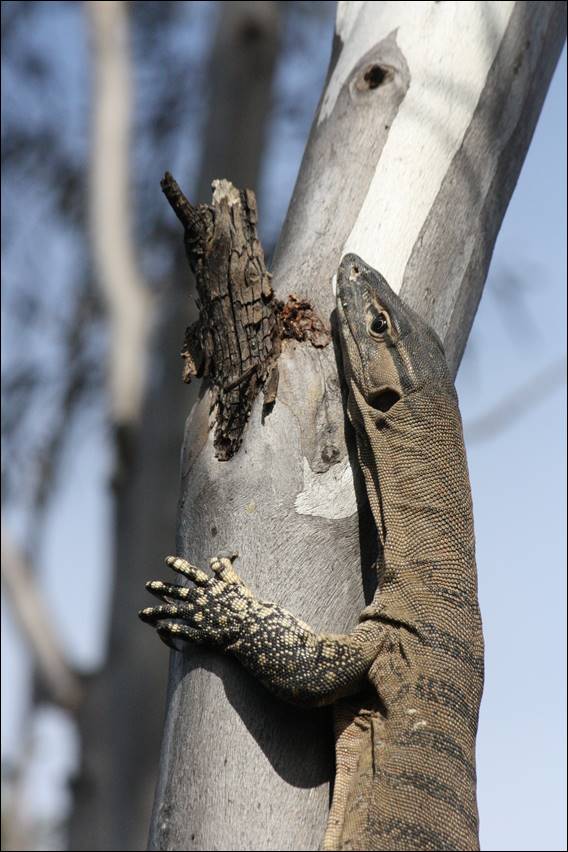
Just a short while later we spied a perentie on the side of the road. We kept an eye on it in the mirrors as it ran off, but we were intrigued so went back to see if we could find it. These guys are the largest monitor lizard native to Australia, and the fourth-largest living lizard on earth, so it was a bit easier to see in the first instance. We didn’t fancy our chances of finding it until Howsie looked up, and sure enough there he was. It was turning into a great trip already not only due to the landscapes but also the reptiles we were seeing, which included a heap of bobtails and a western blue tongue lizard:
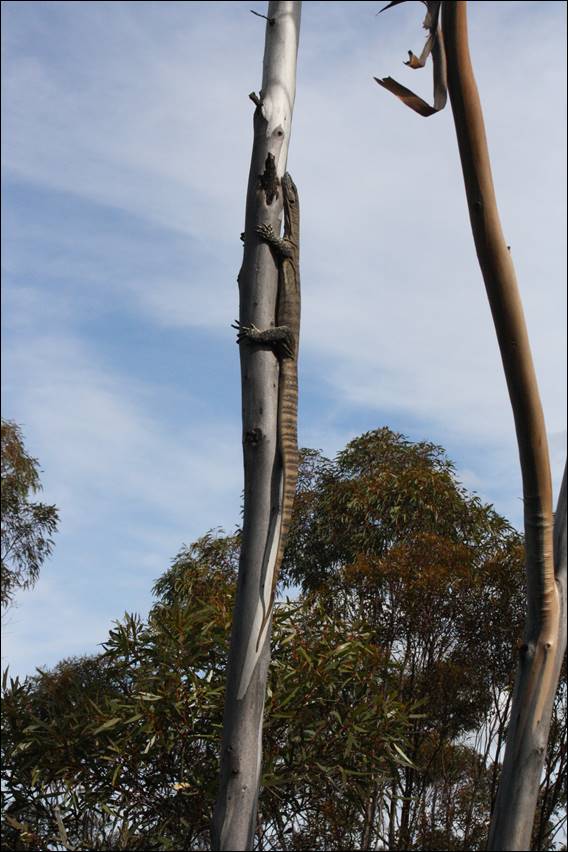
While you may or may not wish to believe me, this was another sight that I was always keen to see in Alice Springs but never had. We saw loads and loads of these lizards, even one that was a clear 6 foot long that moved like a rocket, but never one in the trees. I remember being told that when frightened they found something to run up, so you needed to be careful they didn’t run up you as they have razor sharp claws:
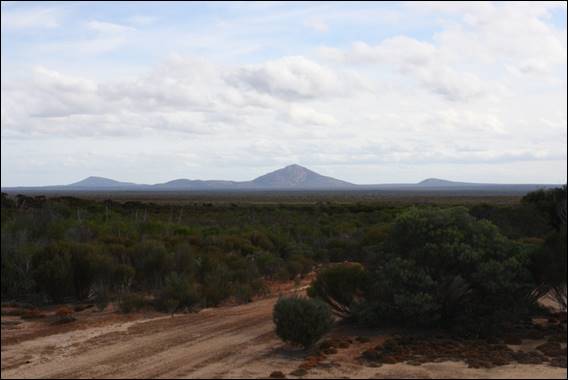
Eventually we got to the junction to turn into the national park and the last 20km to reach the campsite. This road was managed by the state government so was in good condition and we could pick the pace up. We had one short stop to take a picture as we got a bit closer, but other than that were keen to finally get there rolling into the campsite some 9 hours after leaving Bunbury:
Over the years the campsite has been upgraded with an improved track, more formalised camping bays, long drop toilets that seemed much better than last time I came and a swish new signage. Other than that it is a real bush camp miles from anywhere and very, very peaceful. It was school holidays so we never had the place fully to ourselves but most of the others staying were quiet, except for one group when they were listening to the Australian Rule Football grand final:
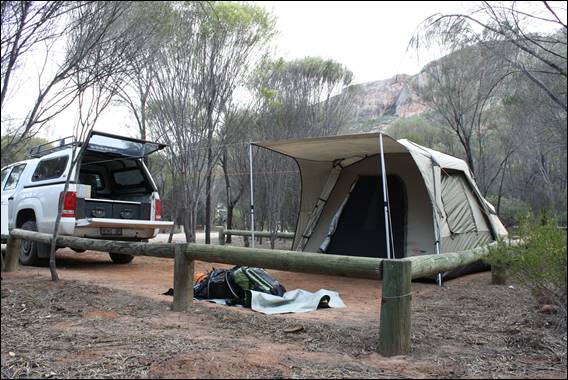
First off we did a quick wander up the ridge to see what the access to the crags would be like, the first time I came with Craig it was hideous. The next time was soon after a big bush fire and you could easily walk between areas. This time looked somewhere in the middle, but we would have to deal with that tomorrow. We set up camp and had an early night. I was up at 5:30 the next day making a brew, just in time to watch the sunrise and a beautiful clear sky morning wake up:
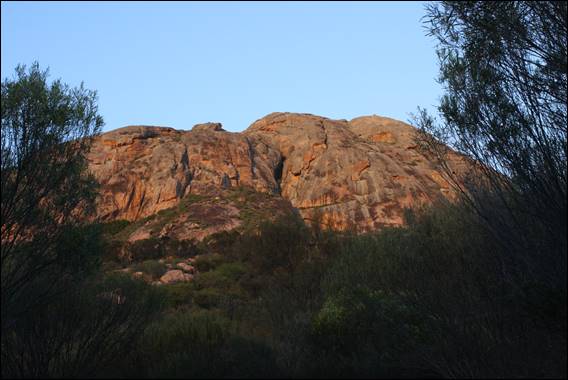
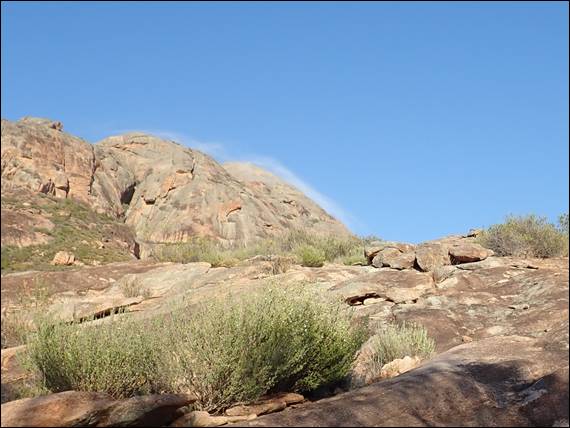
We had a quick breakfast, as we were keen to get up there and get a few lines in. As we walked back up the first ridge with packs on this time our legs could feel the extra weight. Neither of us were particularly crag fit, but with the sight of the massive granite monolith ahead of us kept us going. There was a wisp of cloud trailing down the leeward side of the great dome, but if you didn’t look in time you would have missed it. From the ridge you have to pick the best line to take to get to your chosen climb, as it is not easy to walk along the base of the dome due to thick vegetation growing right up to the steep walls:
We managed to get to the base of Kwelaman relatively easy, although the last 20m or so was a bush bash that gave us an introduction of things to come. I’ve done this line every time I’ve come here, but it is a good line to start with as it is the only line with ring bolts for belays. So you can do the first four of seven pitches, which are the best and then rap down. That said we found a heap of bolts peppered on the wall that were not part of the original route, we steered clear of these. Howsie got proceedings underway with the first pitch:
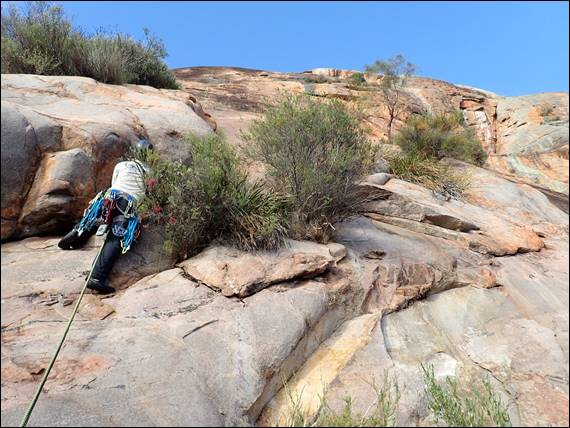
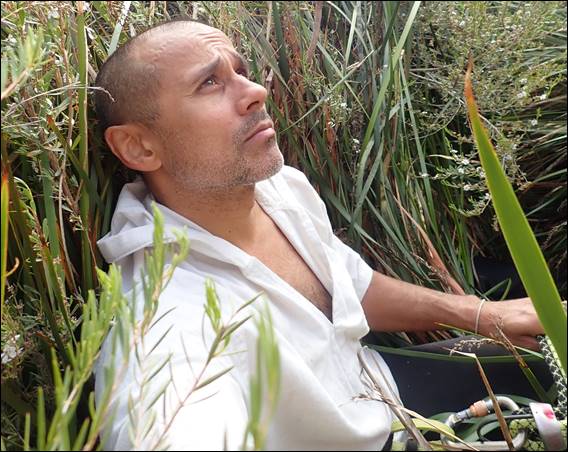
I literally made myself a seat in the thick reeds and laid back watching his slow but steady progress up the slabs. I knew the line well but didn’t bother to tell him that he was going off route, heading to the anchors from the right instead of the left. No matter he still got there, and when he set himself up and looked down he saw the other line, which included a single fixed hanger due to the lack of gear. His chosen approach was still great and better still for being fully trad, even if pretty run out:
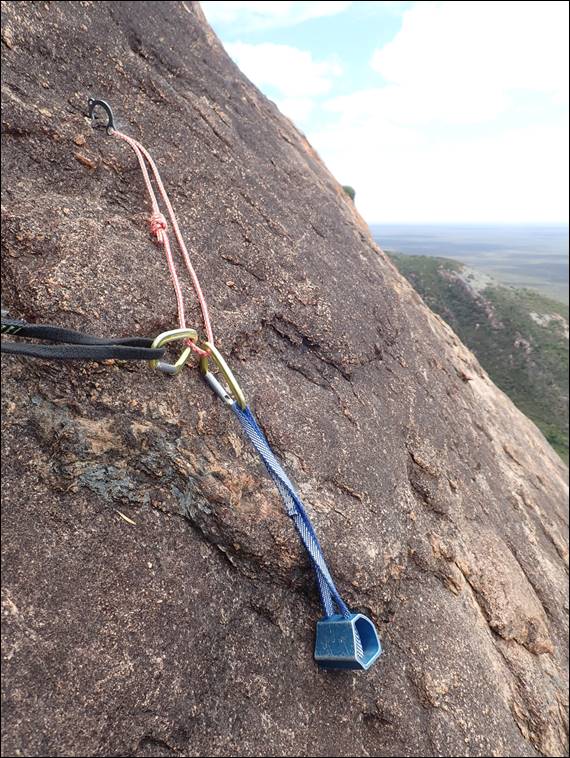
I took pitch two and was very keen to make use of my new piece of gear. My sister is friends with an old school climbing legend of the UK. Geoff Milburn helped pioneer a number of places in the UK and also until recent years had the largest known UK collection of climbing and mountaineering literature. He auctioned the amazing 5 tonnes of books, a sight I was lucky enough to see. His collection comprised wall to wall bookshelves in his garage, with books three deep. It was epic and overwhelming. Anyway as part of a more recent clear out I was given a few pieces from his climbing rack, including the sky hook which is the last piece of gear below:
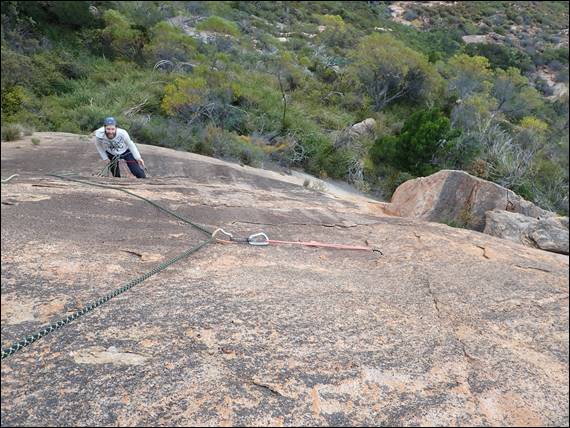
When I had set off to follow Howsie I asked if he was warm enough, it was a clear day and the sun felt great. So all we decide to carry up was the light rope bag with some snacks and water. When I got to his belay clouds started to roll over the hill and the sun disappeared. The wind felt chilly and even more so when we got to our belays and had to stand there for a while. The higher we went the more exposed we be became and the more the wind bit into us:
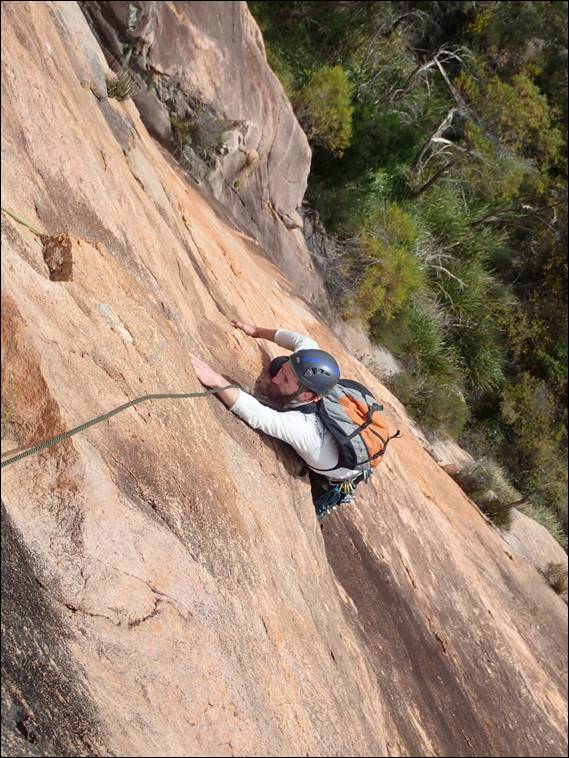
We were both shivering by the end of the second pitch, and our fingers were feeling numb. Howsie was looking up at pitch three eager to go but was also thinking we should be sensible. So after a bit of a chat we agreed that without warm clothing we would be fool hardy to carry on. So we rapped back down to our bags and very welcome warm tops, it was not a mistake we would make again. We packed up ready to move onto the second climb we had our eye on for the day:
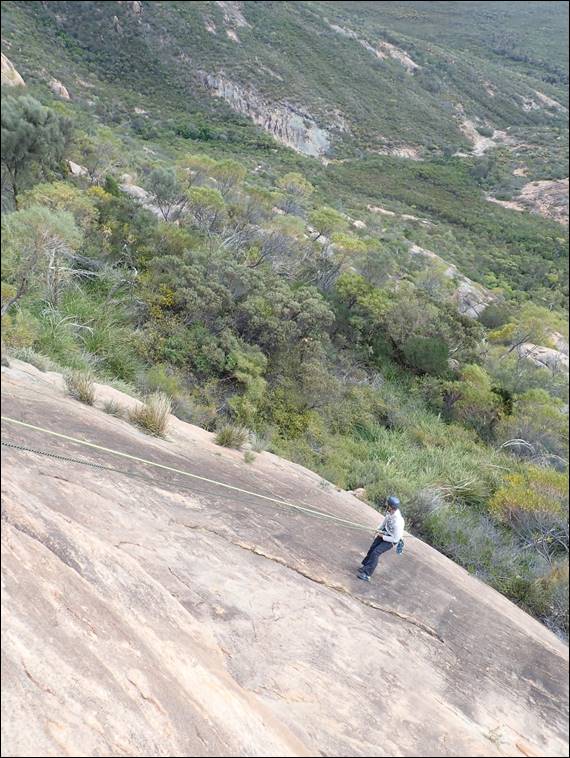
Our second climb was one I had not been on and I had heard great things about it. However, to get there we had to bush bash out, walk round and then bush bash back in. It was hard work and despite the sun having gone behind the clouds we worked up a sweat as we crashed our way through a thick matrix of reeds, dead fallen trees, and live bushes some of which were covered in thorns. We kept telling ourselves this was all part of the fun:
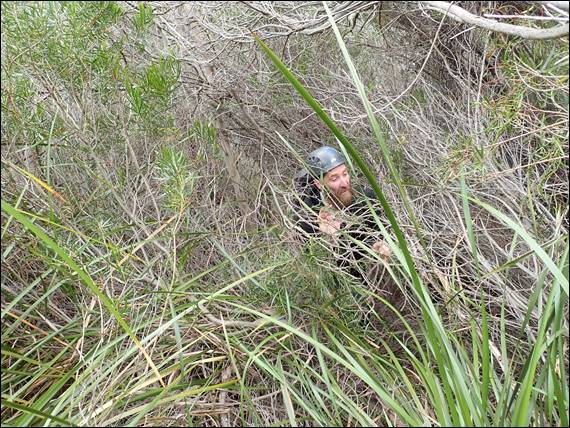
Going lead for lead Howsie kicked things off again, and it was funny how he seemed to bag the first pitch of every line we did on this trip. This time we were going to have to do all six pitches to get to the top, as there were no bolts. The first slabby pitch had a few run out sections something we were simply going to have to get used to. Placing gear 5-7 m apart was not uncommon, but then a lot of pitches were also 50m rope stretchers and as such you really didn’t want to place gear much closer so as to avoid rope drag:
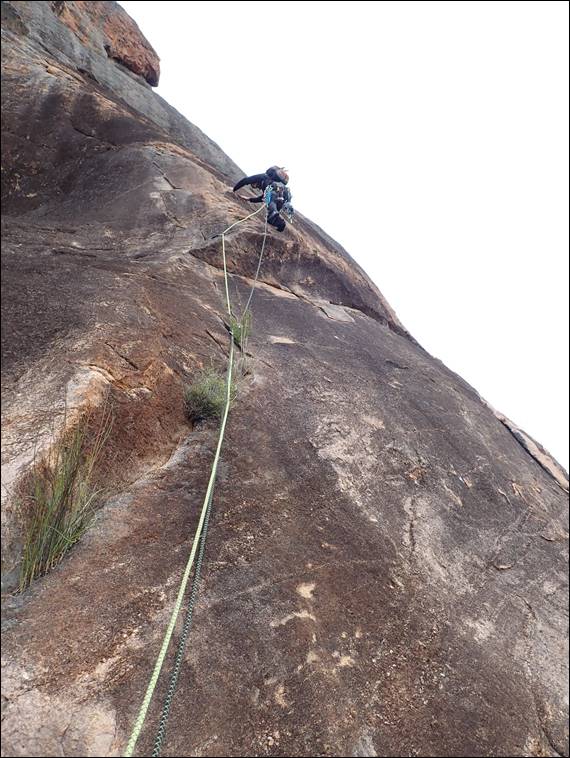
I was very happy that he too used the sky hook, we had made an agreement to try and use it on every pitch we climbed. How much we trusted it was debateable, but at times it was the only piece that we could find so we had little choice. I reckon this may become one of my favourite pieces of gear and will endeavour to take it on every climbing trip from now on. You will probably also have noticed that my twin ropes were getting a work out. They gave us more options for avoiding rope drag, as well as allowing longer abseils if we ever needed to get down in a hurry:
I had pitch 2, which we both agreed was the glory pitch. A fine slab and wall leading to a great airy traverse that was a bit thin on gear. Luckily for Howsie the line then took a right leading line upwards to the belay, so he had a rope above him for the whole traverse. As we were going to the top the second was lucky enough to be carrying the big pack with all the food, shoes and water. The extra 4-5kg was enough to change your centre of gravity and how you climb, making those delicate moves all the more nervous:
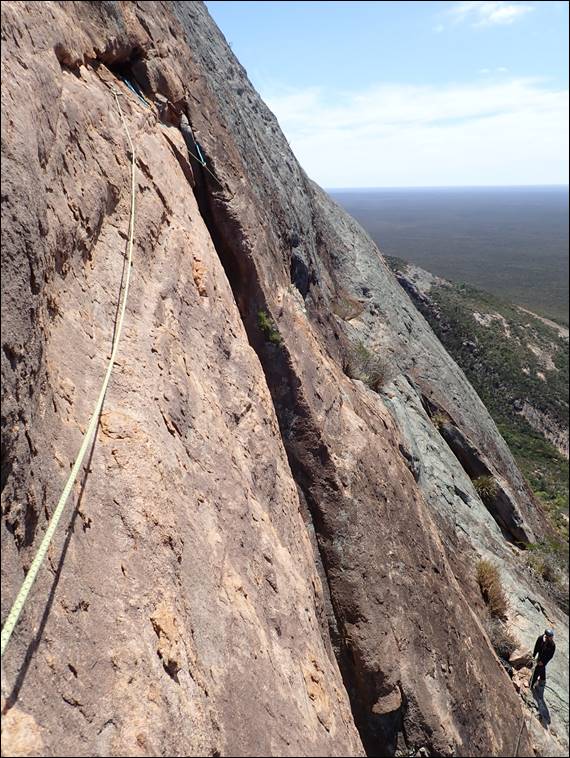
While I bagged the glory pitch they were all very good, even the last two scramble pitches to finish up. You may also notice that while climbing this route the sun had come out. That said the wind was still cutting and so we relished the belay stances when we were able to keep out of the wind. We couldn’t always achieve this and on those it got bitterly cold waiting for the second to come up and then for them to lead the next pitch:
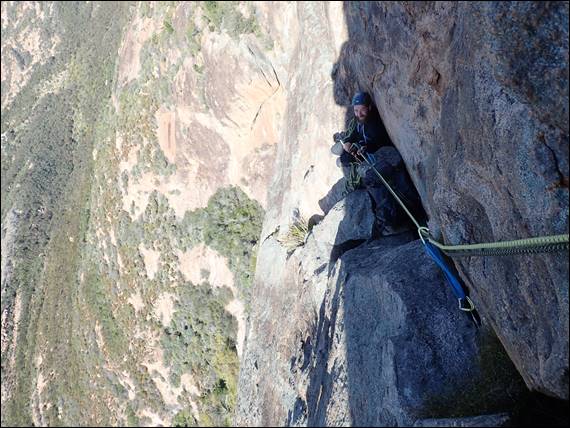
I was getting very cold and weary towards the top, the last two pitches while a scramble felt pretty hard work. I could feel that I wouldn’t have it in me to do any more climbing, but having tallied up what we did it had amounted to over 300m and as Bob and I would say in the Lakes a 1,000 foot of climbing made for a good day. That added to the bush bashing and hikes in and around the base certainly did make for a great first day:
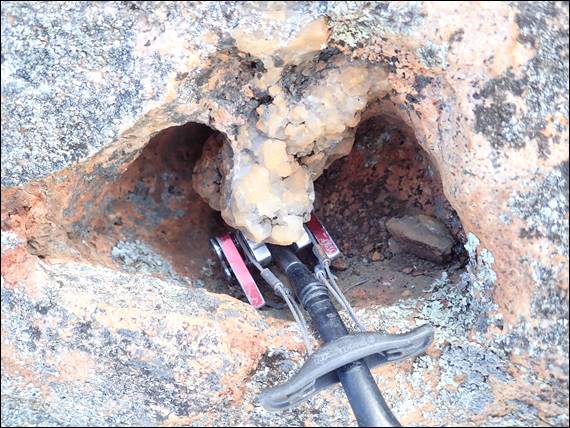
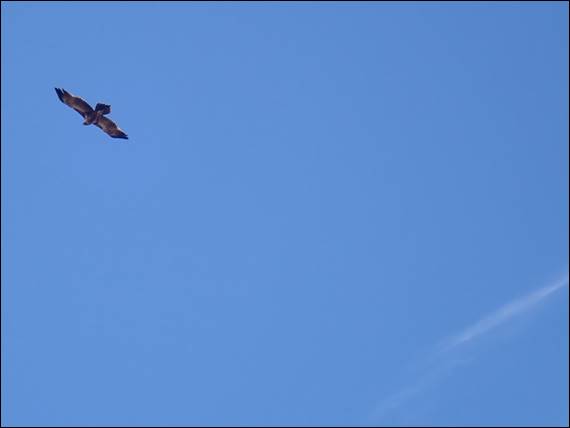
Gear wise we took everything from micro wires through to house brick hexes and amazingly used the full range on many pitches. Some pieces of gear placements looked more favourable than others and some you simply had to use just for the shear novelty factor, such as the cam placement above. No doubt some people will give me grief for that one but it simply had to be done! Being so high up we constantly had wedge tailed eagles flying above and around us, so while the belay stances could be cold there were great views out and the majestic eagles to watch:
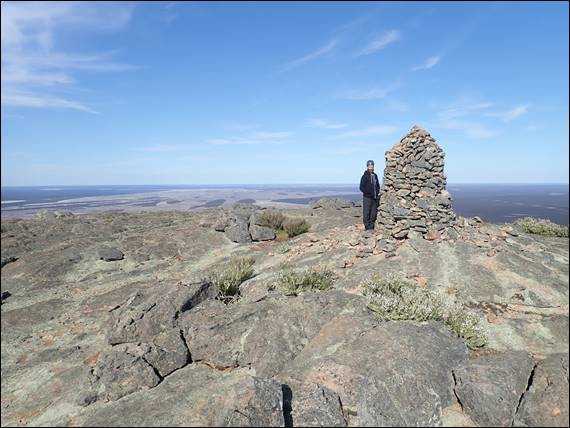
This climb didn’t top out at the summit, but it was not too far from it. The last section of the summit hike is above the classification grades they use to advise tourists. While Howsie and Nadia had passed and stayed a night here before the conditions had been too bad to allow them to get the summit. The last section has exposed sections with holds that are, what some people would call, slick and any moisture would make them dangerous. So before we hiked back to camp and seeing it was dry we went up to the summit to take in the 360 degree views:
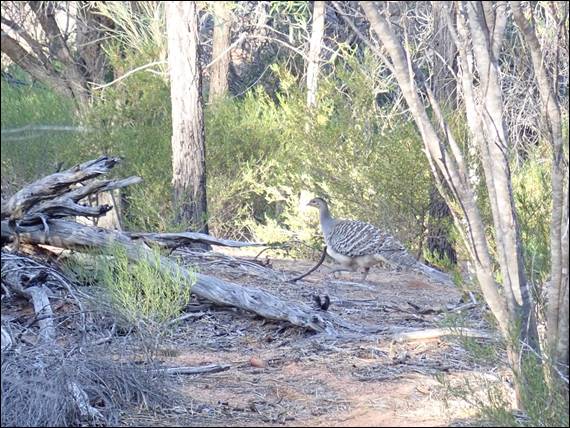
Then it was an hour walk back down, and while doing so looking for an elusive climb that a friend of Nadia and Howsie had been involved in putting up. The description says it’s on a prominent boulder and there is only the one route of an obvious crack line, it is not however shown on the topos so locating it was hard work. In fact it was impossible and we looked every day but failed to find it. On this day we did however see a Mallee Fowl, which kept an even distance from us but didn’t run away. As Howsie was scanning the boulders to find the climb I stalked the Mallee Fowl through the scrub all the way back to the campsite, from where it headed back into the bush:
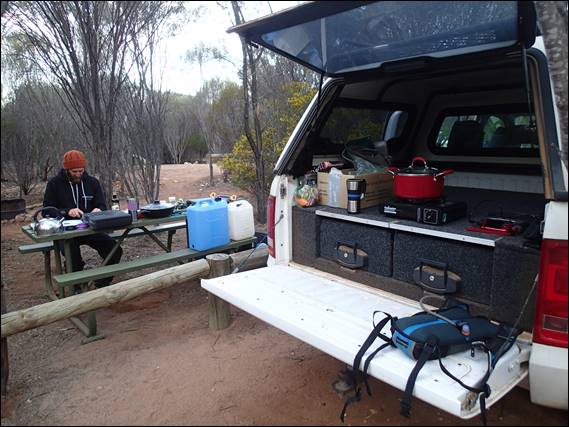
There was still a couple of hours of daylight so we sorted the gear, made a cuppa and set about making an early dinner. Lisa had done us proud, having once again organised the food for another trip away. I’m very lucky and we were both very grateful for the amazing spread she had sorted for us, not only great food but wisely chosen to make it easy to make single pot meals saving on washing up. It was another early night for me as I was pretty stuffed and soon after darkness descended I hit the sack and left Howsie laying on the bench looking up hoping to see a shooting star:
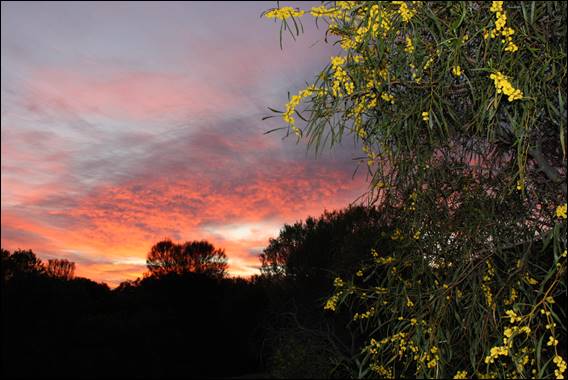
The next morning an old English saying came to mind “red sky in the morning shepherds warning”. In the UK it was a sign that rain was coming that day, on the basis that the weather would mainly be blown in from the west. I’m not sure if that holds for Australia but it was a beautiful sight. This morning we were up at 5 making as brew and brekkie. With the packs already sorted the night before we were hiking back up the hill within an hour of getting up. Just like the first day the initial walk up the ridge woke up our legs:
Today we were heading further to the north which meant a longer walk in and even more bush to force a path through. We thought we were getting better at sussing out the line of least resistance, but missed the target and then had to traverse the base for a long way. To avoid the vegetation, at places we decided to boulder above the vegetation and eventually we managed to get to the base of Conquistador. This 300m route would take us all the way to the summit, so again we would need to climb with packs:
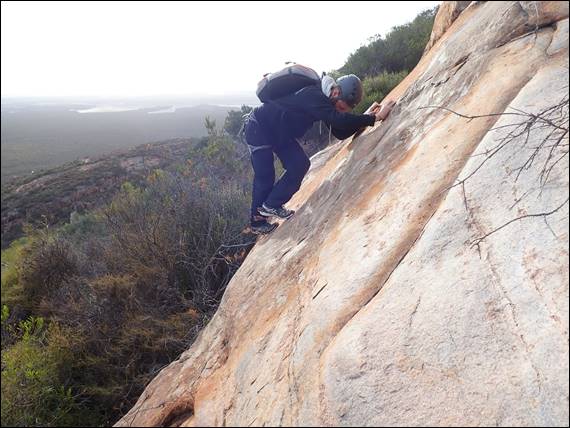
We liked the look of this line, with five consistent pitches before two long scrambles to the summit. The first pitch looked brilliant, a 50m line that took a curving crack upwards. The cloud was already covering the sky and there was no sun in sight. So we climbed with packs and warm weather gear from the start. As I belayed I was getting colder and colder, eventually Howsie set up belay where he thought he should and I went up. We discovered later was that he had gone only slightly off line, but it was enough to throw out the next pitch and I ended up linking into the second pitch of Stormbringer:
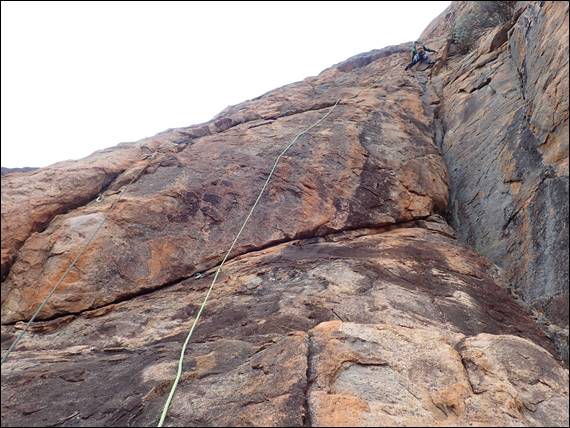
I didn’t realise it at the time and followed what loosely met the description. I was supposed to have a belay under an overlap and aimed for what I believed to be the one. It was a great belay out of the wind, and the pitch was loads of fun and pretty exposed. There were two traverses which meant that I couldn’t see Howsie till his head popped over the last section. After checking the topo and visible features, which wasn’t much, we figured out a way to get back on track. So Howsie set off on unchartered territory to find a belay ledge that was in the full force of the wind, which happened to be getting stronger:
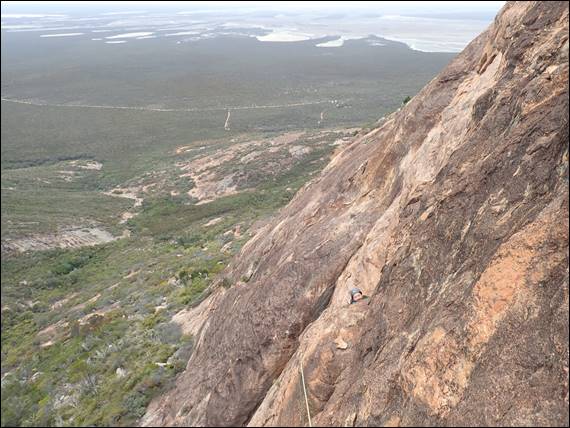
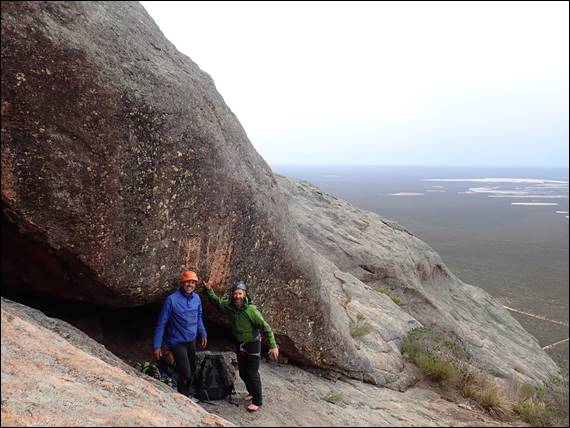
When I got to his spot we hid in a cave until we were brave enough to face the wind and yet another exploratory pitch to get back on track. It was good fun working out our own way up this route, adding an extra 50m or so of climbing along the way. I had been really keen to attempt a new route, which we didn’t have the gumption for when we saw the first few pitches. But now that we have been up here weaving about I know exactly where the line would go:
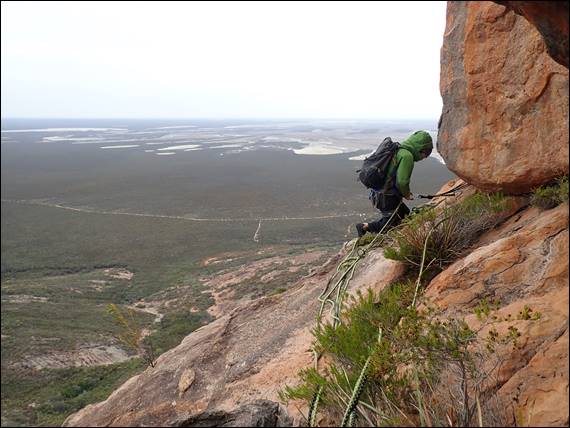
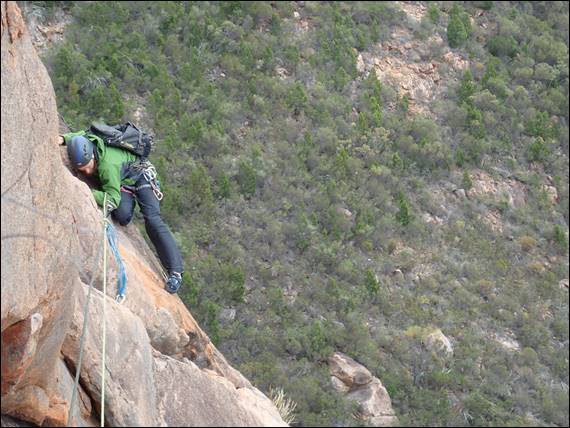
I finally got back on Conquistador after some sketchy traverses on exposed ground. The gear was not too bad but a little thin in places, giving us both a distinct feeling of don’t fall off. For me that wasn’t too bad as I was feeling much better today, but the cold was getting to Howsie. He also had the next pitch which turned out to be the most exciting one of the trip. Some four meters above me he placed a single brass stopper before needing to make a 5m rising traverse on small but positive hand holds, with the wind buffeting him:
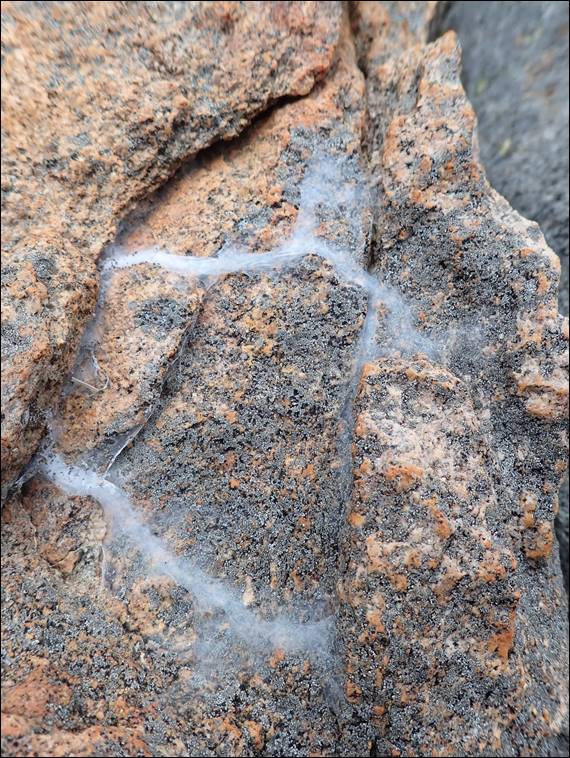
While he edged his way up very slowly, I sat in a comfy belay out of the wind looking at the little web formations that seemed to be all over the place. I’m guessing spiders, and you could tell where their houses were. From there they made protective walkways covered in the fine webby canopy. From a distance is looked like chalk marks, but up close they looked a little ghostly and spooky:
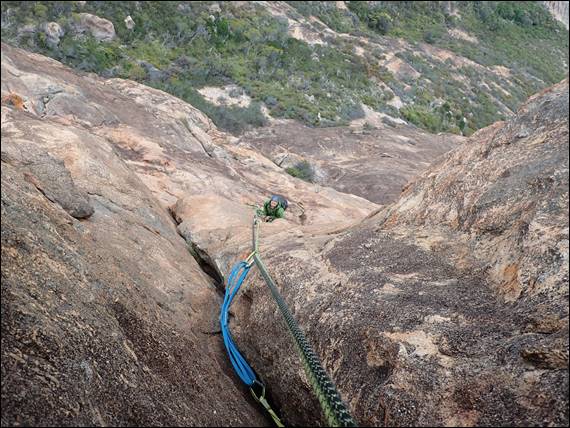
Howsie was very happy to find a good comfy belay and after following him up I took the last big pitch before the 100m scramble out. Yet another very fine long crack that eventually led to easier ground, which is where this part of the dome took on more of a slabby formation. The scramble on this line seemed relatively easy angled so we simul-climbed out placing the occasional bit of gear between us, as we romped to the top:
So for a second time Howsie reached the summit of Peak Charles. What we hadn’t noticed until we topped out was a bank of rain coming our way, it was moving in fast and looked pretty thick, and we still had the scramble off the summit rocks on those slick holds. A slip there would mean a massive tumble, so we rammed all the gear in the packs and kept our climbing shoes until we got down the hardest sections. After finally donning our walking shoes, it was a wet walk down both from being rained on and having to brush past the wet vegetation:
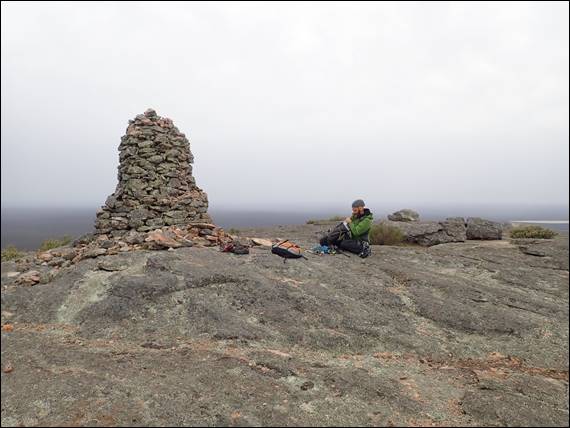
It was only 2pm and we were back at the camp, a hot cuppa was in order. Howsie looked stuffed and was not particularly motivated to do much else, and we were not sure if more rain would come. However, the forecast was indicating that rain wouldn’t hit us until night time, and then again in the morning. If that happened it could well scupper any plans to climb in the morning. I was texting Lisa about our quandary and she told us to toughen up and get back out there, Howsie was still unconvinced hinting that I too wasn’t pushing to get back out:
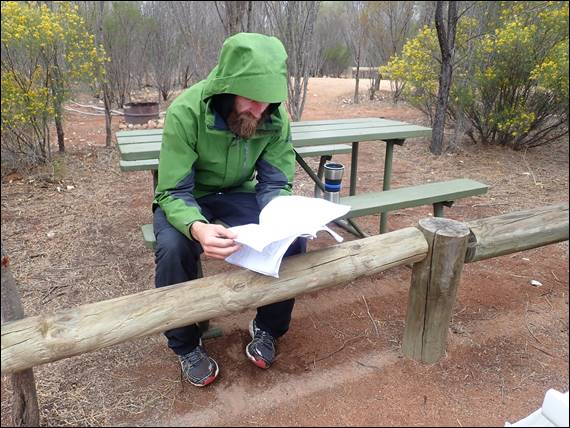
So there was nothing to do but to start packing the gear up for another trip up the hill, and back to another climb I’d previously done. It meant yet another walk from the camp to the crag, but this time we could travel slightly lighter with a single 60m rope and no water or food. We were also getting used to the area and knew the better paths to take, avoiding as much bush bashing as possible. We were also getting more confident in bouldering up and down some of the steeper terrain:
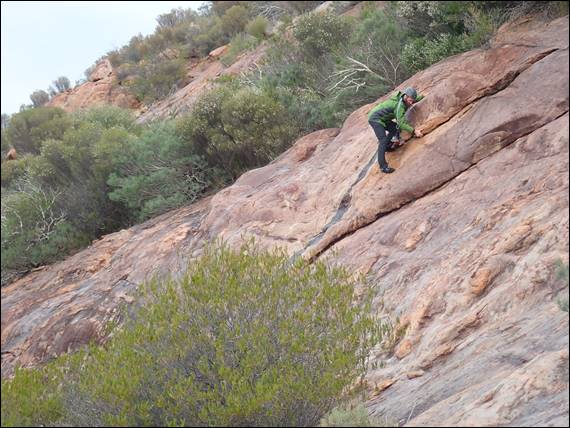
Steve will remember this climb fondly, The Beckoning Horizon is an impressive undercut overlap and being so we reckoned would be dry. While the rain had stopped the rock was still a bit damp on the slabs but this line should have been, and was, dry. Howsie was nervous from the start, so needed gentle to mildly escalating encouragement to get moving and trust his feet. I didn’t fancy walking out in the dark, especially seeing that by travelled light we also hadn’t brought our head torches:
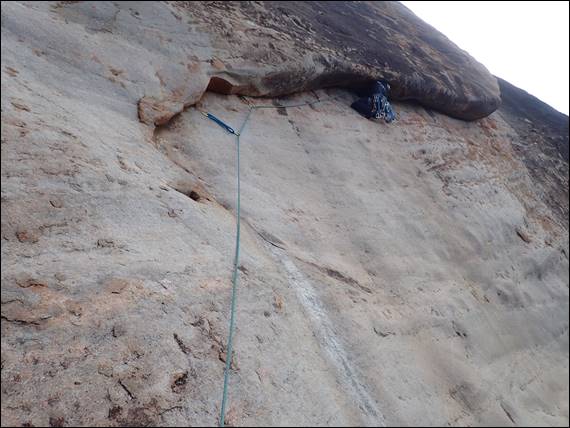
He managed a great clean ascent, with a bit of huffing and puffing. I rushed in to get moving and on the first foothold under the roof slipped off cursing myself. Once back on I caught up with him and took the second fine but much more relaxed corner pitch. The reason we chose this line is that after these two pitches you can reverse climb the first long pitch of another classic called Badile. So Howsie set off and I was to follow after him with the rope below me:
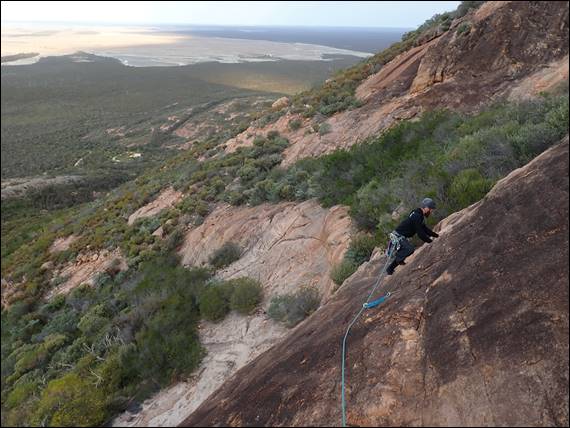
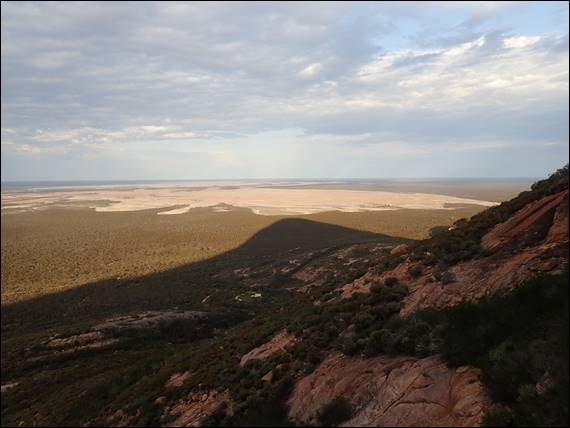
The light was starting to fade and the sky was clearing allowing us a great view of the shadow of Peak Charles stretching out across the landscape in front of us. I could have sat and watched that view of ages, but we needed to get moving so I followed Howsie down and we quickly packed up and started the walk back to camp. We got down and very soon afterwards darkness descended. In view of the looming forecast we discussed whether we would be climb the next day and also stay for the fourth night:
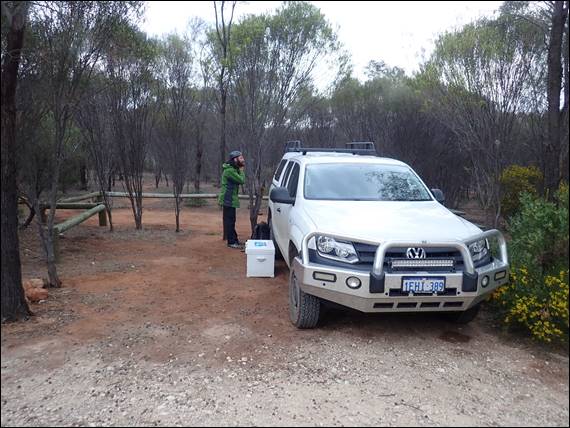
We opted to be optimistic and get ready for a 5am start and at least get one climb in. The rain didn’t come overnight and in the morning the forecast changed and indicated the morning should be dry, luck was on our side. So we agreed to get a “quick” climb in and then head off. To avoid needing to pack away wet gear we broke camp and had everything ready to drive out as soon as we got down. We were getting efficient and even with the extra stuff to do we were walking up that familiar ridge by 6am. The legs still however felt weary as we started going upwards:
Today we were aiming for Central Gully, when I went here with Steve it was a big mission to get in for various reasons. Today we decided on a different approach that was more direct, and that was to climb a fun looking line from the bowl below the gully to gain access. That would mean less walking and more climbing! We also packed light knowing it would be a shorter day so it felt like we were cragging without such a heavy pack for the second to haul up:
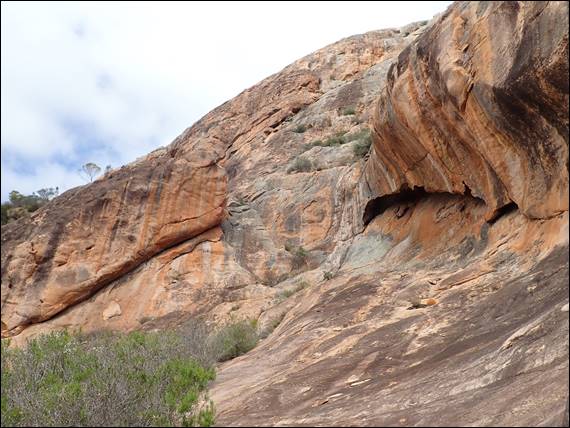
Howsie started on Slime, a very unattractive name but a great line up a pleasant angled wide flake before a delicate unprotected 10m runout on the slab above. Once I joined him there it was obvious that getting to our climb would be a bit more work than we expected, so I went first down climbing into the gully and then Howsie had to do a second scrambly pitch to climb up the other side and reach the start of the climb. It was a lot of mucking about but we were getting used to that now, it seemed to be part of the process for most climbs here:
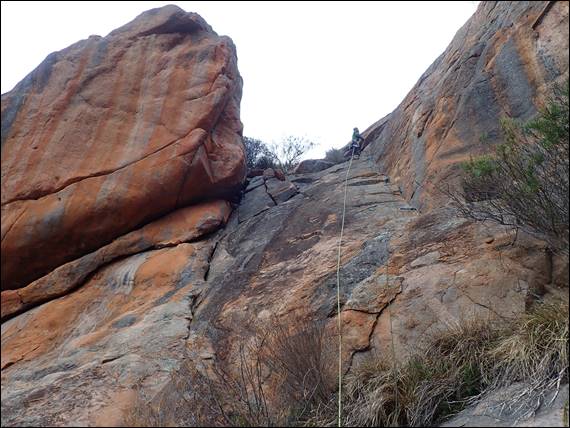
We intended to climb The Missing Link, I took the first pitch up a steep crack and flake before a tricky move to gain the delicate slab that was alarmingly devoid of protection. I stretched the rope out getting more and more fatigued. Just as I got within a meter from gear the rope went tight. Luckily Howsie could hear me and he moved up just enough to allow me to get set up. It was another cloudy and cold day with a buffeting wind, I looked up at the chosen line and it looked steep and daunting:
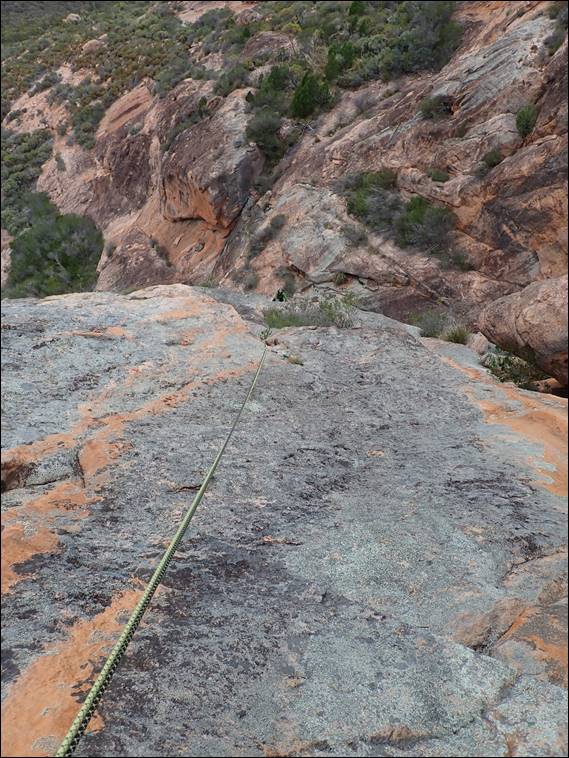
I then looked out and could see rain was coming, it seemed the forecast had mislead us and there was a chance we could get rained on while climbing. Howsie made his way to the belay looking pretty cold and weary. We discussed our options and decided to change tact and finish up the easier climb called Last Tango in Widgiemooltha, which crossed at where I was belaying. Neither of us fancied being drenched on the steeper climb:
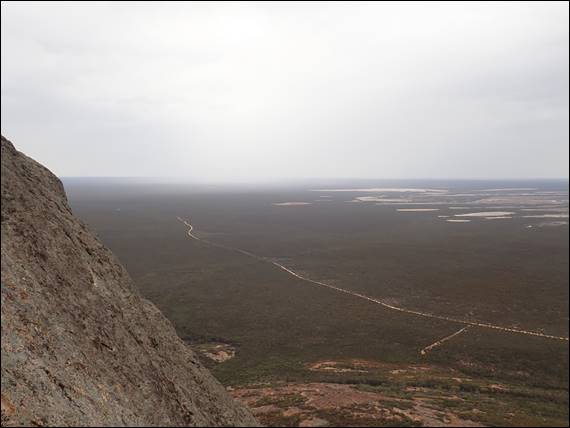
So Howsie set off as rain drops started to fall, but it didn’t really get too wet as the main storm seemed to circle round the rock. As I followed him up a second front was coming in, and we still had a good 75m left. While the last part was not too hard the wind was picking up and so we decided not to simul-climb this time but lead out. The second rain bank hit us and we topped out in the rain, ramming everything into the packs to make a beeline for some shelter:
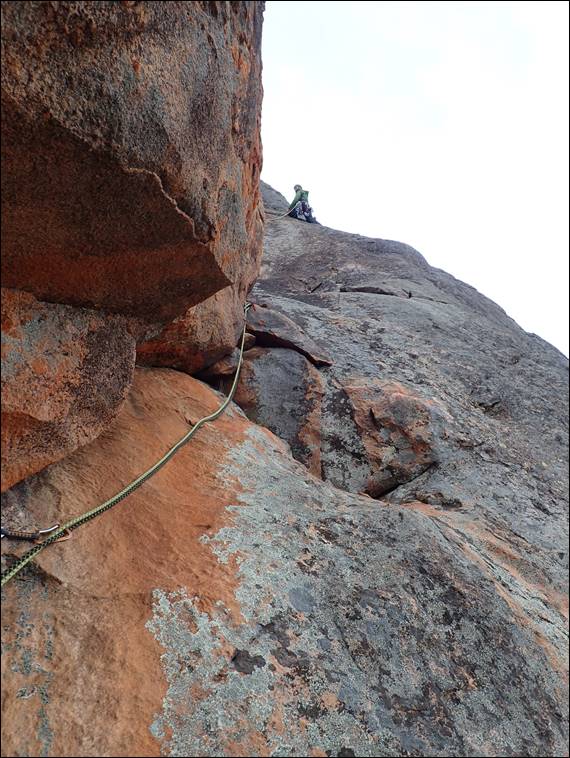
We found a great cave were we repacked things and had a quick snack. Once the rain had passed us by we wandered back down the tourist track. Like the day before we kept our rock shoes on until we got to safer terrain. For the last time we walked down the hill, still scouring the boulders for that crack climb, but it just wasn’t jumping out at us. It was nice to get to the car all packed up. We didn’t even hang about to make a cuppa for the journey out, wanting to get on the road:
There was no sightseeing on the way back and we managed to cut the nine hour trip to seven hours. Maybe I also went a bit faster on that “unmanaged” track, and possibly hit a few more potholes a little too quickly. Then as we got onto the better gravel road the big storm came over and we knew we had made the right choice to get moving. As we passed the salt lake we walked on just a few days back, it was covered in water. However, we didn’t stop there and carried on until we found a fuel station that was open. There Howsie bought us a very welcome hot brew which saw us all the way back:
While we didn’t quite manage the 300m mark on the last day we were not too far off, and our total tally for the trip was just shy of 1,000m. All in all, despite the hit and miss weather, and a few climbs not quite going to plan it was a brilliant trip. Next time I can feel that the new route I’ve got my eye on will need to be claimed, but I’ll need to make sure we are a bit more climbing fit and we will hopefully put in an order for some warmer weather:
A big thank you to Nadia, Fergie, Franke, Lisa and Elseya for allowing us to self-indulge for this trip.
 Sandbagged