Looking back at my emails it has been 20 months since I have donned my mask and flippers and delved into the underwater wonderland right off our beach. The reason for such a long absence is three fold: we were back in the UK last (Australian) summer; I managed wreck my ankle when we got back; and the ocean never seemed to clear up last summer. But this weekend just gone I braved the water and dove in. It was not quite as clear as I have seen it but it wasn’t bad and it felt like greeting an old friend:
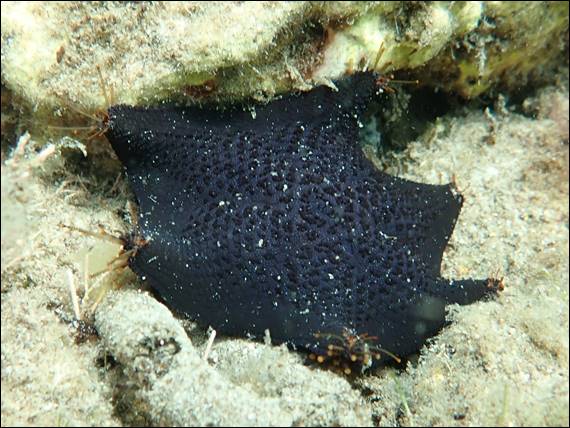
On my birthday I had gone out climbing with Craig and managed to drop my camera, cracking the back screen. So what with some birthday cash I didn’t know what to do with, I went out and bought the new Olympus TG5. Three models on from my first underwater camera so I was hoping that the images would come out pretty good. Being the first time of using the new camera I wanted to find something special to take my first image of:
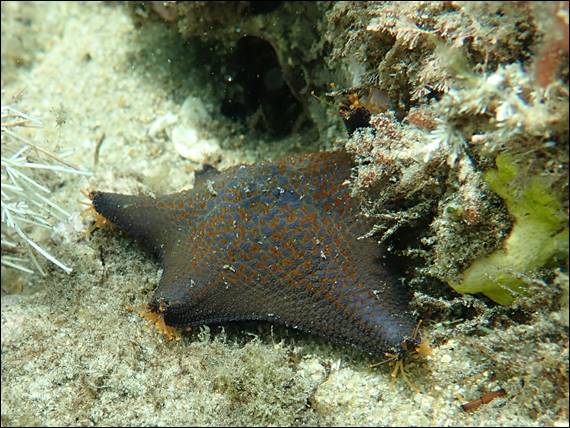
Luckily I stumbled across something that I have not noticed before, and that was these slightly more chunk sea stars. I thought there were only black ones but as I check about I came across a few more some which were more colourful. Not really sure but I think they are all types of cushion sea stars:
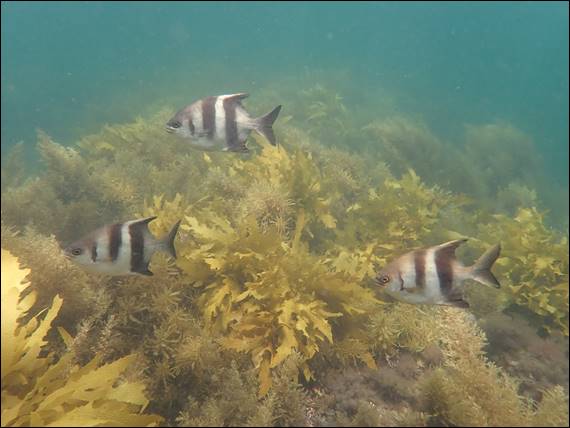
As I bobbed about I was followed by a group of about eight banded sweeps. They would swim directly below me mostly, not seeming to be too afraid even when I duck dived down to say hello to them. This image also shows that the ocean was still a bit murky but it is already looking promising for a better summer than last years:
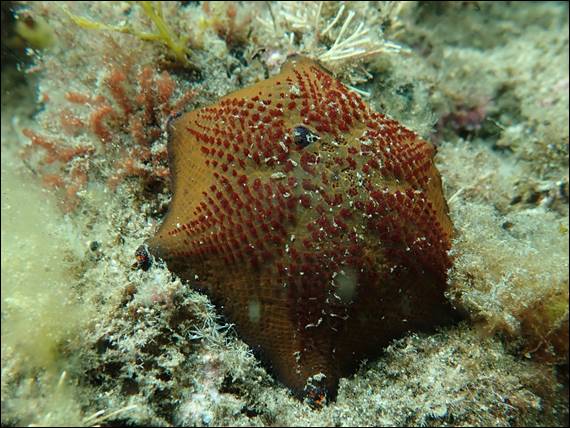
Couldn’t resist an image of one of the more common sea stars I find at our beach. This one seemingly had lots of little air bubbles all over it, but I didn’t touch it to find out if they were something different:
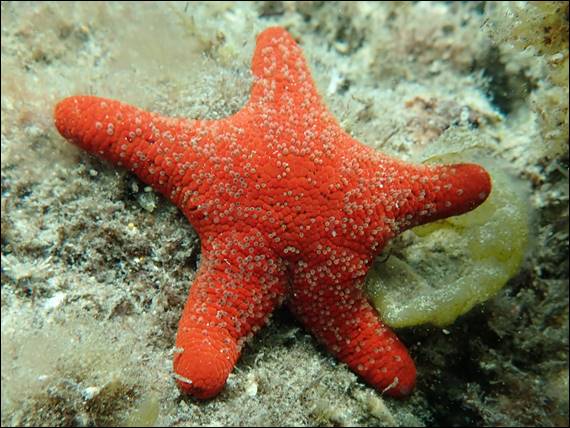
I also had a good look round the rock limestone rocks and came across one sea urchin that for once was not hiding in protective crevice. I didn’t know it but sea urchins are members of the phylum Echinodermata, which also includes sea stars. One of their characteristics being that they have five-fold symmetry and move by means of hundreds of tiny, transparent, adhesive “tube feet”. Picking both sea stars or sea urchins up can result in these feet being ripped off:
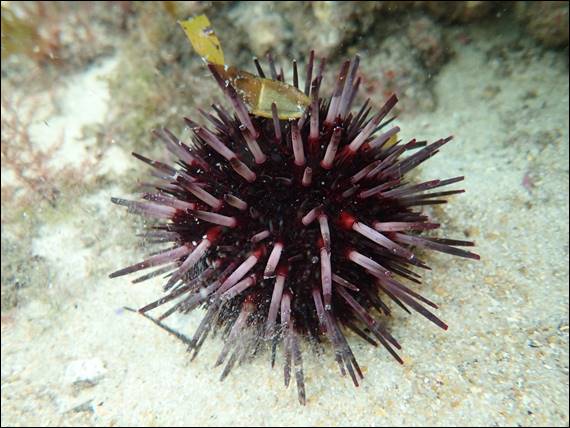
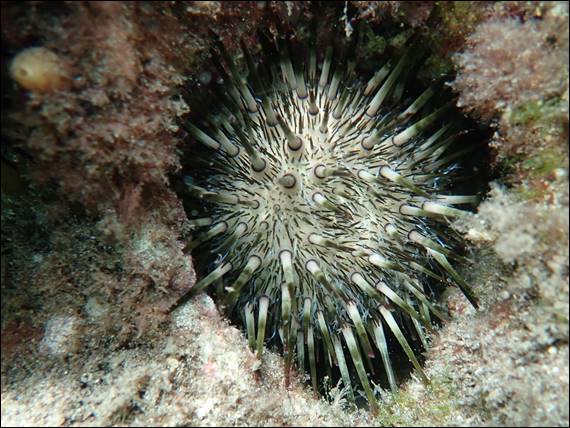
Most times I have seen sea urchins like this one buried into a hollow in the relatively soft limestone. It seems that over time generations of urchins form the shallow pits they live in. The one above had pencil like spines that were not so spikey, where as the one below was more spikey. I’ve had a look at my books and online but with so many varieties am not prepared to try and identify them. Maybe this season I should start collecting images of all the different sea stars and sea urchins:
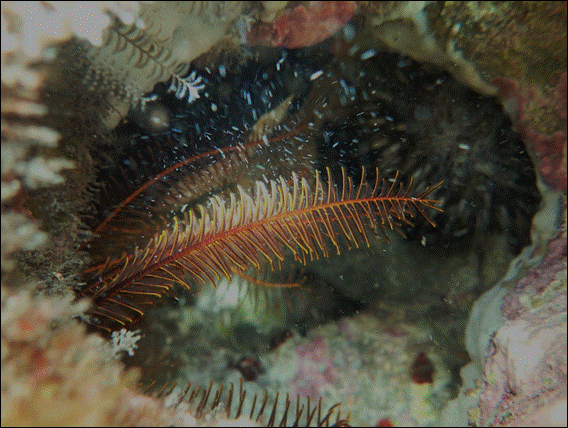
I also noticed in one crevice something different, in the background in another sea urchin, but it was the filaments that caught my eye. I reckon they belong to a feather star, but it was so well tucked in the rock that I can’t be certain. Yet another relative of the Echinodermata phylum, were phylum google tells me means a level of classification that is below Kingdom and above Class in the eight tiered hierarchy of biological classification:
One thing I discovered in my first snorkel in so long was my inability to hold my breath, something I will need to start to build up again. Luckily the reef here is pretty shallow so I didn’t use up too much valuable time duck diving down to the sea bed. But after approx. half an hour I was tiring and getting cold so decided to head back out to warm up, spying on the way a few jellies but none of the stinging variety:
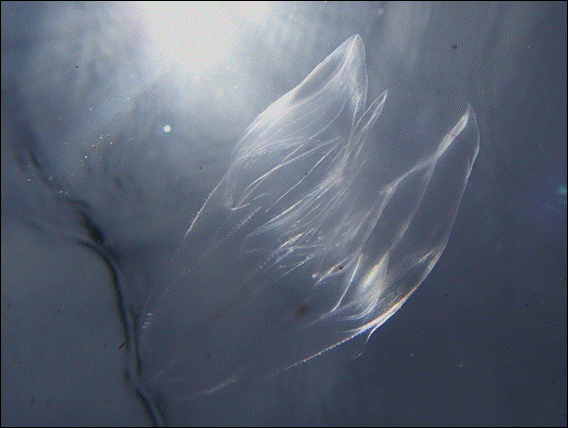
Have to say I’m pretty pleased with the new camera and looking forward to my next strip underwater…
 Sandbagged