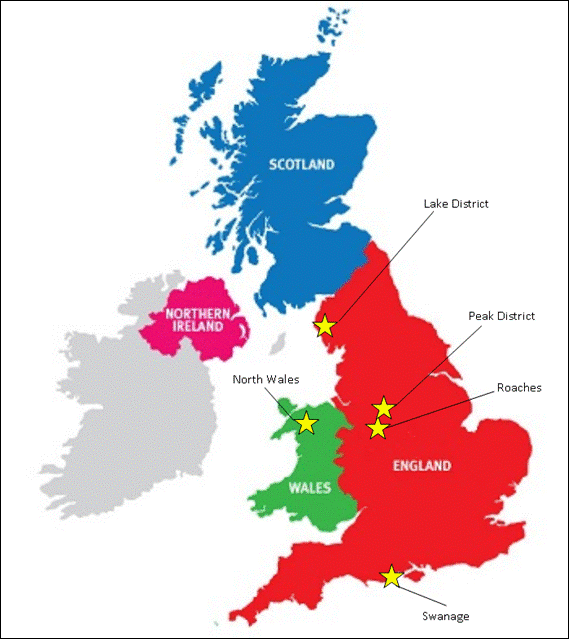
In this part we venture further north to the Lake District. The area was made famous in the early 1800’s by the Lake Poets, a group of English poets who all lived in the Lakes. This group of literary people were considered part of the Romantic (Literary) Movement, which is fitting for the landscape they decided to reside in. The landscape is stunning with long valleys often occupied by long deep lakes and bounded by tall well featured ridges. It is located on the northwest coast of England, and that added to its mountainous landform makes it the wettest part of England. The annual rainfall on average is 2m but varies massively between 5m and 1.5m across this large National Park. It is in fact the second largest National Park in the United Kingdom, and the most visited with approx. 16 million people dropping in each year. Being such an expansive area you may get lost as to where I am talking about when you read through this email, and for the super keen you may need to do a bit of Googling as I discuss the various parts of the area. I mentioned in my first email that the Lakes is considered, by some, as one of the three areas where rock climbing originally started during the last quarter of the 19th century. In 1886 W. P. Haskett Smith ascended The Needle, the first recorded climb in the Lakes and this sparked the publicity that introduced rock climbing to the general public of Britain:
My introduction to the Lakes occurred in 1982, way before I started climbing and when I did heaps of cycle touring. With three mates from school we embarked on an epic four week cycle trek from Land’s End to John O’Groats, taking a meandering path up the United Kingdom that took in the eastern edge of the Lakes. We entered the Lakes via Kendal, where the famous and incredibly sweet Kendal mint cake is made, and worked our way northwards through Windermere and to Ambleside. From Ambleside a long steep road, with inclines of up to 25%, heads east’ish to Kirkstone Pass. This road is the scene of an annual car pull up, with permeant marks on the road to advise how far they’ve gone. The road takes you to the highest inhabited building in Cumbria and the third highest Inn in England; the 500 plus year old Kirkstone Pass Inn. Why is all this relevant, well it’s not really only that the Lakes was one of the places that really struck me out of all the amazing places in the United Kingdom we cycle through. That said I was not to return for a long time, and it was Sad Man Solo that suggested we head there to climb. So in late 1993 I found myself travelling that same road into the Lakes, this time by car. From Ambleside we headed west to Langdale and into the heart of the Lakes, where a national campsite is located surrounded by a number of crags. It is also right next to the a great pub called the Old Dungeon Ghyll. As I mentioned the Lakes is known for rain, and of all the places I used to go to climb this was the one that we most often would get it wrong. On these trips we would resort to hiking and on occasion, when there was an event close by, orienteering. It was on one of those really wet weekends that John and I went for a big hike in the hills, during that hike we huddled behind a huge boulder shivering while our camping stove was busy heating up a brew. Back at the camp we dumped our sacks and headed to the pub, it was heaving and the combination of wet clothes and a hot fire gave it a musty smell. There was not a seat available, until we stumbled across two vacant seats opposite Ansley and Gillian, our luck was in. Until we found out that the seats were taken by their respective husbands! Mel, who I introduced during the Roaches, being one and Mick the other. They squeezed up and invited us to join them and so began yet another great friendship, this time with way too much beer and heavy heads in the morning:
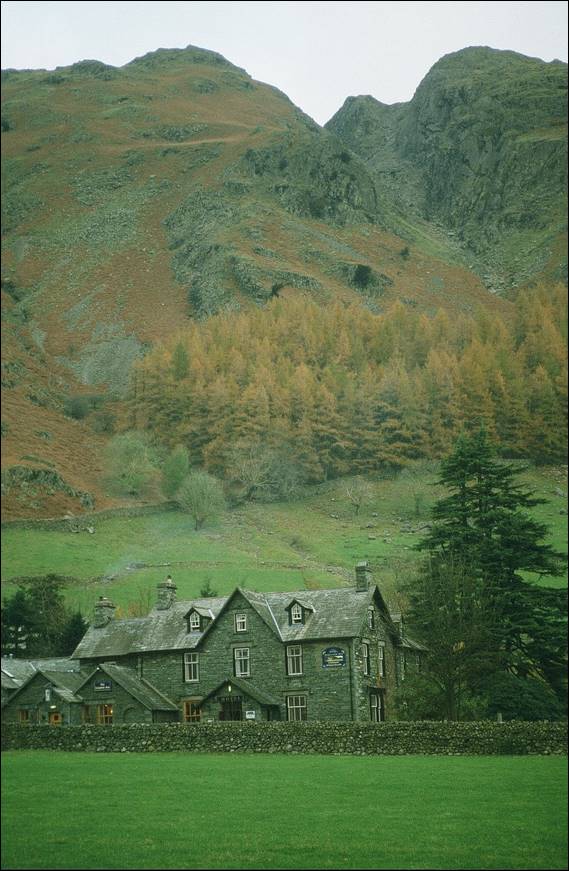
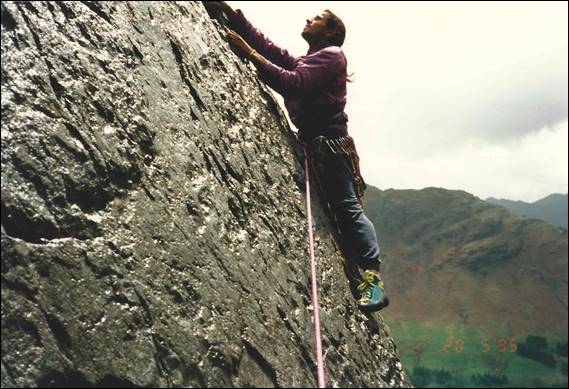
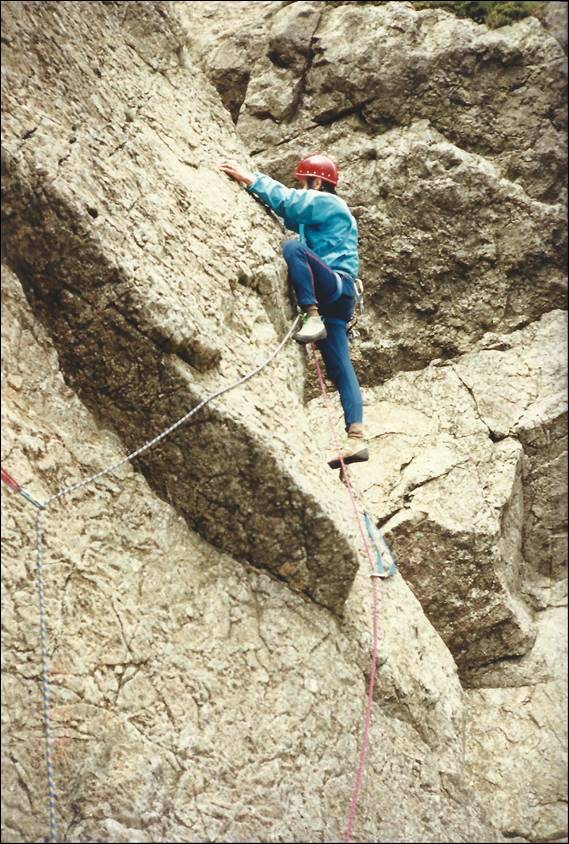
I caught up with Mel and Ansley heaps after that, and not just in the Lakes. However, I really enjoyed the Lakes and it became a place I would make the time to get too. The good thing about Mel was that he was keen and even on damp days we would hit the local crags unafraid of the wet rock, below I’m on the second pitch of Centipede on Raven Crag a short 10-15min walk from the pub so if the weather really came in we could easily head down for a pint. Mel liked a drink and he could sink a lot beer! So went many of our early climbing trips to the Lakes; Langdale offered a great location to park the car and not need to move it until we left. We enjoyed the longer less challenging lines, and were happy to have big walk-ins and enjoy the beautiful setting. There is a second pub in Langdale called the New Dungeon Ghyll, which is shown above, and behind it to the right is White Ghyll crag. On one occasion Hand Jam Rob, John and I headed out to this crag. From outside the pub the crag is not so obvious so taking the lead and not wanting to read the guide I reckoned I knew where to go. After over an hour plus of hiking up and down scree slopes with heavy packs we were almost back at the pub. I conceded that John was right to consult the guide, only to find out that the crag was an easy 30min walk along a mostly level path. Deservedly so it was my round when we returned to the pub after a great day out. On this crag we hit a number of three star VS’s including White Ghyll Wall, The Gordian Knot, Haste Not and Slip Knot. All good clean multi-pitch slabby lines and on a day when the rock was bathed in sun. On one of these lines when John led the second pitch that took on a roof he did his usual yo-yo thing and eventually piked out on a rope dragging deviation to avoid the move. Rob was getting nervous watching and I kept advising him not to worry about how other people climb, as it is such a head game. But unfortunately John’s escapades were deeply embedded in his brain and he too piked out. A shame as the move wasn’t that bad and they both agreed after getting back on line that the holds above were jugs and if they had known that they would have gone for it. I still encourage people to not take note of how other people climb or talk about routes and to trust in their ability, I’d like to think that most times I get it right:
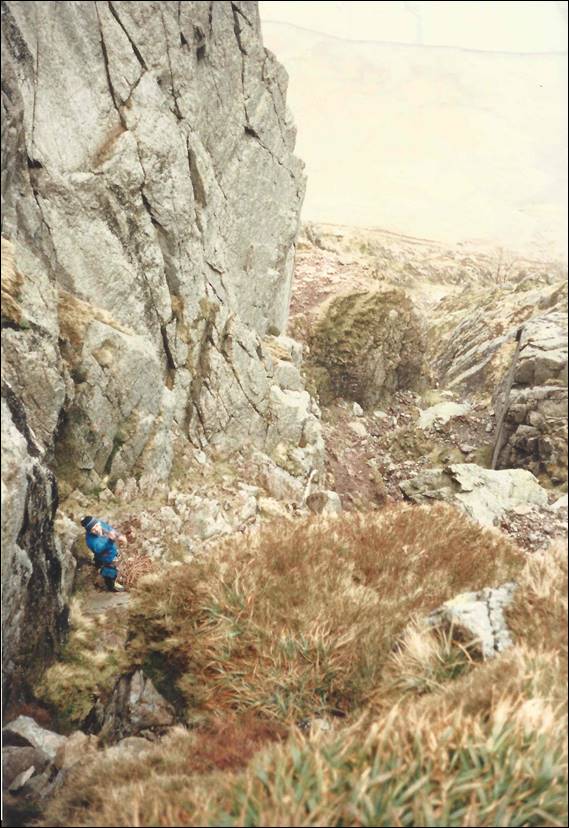
On another trip John and I walked up to Gimmer Crag, it is only a 30min walk but the last section to the base is up a gruelling scree slope where for every step you took it felt like you slipped back two. The sky was grey and darkening and rain came and went, but we were heading to a climb that John had been keen to bag: The Crack. Regarded as yet another classic of the area and a great length at 74m this amazing looking line made use of a steep corner. As we walked in the rescue helicopter flew by, we hoped that it was on a reconnaissance flight but we found out later there had been an accident not far from us. Hence the general mood in the pub that night was less joyful. The weather and chopper did not put Johnny in the best of mindsets and he started to wain a bit as we approached the crag. I stayed positive and racked up to take first lead, making it to the stance and getting ready to belay him up. But it was not to be, I looked down and he was no longer keen. I took a few last looks up the impressive line that was begging to be climbed (or was it me begging to climb it) and came back down. We wandered back down and went for a hike instead. In truth I reckon I’ve done more hiking in Landgdale than climbing, and I have also drunk more beer during those trips than I have at any other climbing destination. Despite that and the many times we were rained out we still did a lot of great routes and the place holds many fond memories:
In Mile End I bumped into other climbers keen on the Lakes and this led me to explore a bit more of this huge area, and the next place that I started to get to was Castle Rock of Triermain and Shepherds Crag. The latter I’ll get to later but the first one really got my attention and I spent many great days at this impressive 75m crag. It was both steep and strenuous and many lines are bold and full of exposure. Some lines made reference to the use of creaky flakes, and I remember tentatively testing them before having to commit full weight to them in dauntingly exposed positions. Sadly I hear that the north crag has been subject to rockfall and it is advised not to climb here, a shame as there are/were so many great routes. It was a place that I would often visit with Dave, a tall and heavy set man who lived in London but also owned a cottage in the Lakes. On trips with Dave we would get a bed to sleep in, and a bountiful wine collection that seemed to reduce in size after each visit. These trips didn’t always go to plan and on one occasion the wine led to silly games, such as the cornflake box challenge. You had to pick the box up with your teeth while staying on your feet. The box is cut shorter with each success until we were left with the flat top of the box on the floor, unable to statically reach it I lunged and pulled my thigh bad enough to put a stop to any climbing on that trip for me. During another trip on the way up to Dave’s I managed to misread the road signs and hit a kerb at 70mph on the outside lane of a dual carriageway in busy traffic during heavy rain. I have no idea how I managed to avoid all the other cars and get to the inside lane but I did. Finton and a couple of other people I have forgotten the name of were a tad shaken up, but when the tow truck arrived we decided it should take us onwards to the Lakes. I had to leave my car in the Lakes for several weeks to get repaired, and picked it up on a return trip with John. Thinking back the Lakes in some ways was the place that we not only got rained out of most but was also where most incidents occurred, so I’m a little surprised I kept getting drawn back:
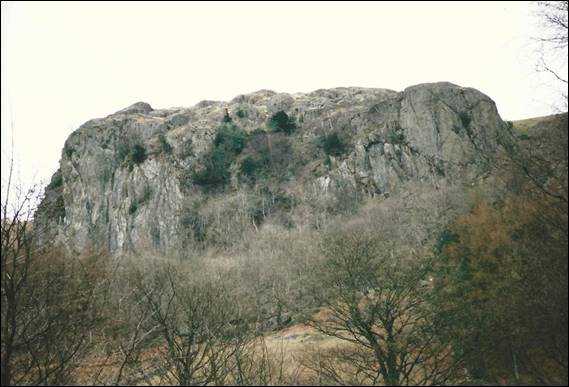
Now I better get back to some climbing talk. During a trip with Gareth, John and Dave we hit Castle Rock of Triermain on the first day. I mostly climbed with Dave and we aimed for some higher grades and set our sights on the E, for Extreme, routes. Another climber from Mile End, Cess, often went out with Dave and they aspired to lead E grades but didn’t usually get to them so Dave was super encouraging when I was feeling good. He was keen to be able to bag Cess out about all the great E lines he had been on. On a side story about Cess; during a climbing trip to the famous Scottish sea stack called the Old Man of Hoy he left his entire rack of friends atop the stack and didn’t realise until he got back home in London. I led a number of great climbs at Castle Rock on that day including Thirlmere Eliminate and Romantically Challenged. On one climb the second pitch took a rising left traverse, which I didn’t find too hard and was enjoying so much and that I forgot to place gear. Dave followed me up without falling but did suggest that on traverses I should be considerate of the second, oops he had a point. On this trip however it was the second day that really sticks in my mind as one of the best days out. Dave took us out to Gouther Crag, in Swindale. This crag was located in an amazing setting, and being relatively high up on a steep hill the exposure was awesome. The well featured Rhyolite rock offered great sustained lines. Below Dave is leading the very fine Kennel Wall, but there were two lines that really caught my eye. One of them I didn’t end up trying, One Step Beyond, which at E4 (a grade I never did attempt) I just didn’t have the gumption to try:
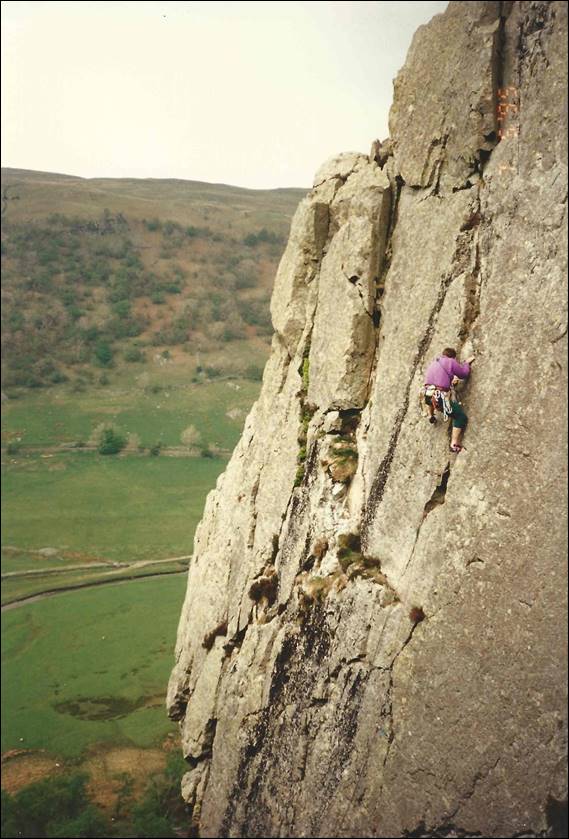
The other one that caught my eye and I did jump on was Blood Hound, a true classic line. Direct, clean, technical and damn run out. There really wasn’t anything else to put in and the first 10m or so was a solo, and as I inched my way up Dave kept asking if I was sure there was no gear. I reckon he was more nervous than I was. The slabby line kept going until you had to move left to a flake at half height, and there was a peg in small crack before the move. I pondered my choices for a very long time, part of my ethical standards were telling me not to clip the peg but I had no other gear in and was a long way off the deck. Eventually I clipped it and made the delicate move over without incident, so in theory I could have avoided using the bolt. Then a there was a small wire placement behind the flake that was OK, but as I had to run it out another 8m plus I’m not convinced. Finally I reached some good cracks which gobbled up a couple of solid wires. From here an exposed step into a corner and up the steepening wall. While it lasted so long when climbing, this absorbing and impressive line seemed to end way too fast. It goes down as one of the best routes I’ve ever climbed but that wasn’t the end of the day by any means:
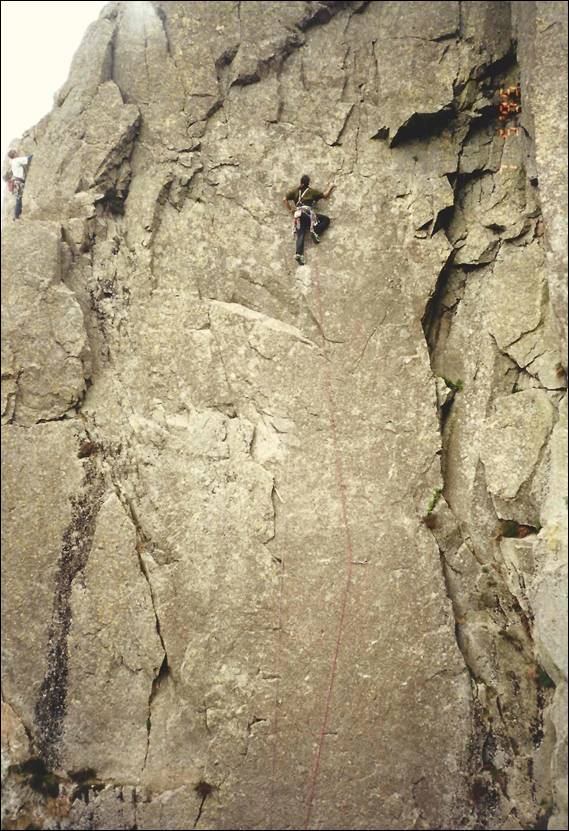
Dave was eager to maximise his chances of bagging more E grades while I was in good form so we moved to Truss Buttress, another crag in the same area. Castration Crack was the hardest climb I attempted in the UK at E3 6a, the crack narrows up the higher you get on this steep face with the holds getting pretty small. It only gets two stars but the description indicates it is worthy of three stars if in condition, which it was on the day we were there. With each move I slotted in another wire, the crack while narrow could gobble up so much gear if you had small wires down to RPs. The higher I went the steeper it got and the smaller the holds got, within one move of the top and trusting RPs below me something gave way and I slipped. Damn… I jumped back on quickly and pulled the final fierce move to gain the slabby final face above. Dave followed me on this one and took a few rests along the way. Having not fully tensioned the belay back to the anchors, I felt like my harness was going to slice through my waist as Dave rested his 14 stone frame on the rope. Another lesson learnt, tension the belay every time. It was a shame we didn’t attempted this line earlier in the day rather than last, but regardless it was a ripper and looking back still ranks highly amongst the gazillion of classic lines I’ve climbed:
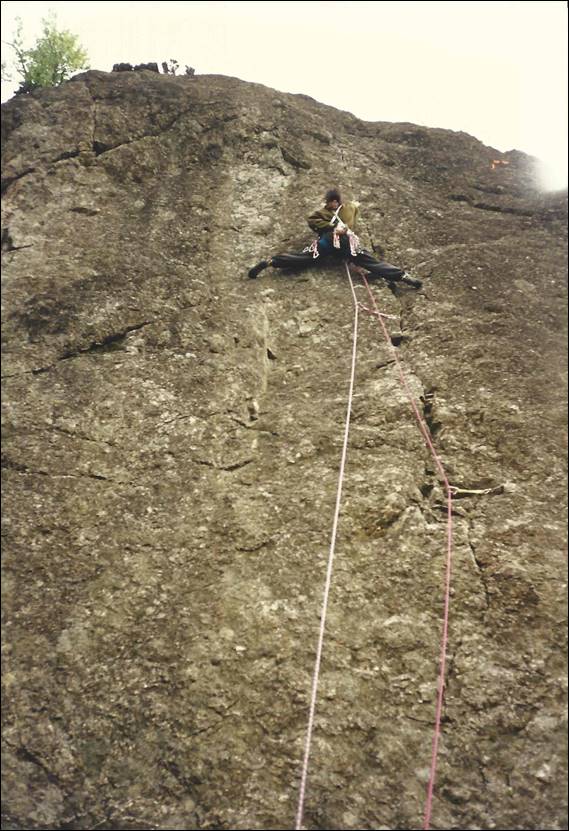
I learnt a lot in terms of good climbing practise and technique from people like Dave and Cess. They had a heap of cragging and alpine experience, so I was always grateful to be able to get out with them and pick up more tips. I probably also based a lot of my own ethics on their approach to ground up climbing, a preference for trad, rope work and (most times) a high regard for safety. This particular trip to the Lakes was a three day one and on the third and last day Gareth, John and I went off to explore yet another, for us, new crag. We went for Black Crag in Borrowdale, reputed to be one of the finest crags in Borrowdale and with a host of good looking lines up to 100m – perfect. Climbing with three on a multi-pitch can be slow work and so we only climbed a couple of routes here on this occasion. It was also biting cold so while we huddled on each belay ledge our teeth were chattering and hands shaking. Jubilee Grooves was an awesome line with four direct pitches going straight up, the first three of which being pretty consistent and sustained. Below Gareth is making the slight left traverse before heading up one of the crux groves on pitch 3. As Johnny and I sat below a small roof watching the rope feed out we heard grumblings from above. Gareth’s hands were so cold that he was not able to control them so well, and then it rained… wires! He managed to drop half the wires one by one as they slipped out of his grasp. I’m pleased to say he managed to climb the pitch and also linked in the final pitch. When we got back down and wandered to our packs we amazingly found all the wires had fallen within a 5m radius of bags:
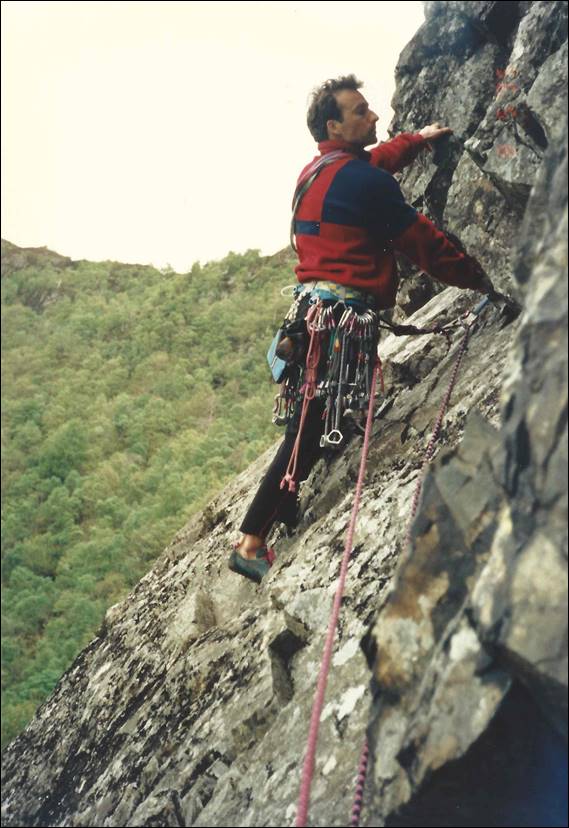
For nine months of my working life I commuted to London spending anywhere from 3 to 5 hrs a day on trains and tubes. The length depended on the connection times, and inevitable delays due to things like (I kid you not) leaves on the tracks, the wrong type of rain, etc. During this time I wrangled a deal to gain me a three months paid holiday to Australia, which I returned from in the second half of 94’. On my return I struggled with my previous ‘professional’ lifestyle so I looked for a change and ended up moving and working in the Lakes. I lived on the west coast in a small village called Moresby Parks, just on the outskirts of Whitehaven. It was a beautiful time to be there with a white winter, followed by a glorious sunny and very dry summer. My previous weekend visits to the Lakes were spent on the eastern side due to the easier access and to keep the travel time from down south to a reasonable 5-6hrs. So when I moved to the west coast it provided the perfect chance to explore areas that I had not been to yet. Each morning I’d drive to work in a town called Wokington, on the way out it would mean going downhill while, on clear days, taking in a view of Scotland across sea. During winter the snow covered peaks were clearly visible. Then coming home I’d see the snow-capped peaks of the Lakes, I had made a good choice. Just a short 15min drive from home I could get to a lake called Ennerdale Water for great walks (see below), St Bee’s (which will get mentioned later), and Egremont which had a fun indoor climbing wall. The latter was a good place to meet other climbers and there I bumped into the two people that I spent most of my time climbing with, Bob and Gary. For those that have climbed with me, I bought a 20m indoor lead rope at this wall: So if you remember using a short light pink/purple rope of mine you now know that I bought it way back in 1994! You’ll be pleased to know that I officially retired that rope a couple of years back after some 20 years of good service:
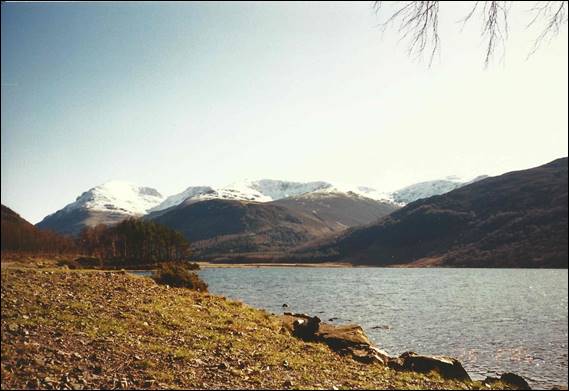
While having all the magnificent Lake crags on my doorstep there was a second evening option and that was to climb at St. Bees Head. This westerly facing soft sandstone crag is protected from the ocean by a sandstone shelf, and being west facing is bathed in the evening sunlight. A perfect place to go and unwind, climb and watch the sunset. The cliffs are owned by the Royal Society for the Protection of Birds, and with the seasonal ban in place when I arrived it was not until later in the year after July that I got to explore them. Being soft sandstone they are fully bolted, but due to the awesome setting I accepted that and usually headed there with Gary. To get to the cliffs you had to cross private land and on occasion the sheep, more so during lambing, were not feeling that friendly and might chase us across the paddock before we could make the steep scramble down to the base of the cliffs. Living on the west coast also offered me easy access to Wasdale where the mighty Scafell Pike is found, the highest mountain in England at 978m. On cold or damp days I’d go on big walks, and the image below being taken from the saddle that separates Wasdale from Thirlmere to the east. In this view, looking west, you can just see the end of the lake called Wast Water which you have to drive past to get into Wasdale. Many a time I would see divers preparing to enter this lake, you may ask why anyone would dive in this freezing water but it is the deepest lake in England, 79m deep so a great training ground that has at time proved fatal:
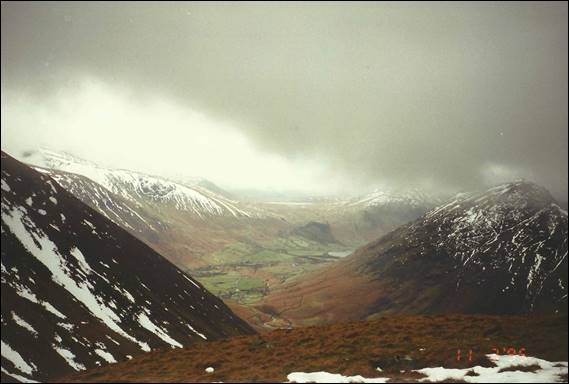
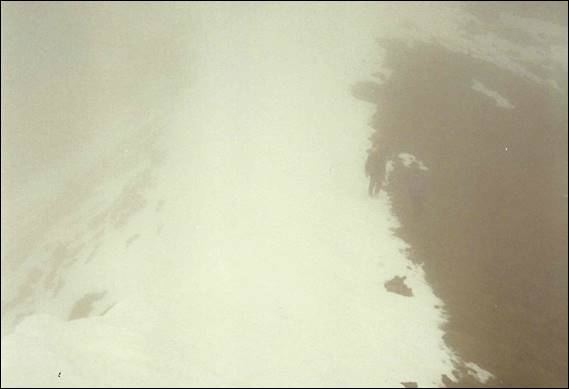
I have to admit surprise that in my nine months of living in the Lakes not many people came to visit and climb. I guess it just went to show that for many of the people I climbed with I was the main driving force for many of our longer excursions, excuse the pun! During my time in the Lakes I still drove out to climb in other locations so I got to catch up with the usual crew. On a weekend when Gary or Bob wouldn’t be available and I didn’t feel like going too far I’d pick a random spot, walk up to the crags in the area and solo the easy classics. At times I’d get myself into a sticky spot but always managed to come out unscathed, sometimes backing off and when that wasn’t a safe option gritting my teeth and going for it. It is amazing how many crags there were to visit and I rarely returned to the same spot. One hike I did attempt a number of times was the horseshoe walk from Wasdale head, up to the saddle and then following the ridge to the south/west back to Red Pike (the peak on the right in the image above). It took three attempts before I completed that walk, as on two occasions I got caught out in a whiteout and it seemed too dangerous to go for it. Below Mike joined me for attempt number two and as we were crossing Wind Gap the clouds came in and we decide to look for an escape gully. The time I did complete the walk was with my mam in the last month of my stay in the Lakes. I needed to clean up the garden and she offered to help, I’d let it go wild and the grass was thigh high. We managed to tidy the garden up with the help of Bob’s lawn mower that we subsequently burnt out. When I explained what we had done he said not to worry as it was under warranty and he could get it replaced – but whether he did I never found out. On the second day of my mam’s visit we went on this walk, and the approx. 12 mile walk was awesome. The clouds came in but also cleared at the right times, and to boot it was the first time my mam had walked in the clouds so she was thrilled. The last decline down Red Pike was pretty steep, loose and hairy and by the time we got back to the head of Wasdale pass we felt like we deserved a pint in the Wasdale Head Inn:
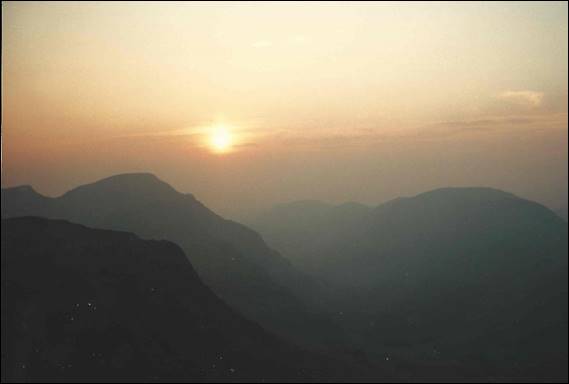
The further north you go in the United Kingdom the longer and shorter the summer and winter days get, respectively. In summer the light would not fade until past 10pm, and Bob and I had a system going whereby we would on occasion pick a climb and meet after work to head out there. We would set our sights on usually only a few climbs, and for those crags that required a longer walk-in possibly only one. Bob was eager to seek out routes established by some of the early Lake pioneers, especially Bill Peascod (we eventually got onto his most famous route but you’ll have to wait for that one). During these evening trips we hit quite a few locations and climbed some mega classic Peascod lines such as Sinister Groves and Cleopatra at Honister Pass. However, the evening trek that sticks in my mind the most was when we tackled Engineer’s Slabs a classic three pitch line that ends up a smooth V groove. I thought it was a Peascod route but Google is unable to verify that for me, and I no longer have the guide book for that area (in the 90’s there were six guide book for the Lakes). The route we had our sights set on is located on Gable Crag, which is an hour and half walk-in. Bob was coming up the penultimate pitch, as I took the following image of the sun setting over Ennerdale. He still had that epic finale pitch to go up the almost featureless walls of the V groove with the light fading and our head torches safely stored in our packs at the base of the crag (oops). He made it with the biggest ear to ear grin and belayed me up, as the darkness really took hold. We were pleased for the head torches on the walk back out, but unfortunately on this occasion we didn’t make it back to a pub for a celebratory beer as we would usually attempt to do. No matter the climb was everything it was hyped up to be and more:
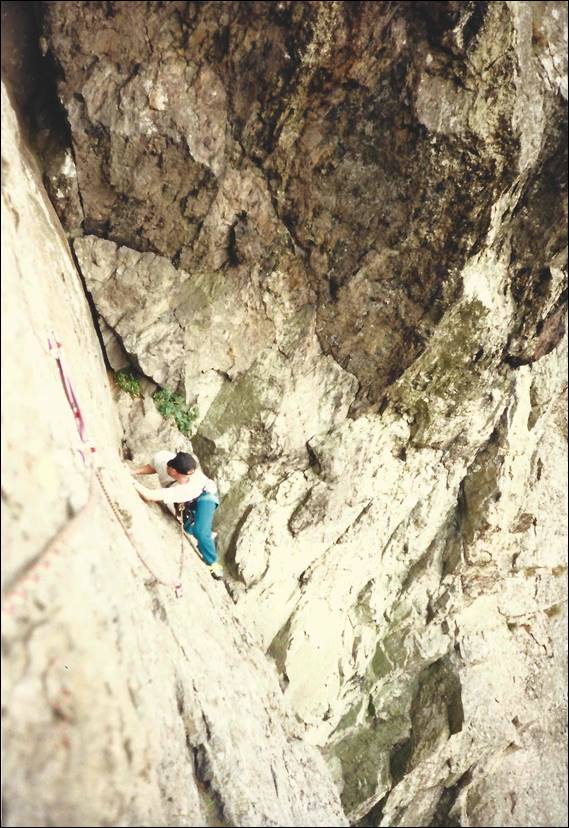
I managed to convince a few other people to get out there in the evenings and also introduced a few of the people I worked with to climbing, but it didn’t stick with any of them. The more populated towns of the Lakes, and probably more so the west coast, seemed to me to be a place that bred blokes who played rugby and drank beer (a combination that would often end nastily in the pubs of Whitehaven on a weekend night). I played hockey before moving to the Lakes, but you wouldn’t dare mention that while in a bar, well at least not back then. Below Siddle, from work, is being introduced to climbing as he followed me up Ardus at Shepherds Crag. This was a crag that I went back to numerous times and loved. This 50m hugely popular crag was very accessible and boasted many classics up to a reasonable standard. It also had heaps of very fine low to mid-grade lines and as such was a brilliant place to take beginners, such as Siddle and Mike(mentioned above and in the Peaks). Looking back I have climbed a fair portion of the routes here and many of them seem to have gained a good number of stars since the guide book I have got (1990) was published. There was a test piece at this crag called M.G.C which I never attempted but Gary did and he took a ground fall of it, which I’ll come back to in due course. Another great attraction of this crag was the very quaint café located in a narrow stone walled room that resembles a barn. It was traditional, no it was obligatory, to have a cuppa and some cake there after a climb here. On a fine evening the seats outside were elevated in the landscape enough to allow glorious views down the valley across Derwent Water:
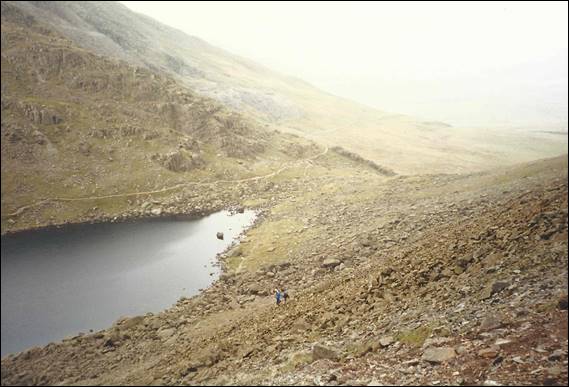
In addition to the evening climbs I also got out with Bob for big days. On some weekends Bob and his family, Mary, Hazel and Jenny would go camping. I’d rock up for a day and drag Bob away from them. When I got to their VW camper Hazel and Jenny would poke their heads out from the top bunk to say hello before we would set off. Unafraid of walk-ins and keen to climb classics we would often find ourselves trudging in a pack a bit heavier than usual carrying food and drink enough to sustain us for a long day. Below is the final scree slope before getting to the base of DoW Crag near Coniston, this one had an hour walk-in which was considered a relatively quick access for a Lake’s mountain crag. The 100m Rhyolite buttress offered many quality lines in yet another remote setting. While the Lakes has on offer sedimentary, igneous and limestone formations. I mostly climbed on the igneous rock, sometimes on the sandstone and never on the limestone. On this occasion Jenny decided to join us, and brought with her a sketch pad and pencils. For some reason I didn’t start well and backed off when attempting, from memory, Leopard’s Crawl. My head needed re-adjusting so Bob suggested a classic Diff. Jenny put her sketch pad down and the three of us went up ‘C’ Ordinary Route. It was such fun and I came down refreshed and mentally reset:
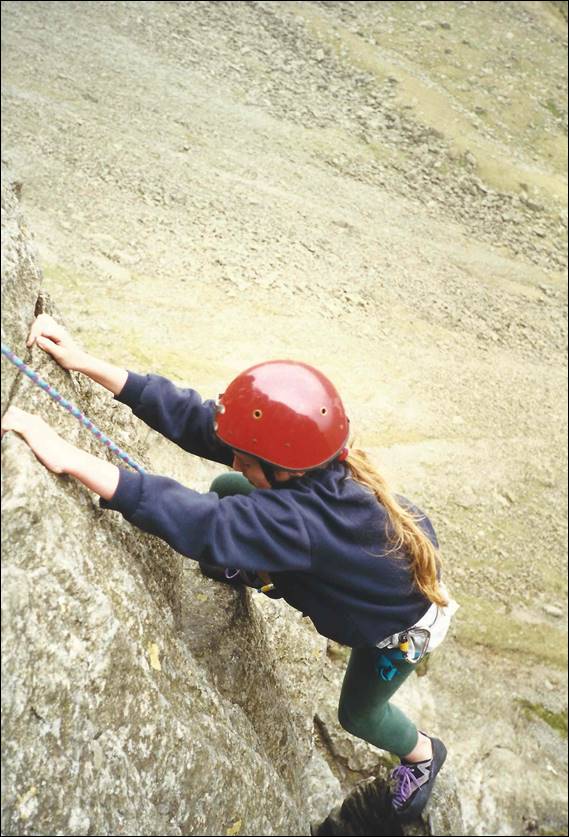
Here is Jenny coming up ‘C’ Ordinary Route, and she managed the whole route amazingly well. After the one climb (noting it was 100m long) she had enough and went back to her sketch pad. I may be mistaken but think I then didn’t crawl but practically sprinted up Leopard’s Crawl, and I’m sure the next line we jumped on was Pink Panther. This line was somewhat harder than what Bob and I would normally go for but it looked good. The first pitch was a left rising traverse and I remember Bob being a tad concerned that I didn’t put much gear in. I am sure there wasn’t much to find but maybe my mind had been reset a little too far in the opposite direction. Next up was the crux pitch, a short right rising traverse to the base of a overhung crack. I placed some gear and then had to crank fiercely to get my feet up and work into a stance to get established and continue up the steep crack above. It was tough and awesome and I was feeling good, what a move and what a line. Bob followed me up cleanly and I wonder why we didn’t push the grades a bit more, probably because there was no need with oodles of classics at a far more relaxed pace to be found:
Bob is leading one of the pitches of Eliminate ‘C’ below, and you’ll note the sling he placed at his feet. His rack was pretty old and he had rigid friends and the originally stoppers, I’ve still got the one he gave me to complement my one and only stopper that I found as crag booty in Cornwall. Bob loved to place slings and I reckon that is why I too am keen on them even now. We didn’t wait till darkness descended on us on this trip, as with had Jenny with us but still managed to reach our 1,000ft of climbing in. When we had a day out the grades of the climb didn’t matter but we would try and climb a minimum of a 1,000ft, it just seemed a good round number and most times we managed it. On one occasion we got to the crag, I forget which one now, and Bob had forgotten his sticky boots. He climbed in walking boots and kept up with me the whole day. Another reason for remembering that day was that on one route there was a brand spanking new flexible friend at one of the belay ledges. Still in the crack and in no way stuck. Seeing there was no else at the crag it was a great bit of crag booty:
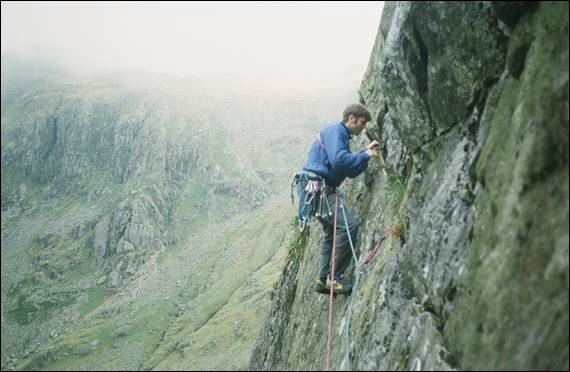
Gary too did not have a hankering for bagging grades and when we went out he was happy to enjoy just being there as much as the climbing. He was relatively newly married and a tradesman so worked long hours and wasn’t as often free to climb, and as such I would be led by his pace. He loved the Lake’s and had an amazing eye for detail. We could be walking past a clump of trees and he’d see a nest buried deep in the vegetation, and he hated nothing more than finding litter well maybe he hated finding someone who was littering. Our days out would often consist of hikes and longer classics. On this day we headed to Raven Crag in Combe Ghyll, a great crag reaching close to 200m in places. We climbed a number of good lines here and below he is on pitch 6, the hand traverse, of the extremely popular 1950 classic Corvus. It’s a route that I had previously solo’d and at that time after topping out I walked across the valley and entered the dark chimney to the left of what is Doves’ Nest crag. I managed to hike, scramble and climb out the back of this chimney but it was the one time that I thought I might have pushed my luck that bit too far. Climbing out of the chimney on slopey wet rock with a big drop into the dark crevices below was frightening:
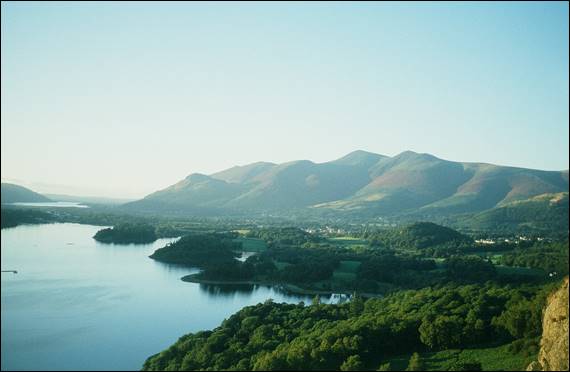
On some occasions we would find a more challenging crag and below if the view of Derwent Water in Borrowdale from the top of Gowder Crag. This crag was great fun it looked steep and imposing as you approached but yielded to a number of fine mid-grade routes and the best of the pick on that day was Fool’s Paradise and Kaleidoscope. It was such a rarity in the Lakes for us to climb single pitch climbs (like at Gouther Crag) and most routes I did had a minimum of two pitches. Long routes became the norm and a 100m crag was not uncommon, these long routes allowed you to get into ‘the zone’. While the routes were so good I’m surprised to find many of my images are in fact of the surrounding scenery than the climbs themselves. It is easy to see why this place (in part) inspired the Romantic (Literary) Movement by the Lake Poets. Just a bit further along the valley shown below is Falcon Crag, and this crag required a bit more respect when we ventured there. I remember feeling intimidated by the steep black walls looming above us. It is also the only place in the Lakes that I remember feeling insecure on lead, the climb name has escapes me now and I reckon my brain has suppressed those memories:
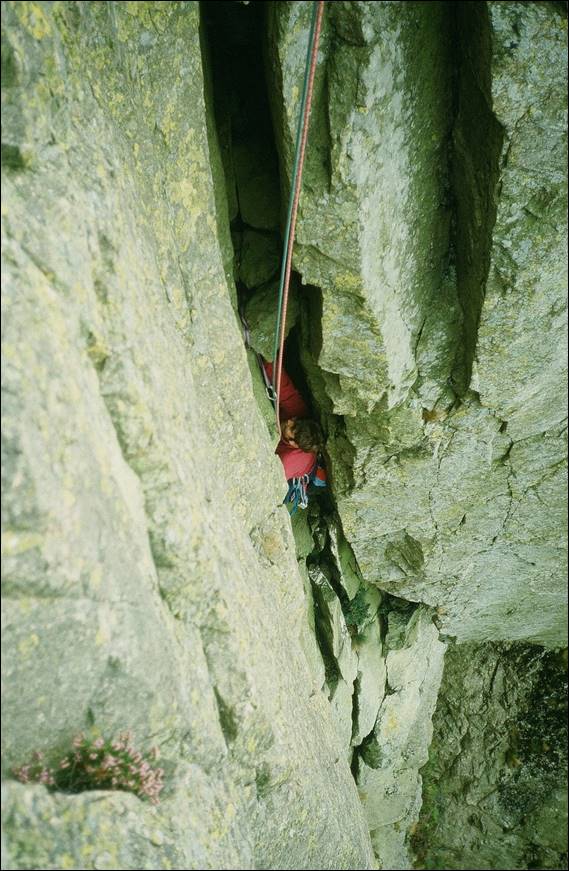
I was so taken by Gouther Crag that I took Gary there, we repeated a few lines and added more to my tally of routes. I never got into the habit of using my guidebooks as a record, and in some ways I feel it is a shame that I didn’t keep track of the all the routes I have climbed. While it may seem that I can remember a lot of them there are far more that I can’t recall. Below he is following me up the very fun Hindleg Crack, it has to be climbed like this and does not have a heap of gear. For the grade of climb it provides a strenuous outing and your body knowns it has worked after you top out. We didn’t repeat Bloodhound, it didn’t jump out at Gary and I didn’t want to ruin the perfect moment I had on it the first time round. My main reason for including this image was not to revisit the crag for any particular reason but just because I liked the image:
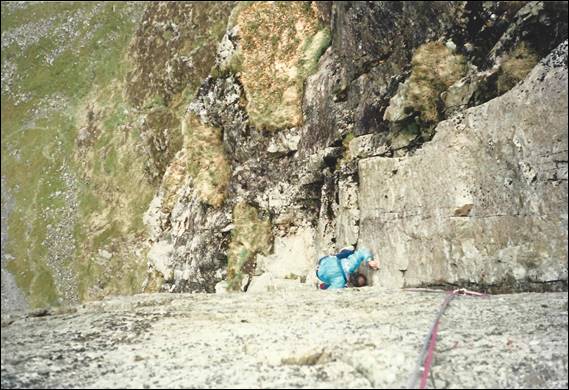
Now here is a climb that I said I would get too. It has to be one of Peascod’s greatest achievements before he, funnily enough, moved out to Australia in 1952. I have just been reading up on this great pioneer I found the following recount that I thought was gold: Peascod was from the school of climbing where any form of belaying was unreliable. He and his generation operated on a simple principle known as the Tiger’s Rule: ‘The rule was simple. Never fall off and I never did; well, hardly ever did,’ he recalled when in his early 60s. I also noticed that Peascod helped establish some of the early climbs in the Warrumbungles in NSW Australia, which is high on my wish list of places to climb… one day. Back in the Lakes and Eagle Crag is a proud 150m buttress that stand out amongst the scree slopes above lake Buttermere. The line Bob was keen to jump on was Eagle Front, climbed in 1940 it tackles the front and steepest part of the crag and is surrounded by daunting classic E grades. The route meanders a bit to be able to get up this impressive crag at its mid-range grade, but despite that out of the eight pitches a good number are surprisingly consistent and all are on solid rock. Bob is following me up the great corner crack on pitch 7 as we near the top:
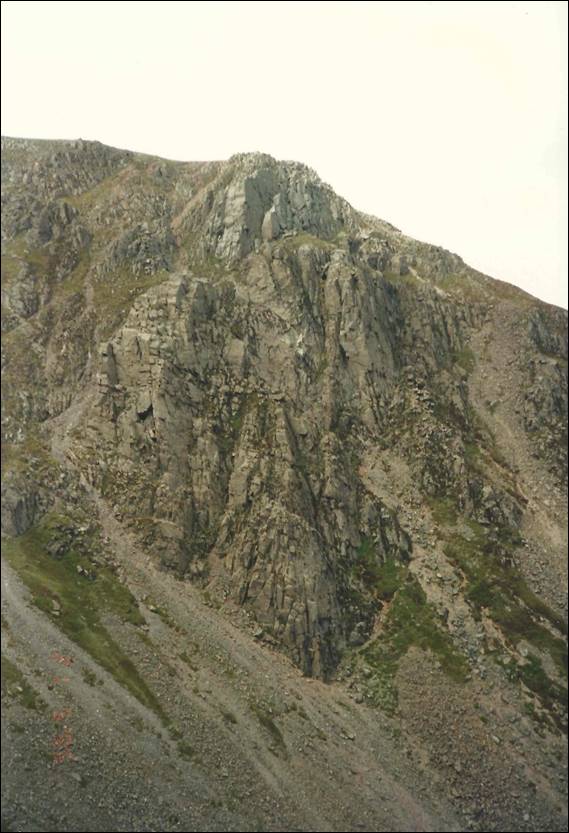
After such a great climb you would think we could retire to a pub for a beer, but why stop there so we scree skied back to our packs and then scrambled across to Grey Crag. This crag is more of a series of crags upon crags and the image of it provided is taken from the top of Eagle Crag. Bob and I picked a series of climbs that wove from the lowest point to the top, this time climbing with packs on. Hooking up three routes got us to the top and it was pretty easy to see how we could tally up a 1,000ft of climbing in a day. With still more light in the day we shouldered our packs and walked across to High Stile and then onto Red Pike (not the same as the one previously mentioned) before descending back to the base of the valley. On this trek the many walk paths could be seen zig-zagging up the steeper inclines and the impact of all the hikers was pretty scary. In fact erosion under the footfalls of tens if not hundreds of thousands of feet that plod up and down these hills every year is a massive risk to the area:
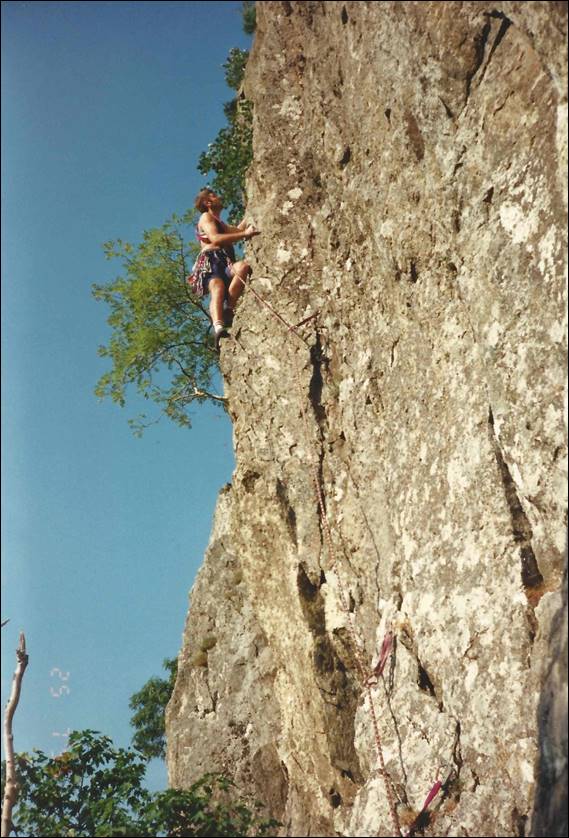
While I lived in the Lakes Tim and Finton caught a train up from London and the next day we jumped in my car and headed out to Ireland. While that is another story, on that trip I had my most serious fall and didn’t climb for a while. This occurred around the same time Gary took his worst fall to date, off M.G.C. at Shepherds Crag (mentioned earlier). So on my return from Ireland we both had dented bodies and lacked motivation. We decided that there was only one way to sort this out and that was to find a classic two pitch climb that would put us both back on the horse. We trawled through the guide books and plumped for Triemain Eliminate on Castle Rock of Triermain. At E2 5a, 5b we thought it was perfect as it wasn’t too namby-pamby and would make us focus and just get on with it. Gary drew the short straw so he kicked off the proceedings, moving well and not faltering once. Inspired by his lead I set off and while starting shakily soon got into the groove. Just in time as it was then my turn to lead and loved it, the memories of that 60ft fall being pushed into the darkest recess of my mind. It was the perfect tonic, on the perfect route, and as can be seen on a perfect day:
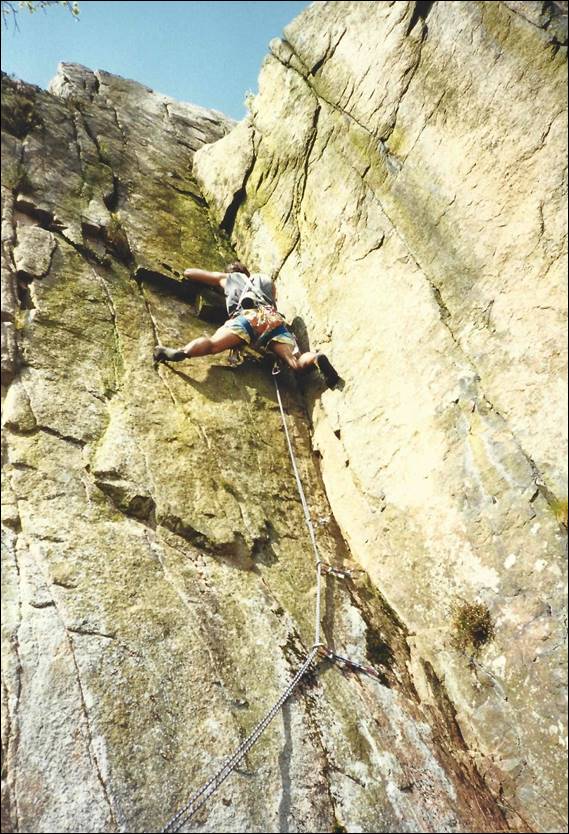
On one occasion sometime after I went out with Gary and his mate Sean. Gary had not climbed as much or hard for a while and had instead started fell running. They had plumped for a small crag called Bell Stand in Eskdale, and there I did the shortest routes I have done in the Lakes at less than 20m. But they were by no means poor quality and we knocked off a good number of fine lines. It was kinda funny as the 15min approach to this crag comprised a steep scree slope and these seasoned fell runners flew up this, leaving me panting my way up. Then on the rock it was a reversal of roles. It was yet another glorious sunny day and as I mentioned before the best summer conditions I could have had while I lived there. Crags that had not been in condition for years were perfect and it is with some regret that I didn’t climb anything on Scafell or Pillar Rock, two epic places that really should have drawn my attention. Still no complaints with what I did achieve and that included conquering the thin and sketchy but very cool Puzzle Book, which took all my focus with its technical bridging and the need to trust micro wires that didn’t always sink in as deep as I wanted:
In August 1995 my time in the Lakes was coming to an end, while I loved the area I was attempting to find work overseas. That required a change in my current working arrangements and a move back down south. For my last evening session with Bob we picked an absolute gem, located high up at the head of Wasdale. However, before I get to that on a previous visit up here with Bob I attempted a route with an overhung start. Without the guide I can’t recall the name. It was an old route from the 40s or 50s and with all my modern day protection and sticky boots was unable to make the hugely committing start moves. It certainly humbled me and also showed the sheer strength of mind and muscle that those old pioneers had when they ascended routes like that with hob-nailed boots and hemp ropes. On this last evening climb we headed up to the saddle and after climbing a great line on the main crag of The Napes we then climbed The Needle, which you may remember is reputed to be the first recorded climb in the Lakes (and probably the UK). It was truly awesome and a fitting way to end it, so with the sun sinking down we scree skied down as fast as we could to get in not one but two pints in at the Wasdale Head Inn:
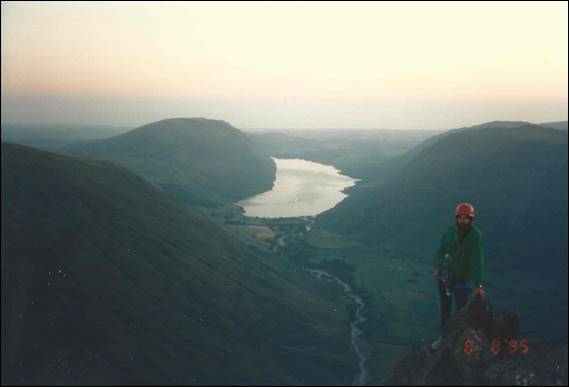
My move down south didn’t directly result in me gaining overseas work, but I did eventually get a placement in Africa. After two years out there I really struggled with getting back into the UK lifestyle, so much so that I looked to move overseas on a permanent basis – to Australia. In that last year before I moved out I made an effort to revisit as many of the best areas as possible and that of course included the Lakes. On one of these trips I came in via the famous Hard Knott Pass, which can become impassable in winter. It is a steep incline from both directions and provides magnificent views of the valleys below, coming back made me nostalgic and I spent a fair but of time just driving about taking images with slide film, rather than climbing. I did however get to climb and that included getting out with both Gary and then Bob for one last Lakes session:
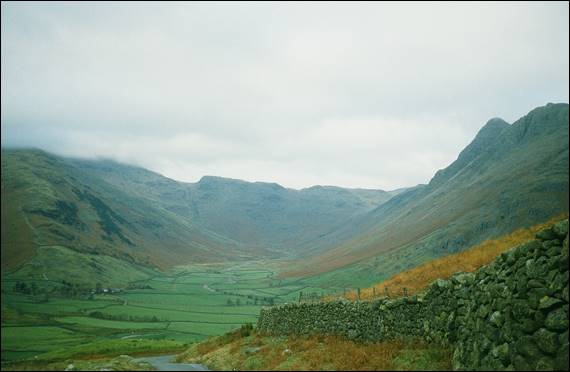
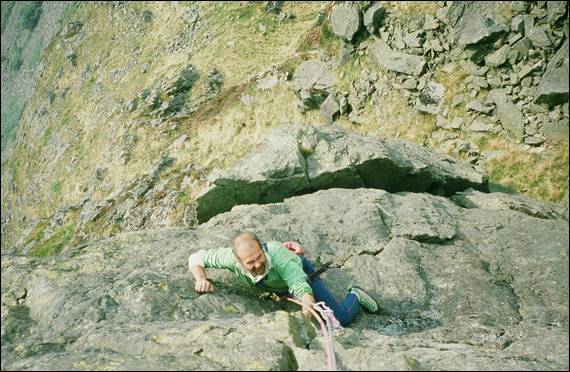
Gary ‘s life was changing and he was heading off to university to reskill. When I rocked up he was in the last stages of preparation before he too would be moving on. He was still keen to get out for a climb or two and for our big day we wanted to get to Esk Buttress, which sits behind Scafell Pike. I’d been here once before with Finton and had a great time, so I was keen to get there early and bag a few lines on this impressive 120m crag. However, Gary still organising himself before the move wasn’t quite ready and had to get the bank before we set off, then we had to swing by Bob’s to pick up a second rope (as Gary’s was packed away), and then it was a fair drive to Hard Knott Pass before an hour and half walk in. Bob was staggered when we got to his place and looked at me as if to say ‘why so late’, but what could I say other than it was what it was. Needless to say we didn’t get as much time at the crag as I had hoped but we did climb the classic Trespasser Groove and it was great. Lugging my pack back onto my back before the hike out it felt like a long way to come for one climb but it was still very much worth the effort:
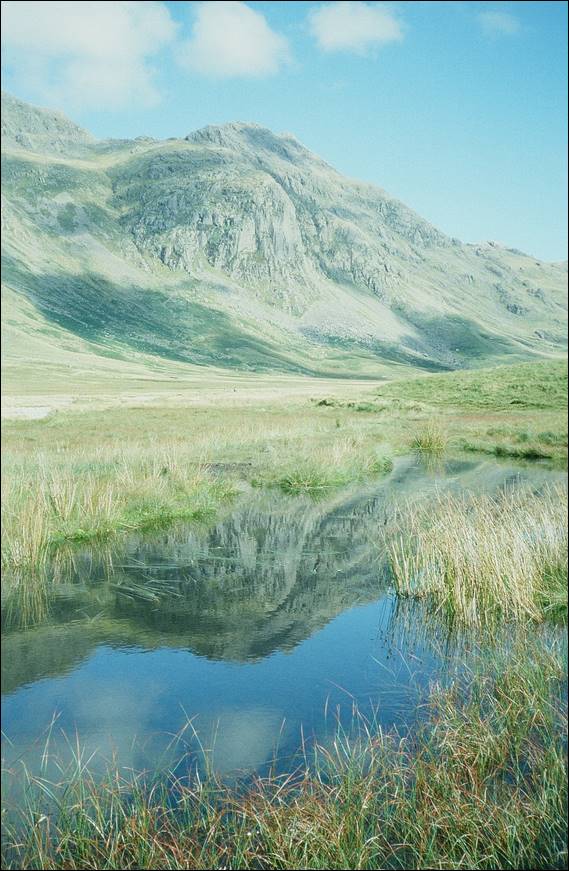
It was only right that for my last climb I did in the Lakes I went out with Bob. We decided on a relatively local crag called Buckbarrow which overlooks Wast Water (the deep lake that some aspire to dive in). It was not a day for us to get our 1,000ft climbing in, but the sun was out, the rock was in prime condition, the routes were sustained and good quality – what more could you want. We took our time and enjoyed a few lines including Last of the Summer Wine a feisty steep crack and a good climb to wrap up the tales of my fabulous times in the mighty Lakes:
I’ll continue my journey northwards in the next instalment. A place I only venture to a few times but it is worthy of mention and will include the tallest route I have climbed.
 Sandbagged
One thought on “Part 5 – The Lake District – a place to live”