I’ve been climbing for 24 years and it dawned on me that for close on half of that time I have been living and climbing here in the south west of Western Australia. So in view that you have been hearing so much about my adventures in WA I thought it was high time to delve into the murkiest corners of my memory, dig up my old photographs and slides and provide you with a snippet of my climbing past. It won’t occur in one email so be prepared for a bit of a journey that will take eleven emails, each one touching on a different location that I either used to frequent or had a decent climbing holiday to. But don’t fret you are not about to be bombarded with them all in quick succession and it may take me a few months or more to get through them. Also Some will be longer than others, such as this one. If you are keen to hear more keep reading and if not then reply to this email and ask me to take you off this distribution list.
As all good stories must start: A long time ago in a land far away… a friend I knew through hockey, Andy, convinced me to have a bash at climbing. He’d previously climbed but hadn’t for a few years and was eager to get back into it. I’d done a heap of mountain walking so knew I loved the hills, but wasn’t quite sure what to expect with climbing. After only two visits to indoor walls in London, just to make sure I was keen, we were organising a trip to North Wales. We agreed on a ten day trip starting on the Easter long-weekend of 1993 and we arrived in glorious weather in the mighty Llanberis Pass:
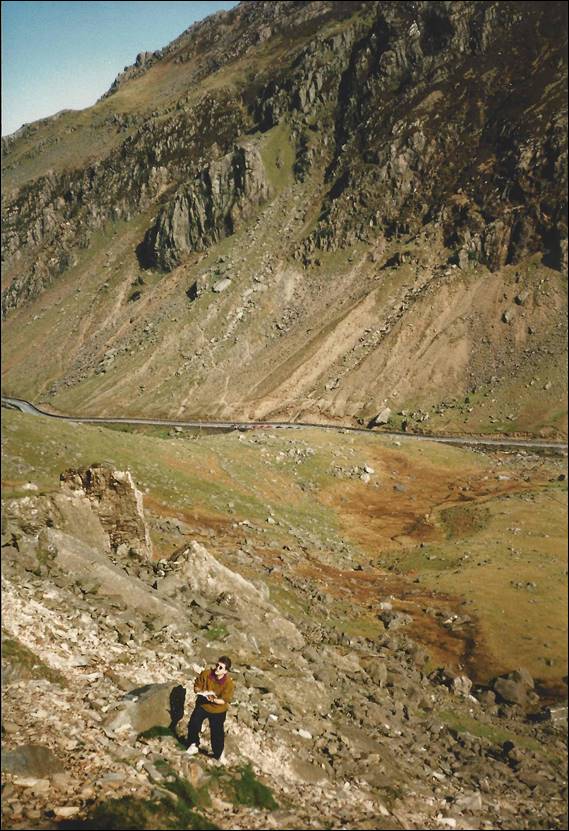
In the image above there is a prominent buttress across the valley. This is Carreg Wastad and it was on this crag that I seconded my first ever climb. My memory of the climb on that day is vague and I took no images during that ascent. However, below is Kate following me on it after I finally got to repeat the route. This is the worst quality image I’ll be using, but it simply had to be included. So why did it take so many years before I jumped back on this line, well probably because there are simply way too many places to go and routes to choose from to warrant repeating these big routes. Lion is a 100m four pitch line so not a bad one to get my rock addiction off to a good start:

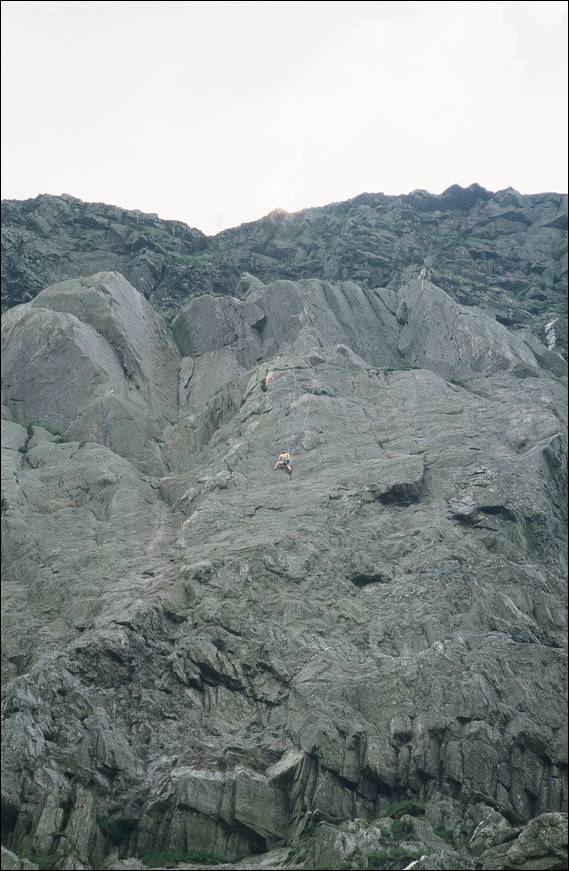
Llanberis is a mecca for traditional climbing with a multitude of big buttresses that offer all styles and grades of long multi-pitch routes. The first image I used was of Andy looking up at Dinas Mott, which happened to be where we climbed on the second day of our trip. I must have been pretty comfortable and confident on the first day, as for day two he was eyeing up Diagonal another long three pitch line. If you look closely below you’ll see someone on the second pitch of this route just above the flake in the middle of the slabby wall. I particularly liked this crag and visited it many times, partly I guess as the slabby nature suited me but also it not only offered sustained long lines but the scramble descent that can be made down the left or right gullies made the routes feel twice as long:
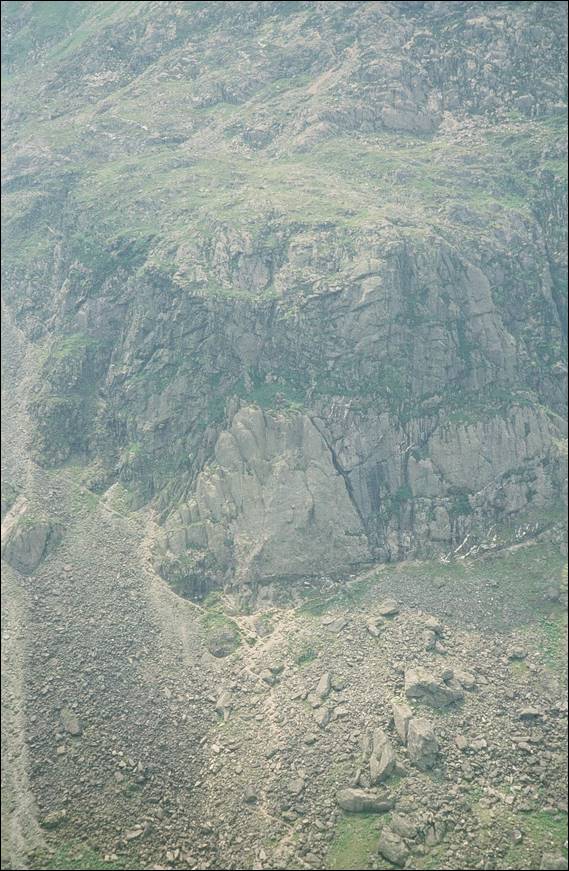
The route shown below is Superdirect a simply stunning line and I loved every metre of it. However, the reason for this image is more to show the line of Diagonal. It starts at the left end of the base and takes (of course) a diagonal line to the right side of the big flake. When Andy and I climbed it the first pitch was fine, but as he started up the second the clouds rolled over Mount Snowdon (the highest mountain in Wales at 1,085 metres). The heavens literally opened and the smooth slab was running with water and we were drenched to the skin. It has to be the coldest belay I have ever been on, and as soon as we got off the crag we headed into the shops of Llanberis and I bought my first ever buffalo. I’ve sworn by these fleece lined tops with a pertex outer ever since, and amazingly am still using my second one which is a testament to their durability:
The shop I bought that first buffalo from was the Joe Brown climbing and mountaineering shop. For those who know their alpine history he was somewhat of a legend, and North Wales was his training playground when preparing for his bigger Alpine expeditions. Some say that rock climbing originally started in the last quarter of the 19th century in at least three areas: Elbe Sandstone Mountains in Switzerland, Dolomites in Italy, and the Lake District of England. That said the Alpine Club started visiting North Wales for winter training from the 1860s, but the first recorded rock climb wasn’t until 1879. So arguably North Wales could also be on that list as one of the birth places of rock climbing, and below is the crag that Llanberis Pass is probably most famous for… the awe inspiring open book corner of Dinas Cromlech:
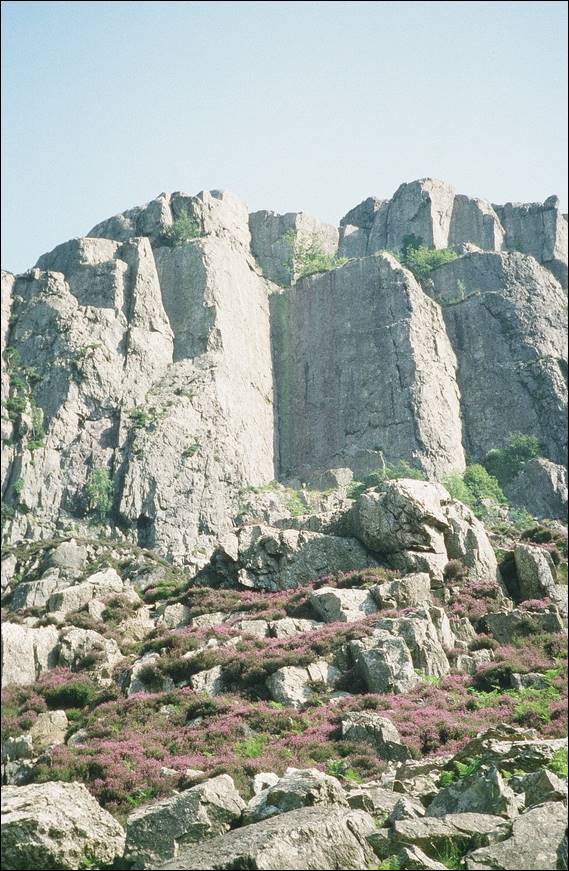
With two vertical walls that provide a rope stretching 50m of sustained climbing this crag is both impressive and a daunting proposition. Andy and I not surprisingly didn’t climb these walls, but we did tackle Cobweb crack on the west wing of the buttress. This was the last climb we managed on our ten day trip, despite attempting to climb it on day three. The first pitch was a tad rambling but the second was an imposing T shaped crack that required jamming and big gear. Andy didn’t have much big gear so he decided to climb the blank wall instead of the crack. Even to my untrained eye his gear didn’t look that great and I recommended against his actions. But he went for it regardless and part way up he slipped and my misgivings about his gear were founded. He literally bounced past me and was left semi-conscious dangling below me. After lowering him down I down climbed the first pitch. Not really knowing what I was doing I soloed it so I could retrieve all the gear! Andy subsequently ended up in hospital with a broken elbow and dented ego:
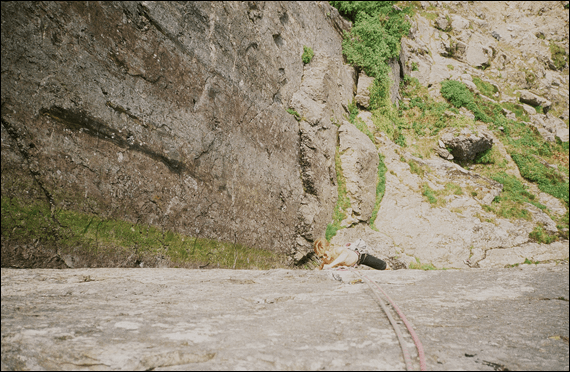
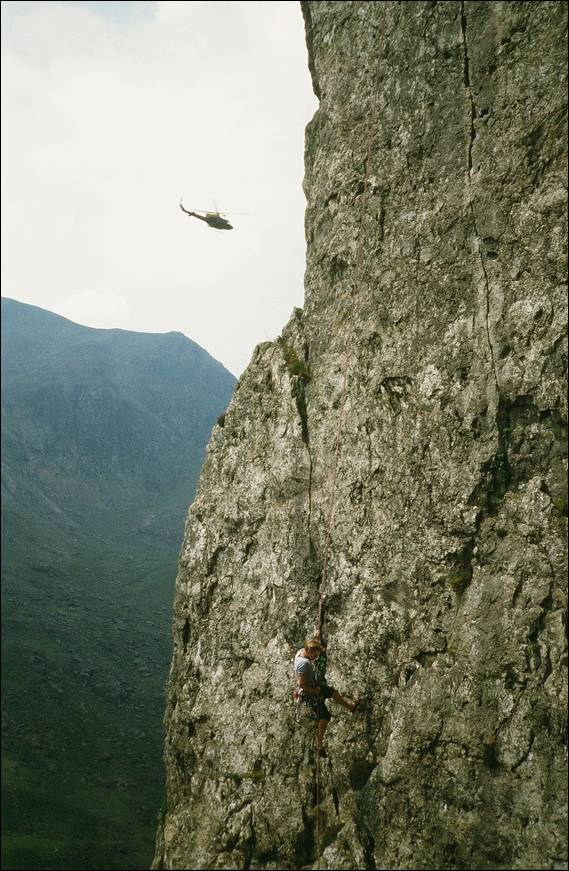
I didn’t climb outdoors for another six months or so, instead becoming a regular at London’s Mile End Climbing Wall. Back then for just 50 pence I had access to multiple rooms with up to six metre walls of all angles and designs and no ropes. Two of the rooms had traverse walls one with a 50m traverse loop and the other not as long but including a full roof portion. I would spend hours here and grew strong and confident, and then eventually someone offered to take me out climbing again. That was however to different location so will be continued in part two. Once reacquainted with real rock I frequently returned to North Wales mainly because I loved the big multi-pitch routes it offered, so my story at this location continues. Below and above is Sheridan going up and then down the mighty Left Wall that follows the thin crack (on the left wall) of Dinas Cromlech. This mega classic was first ascended in 1956 and was an amazing feat at the time, it is renowned for being ‘quite simply one of the best pitches in Britain’ and ‘an aspirational climb which defies most superlatives’ – I completely agree:
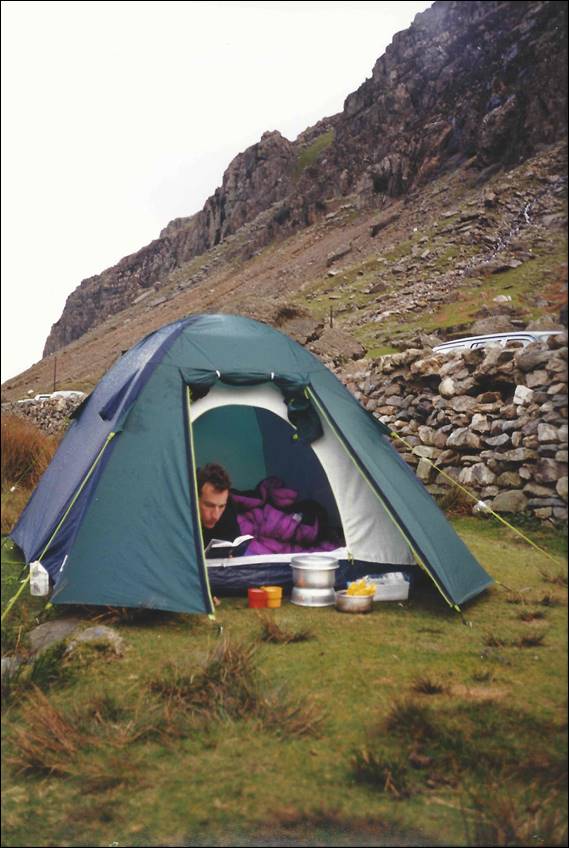
I lived near London for most of the time I was climbing in the UK and North Wales was a four to five hour drive. The last couple of hours of the journey was along the twisting roads of Wales that were barely wide enough for two cars and had high stone walls on either side. Most trips were with Gareth, and we’d leave work at 4 on a Friday, driving in the dark way too fast on these roads and hoping not to come across anyone heading the other way. We’d get there in the dark and the obvious place to camp was over the wall on the opposite side of the road to Dinas Cromlech. Not many people camped here and preferred the campsite at Nant Peris just down the road, probably because it had a pub. Early in the morning an old lady would come round and knock on our tent telling us she owned the land and it cost 50 pence to camp there. We never believed her but paid up anyway:
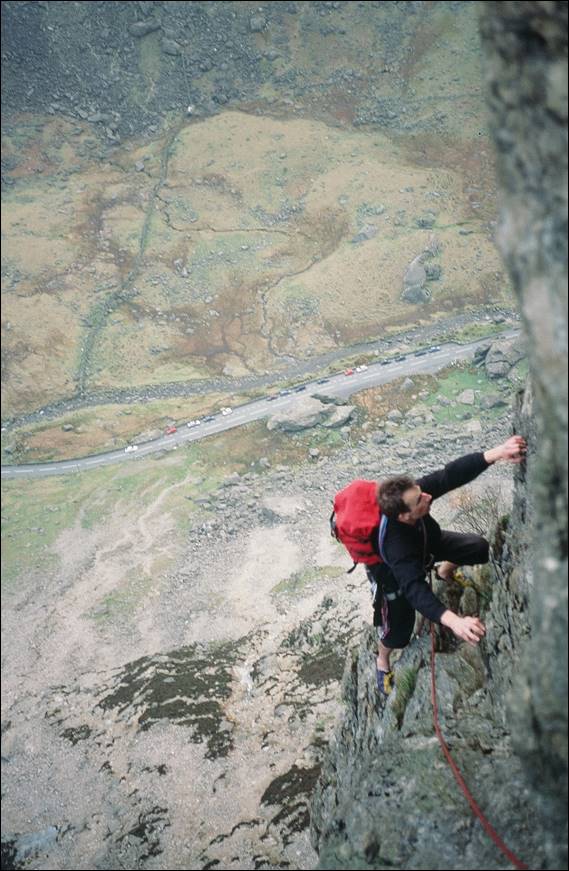
Gareth had in the past worked as a guide for the National Mountain Sports Centre of Capel Curig at the head of Llanberis Pass and had formed a strong bond with the area. He knew the place well and was eager to come back whenever he could, which was another reason I came back here so often. We were like-minded and keen to be up early so we could crack on with climbing. Often we would be the first on the rock and last to leave. In the image below he is following me up one of the many pitches of Flying Buttress a very renowned lower grade route that has to be done just because it has such amazing exposure. Way below you can see the Dinas Cromlech carpark boulders, and we would camp next to the creek across the road from here:
The next image may seem a tad samey to the one above but there is a good reason for including it. Gareth is following me up Brant Direct on Clogwyn y Grochan. It was a year or so before this image was taken that we were stood at the base of this crag eyeing up a line just next to this one called Sickle. Little did we know that to our right someone was taking a photo of a climber leading Snape Direct, and the image was used as the front cover of the fourth edition of the Llanberis Guide released in 1994. Despite having used that guidebook many times it was not until about 2010 that I noticed Gareth and I on the cover image:
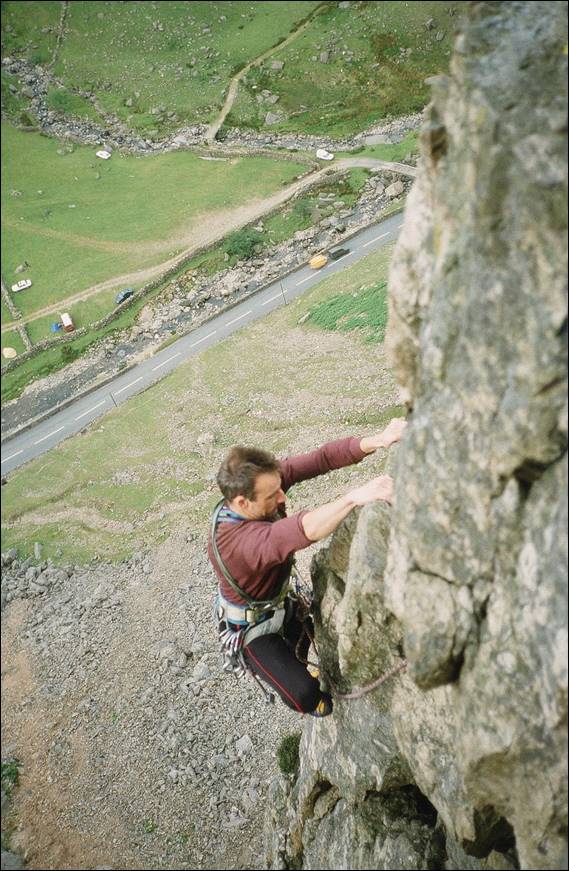
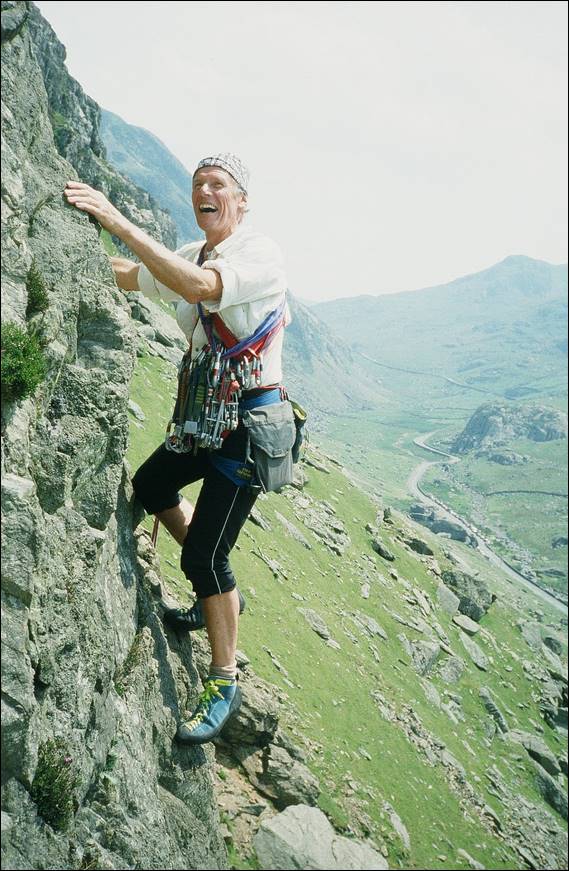
This will be the last image of climbing in Llanberis Pass. We were climbing The Crevice on Carreg Wastad, a climb that has a great description that says ‘a pleasant route for the slim but a fiendish problem for the corpulent and those above average girth’. At the belay above the stature dependent pitch this fella rounded the corner while climbing pitch 2 of Crackstone Rib. Crackstone Rib is another one of the very highly rated and massively repeated lines of the pass, and one that I have climbed a few times. This guy had an ear to ear smile and he was one of the happiest people I’ve ever met. We had a good old chat with him while belaying and he admitted to having climbed forever, he was close on 70, and that it had kept him healthy and happy. I still remember how the conversation and his never ending smile made me think that my aim was to continue to climb to a ripe old age, just being out there bumbling up the classics:
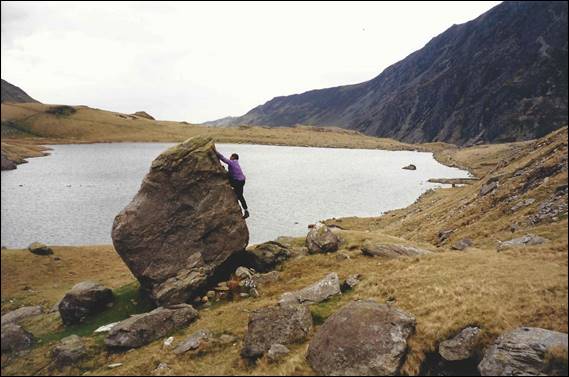
Llanberis pass runs in SE to NW direction, parallel and to the east is another amazing rock filled pass to called Dyffryn Ogwen or more commonly known as the Ogwen Valley. As you drive through this valley it has more of a rolling nature and the buttresses are generally not so prominent or visible. Many of the crags are not as extensive nor as tall as in Llanberis but they are equally good in quality and there are a couple of gems that need to be mentioned. Another aspect that is different is that there is usually a bit more of a walk in. As such when you aim for a crag you tend to be more committed for the day. The walk-ins for me form part of the day and provide just as much enjoyment and entertainment as the climbing, providing the occasional diversion such as this fun boulder next to Llyn Idwall (i.e. lake Idwall) that I couldn’t resist. For those that noticed yes I am in hiking boots not sandals, as I wasn’t introduced to the improved safety footwear until a trip out to, funnily enough, Australia in late 1996:
Our destination for the day was a 160m crag called Idwall Slabs. I’d attempted to get to this crag a few times before. In literally every previous trip we’d get to the base, rack up, tie on, touch the rock and the clouds above would darken and rain would fall. The weather comes in from the west and the tall peaks of the area were a magnet to the wetter weather. On all previous visits I’d hiked in with Johnny Sad Man Solo whereas this time I’d come with Gareth. You’ll have to wait for other parts of this tale before I properly introduce John, but just maybe the misfortune was down to Sad Man Solo? Seeing there was only two of us in the party you may be wondering how we got this image. Well, Gareth similar to me liked his photography and was not worried about being taken off belay during leads (when he felt safe) so I could run to a good vantage point. It does have to be said that this is however an extreme example of our exploits:
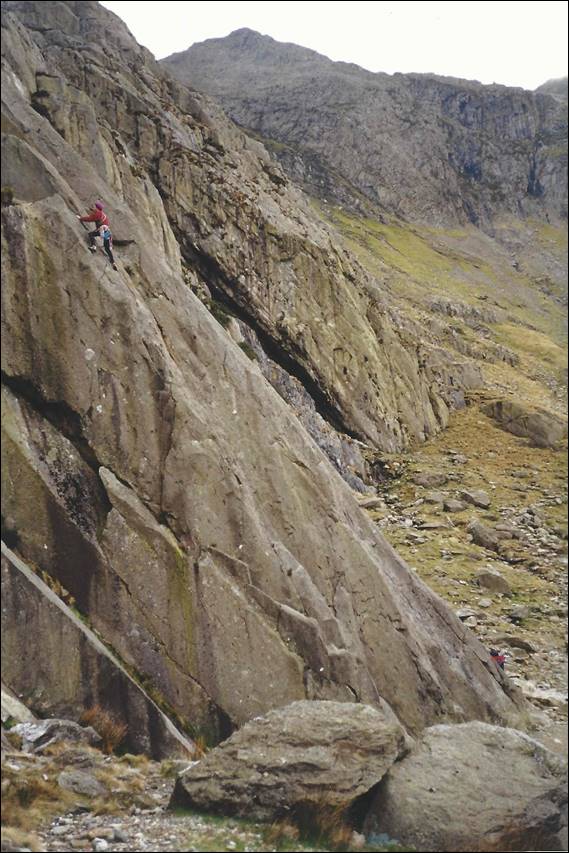
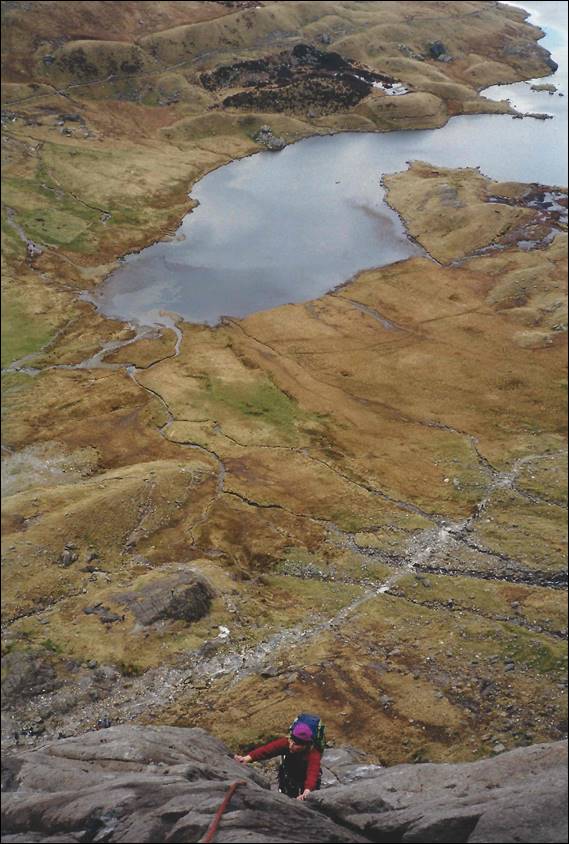
We decided to jump on the crag classic – Tennis Shoe. It’s the one everyone aims for and in our usual early bird way we were the first at the crag and as such didn’t need to jostle with anyone for pole position. Truth be told this valley didn’t fill up like other places in North Wales, which made it a place to go to when the Pass was busier than usual (such as long weekends). From memory I think we were on pitch four when the next part rocked up. So after topping we decided to leave them and the magnificent view of Llyn Idwall behind us, opting to hike out to some other quiet crag:
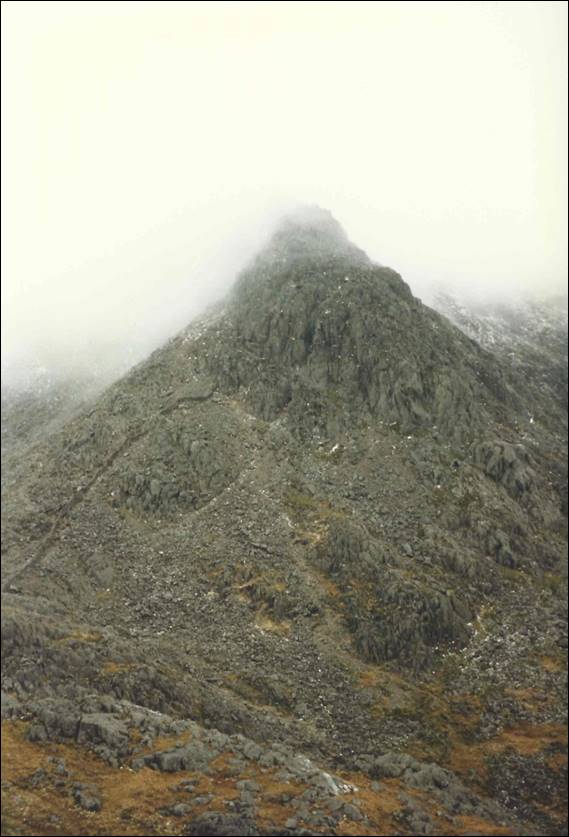
I didn’t go back to Idwall after bagging that classic, for no other reason than we went to other crags in the valley and had just as much fun. There was however one particular crag that we did keep going back to, the most impressive rocky peak in all of North Wales – Tryfan. Not as high as Mount Snowdon by any means, being just shy of 918m and the 15th tallest peak in Wales, but it looks impressive with its peak surrounded by rock walls. This image doesn’t show the full extend due to the top being partially in cloud, but the peak is in fact a long rocky ridge and all of it is rock, rock, rock! The routes can be over 300m and are not consistent in difficulty, providing a mountaineer style outing rather than a crag experience:
It was the perfect peak to carry everything plus the stove up allowing us to sit atop, make a brew and take in a grand view. In this image we are climbing Grooved Arête a wonderful 230m line, with some section being a tad broken but non-the-less interesting and fun. It’s definitely a crag to bring all weather gear as like the others it can be subject to unexpected and quick weather changes, but unlike them bailing off this rock masterpiece is not so easy:
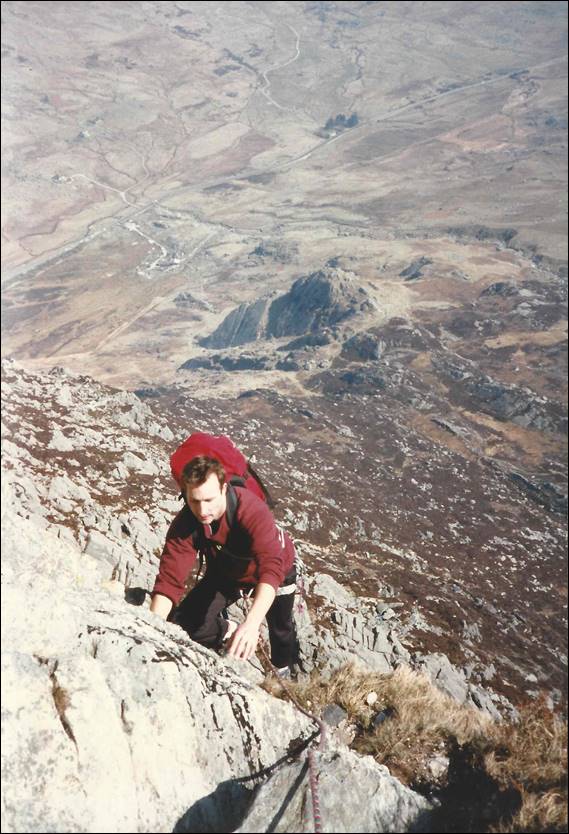
The higher up you go the steeper the territory can get, which is reflected in one of the descriptions I came across for this peak ‘in calm dry weather it is not too hard but the penalties of failure are unpleasant in the extreme’. However, more often than not we would climb here in hiking boots, picking the more consistent lower grade lines rather than the ones that had one hard pitch with a multitude of lower grade pitches just for access. I could ramble on a bit here but instead will let you soak up a few images, as possibly I’ve included a few too many of this place:

Some weekends we knew it would be cold and probably not the best weather to try and climb, and on those trips we’d aim to hike. Tryfan provides one particular hike that is soooooo good, it’s called Bristly Ridge. It traverses the entire ridge of Tryfan followed by a steep decent down the back and then climb up to Glyder Fach, which sits proudly between Llanberis pass and Dyffryn Ogwen at 994m (the sixth highest in Wales). The way to start this hike is to ascend the NE Ridge of Tryfan, which has a number of short rock buttresses protecting it:
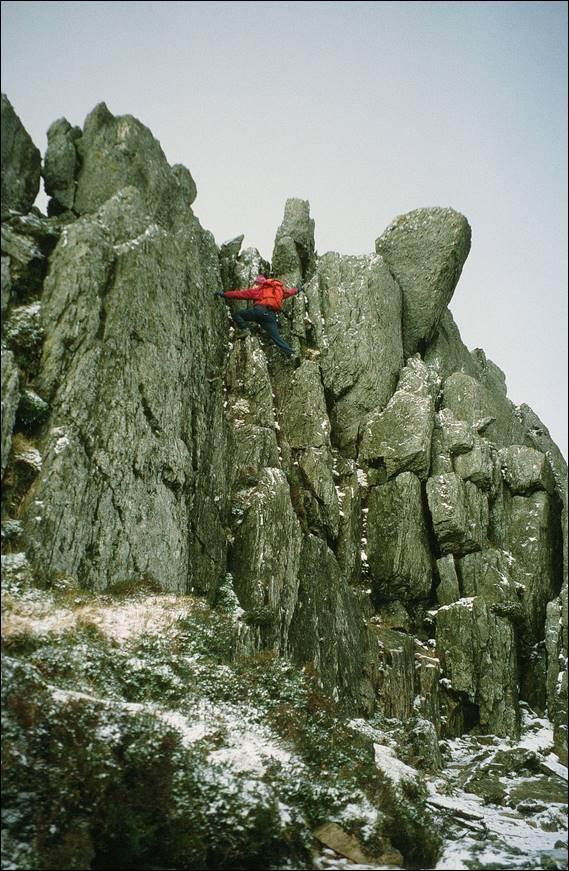
If the clouds clear then the views stretch out endlessly, such as this one where the backdrop consists of Llyn Bochlwyd and Glyder Fawr (1,000m and the fifth highest mountain in Wales):
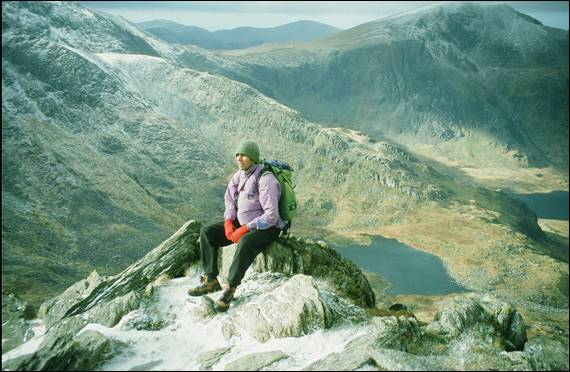
Just one more of Tryfan which shows Bristly Ridge with a light dusting of snow. It is on days like this that you really appreciate the effort of hauling up the stove:
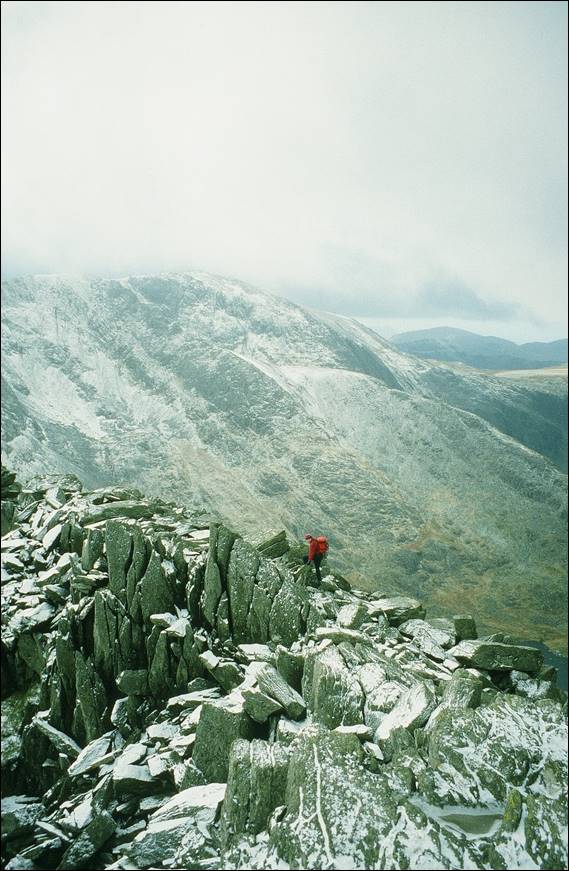
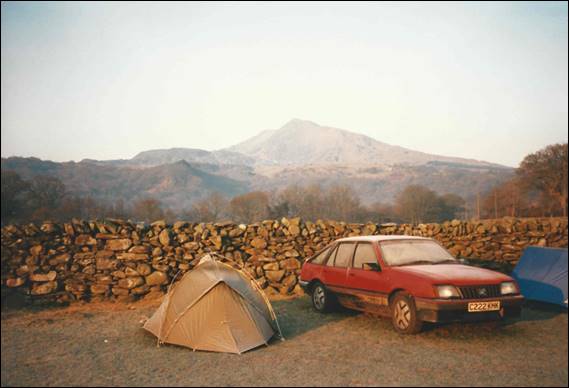
I hope the last few images didn’t make you feel too cold. You come to expect cold weather in North Wales and as such I quickly invested in a descent tent and more importantly sleeping bag, the latter costing three times that of the former. Sounds excessive but on nights when the mercury drops into minus, the coldest I can remember was -7°C, it was money very well invested. In fact the only thing I really spent any money on was climbing related, I lived cheaply and rarely went out. I’d head off to the hills each Friday not to return until late Sunday evening. So in some ways my car and tent were as much my home as the places I rented:
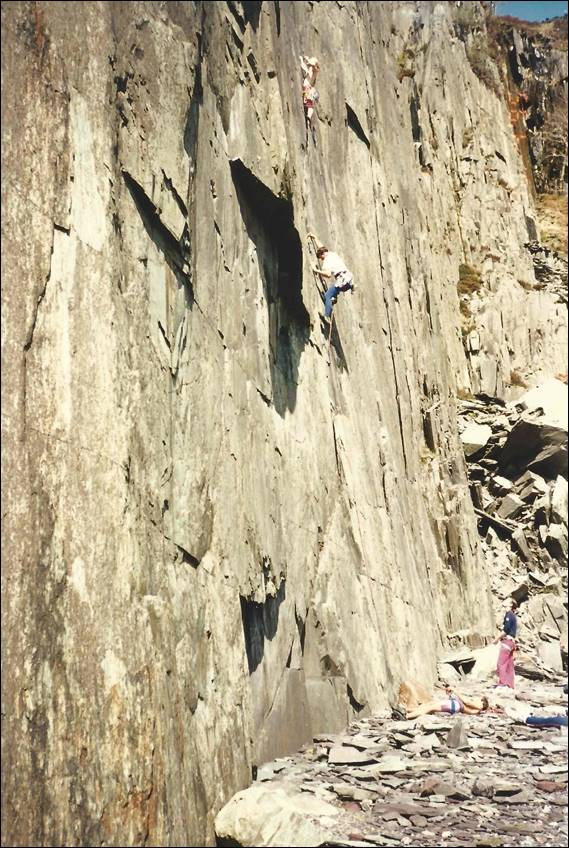
North Wales has so much more to offer than the Pass and valley I’ve introduced you to above. I would have had to stay in the UK a lot longer to find to time to explore all of it, but there were a few other spots that we did visit. One of the old industries that made this area great was slate, the old mines are impressive to behold with numerous tiers being carved out of the hillside 100m up. These places now sit unused other than as tourist attractions with museums full of historic images, and are frequented mostly by climbers. Slate has to be one of the most obscure rocks I’ve climbed on. I reckon it would be hard to find a rock type that is more slick in nature. Add that to the nervously thin flakes you need to trust to both crank on and place gear behind. The slate quarry we went to most often was called the Bus Stop, and below I’m belaying Doug on Guillotine. Behind him another crew are on Fools Gold, which is one of the very few routes on which I have been known to do a full-on dyno:
On days when the weather closed in on higher peaks we had a favourite place to escape to. Close to the coast Craig Pant Ifan (locally known as Tremadog and to us as Three Mad Dogs) was more likely to be fine than any other location in North Wales. It is promoted as a year round crag offering a great cragging experience with mostly two pitch 60m routes on steep clean rock that dries quickly after rain. It has very few routes below the UK grade of VS (very severe), which helps keep the crowds and big groups away. During one visit the place was drenched and there was no end in sight so we sat in Eric Jones’ Climbers’ Café, which can be seen just above Gareth’s head. The owner was a great character and we always made an effort to know people like him. The place was packed with climbers looking a tad disappointed and he came over and quietly advised us about a little known place that offered a good long multi-pitch traverse that would be dry due to the roof overhead. I’ve clean forgotten the name of that place but it was gold:
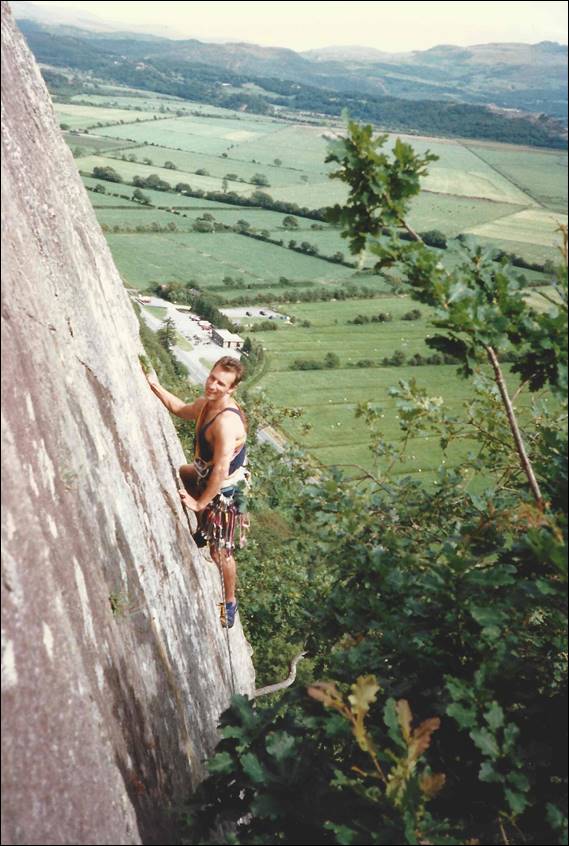
I’ve just read an article written in 2007 they reckoned this place was in the ‘doldrums’ for the last decade, which does surprise me a bit as it has so much to offer. As an example above Gareth is about to head up the very fine second pitch of Scratch Arête, and below he is pulling like (the guide says) a tractor to mount the crux overlap. This was yet another sunny day in paradise for us on yet another successful trip to this awesome place. The people I worked with were constantly amazed with the images above my desk, asking if I’d been to Spain or Italy. They were not willing to accept that the UK also offered great weather (back then) if you were prepared to observe the weekly forecasts and make the long drive to the place that promised the best weather:
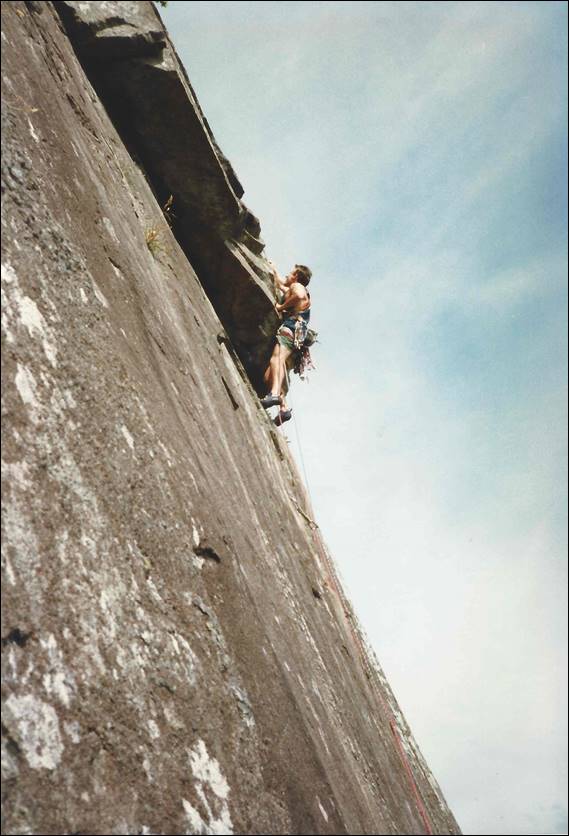
It was on the trip that these images were taken that Gareth and I managed to get in a stack of the classics in, such as Scratch Arête, Poor Man’s Peuterey, One Step in the Clouds, Merlin Direct, The Plum, The Fang and the one shown below Pin Cushion. This route was the last and the toughest, back then it went at E2 5c but looking online today it is given a E2 6a grade so I’m feeling pretty chuffed about that lead. More often than not when you peruse a guidebook you are drawn to the climbs of which there are images. This one was no different, with an old B&W image of Joe Brown with flat cap on and a fag hanging out the corner of his mouth after completing the crux traverse. The route is also listed in the North Wales 100 Classic Climbs and Ultimate E2 Tick List, it’s a real gem and described as a ‘route of contrasts – it has roofs, slabs and cracks, wide bits, thin bits and blank bits’:
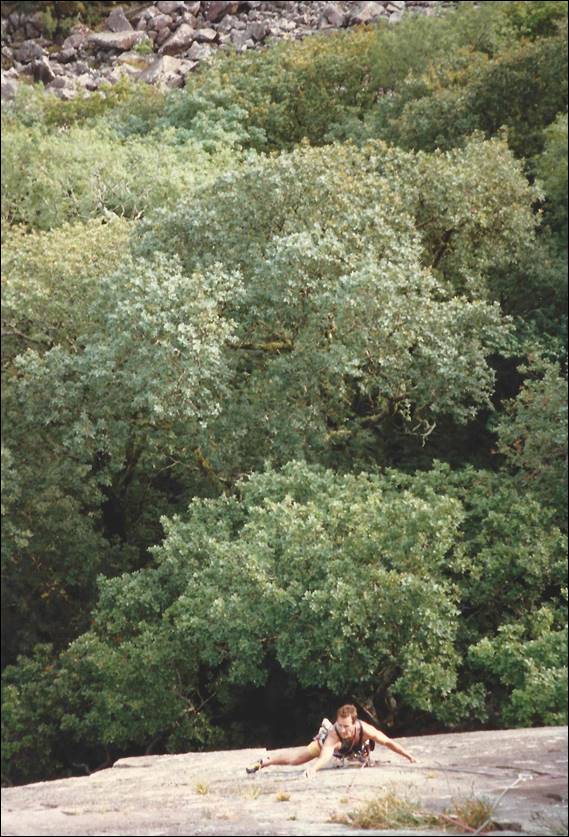
When we topped out on Pin Cushion the light was fading and it was time to head back to the café carpark, at which point we noticed that the phono-plug which was the immobiliser key for Gareth’s car had unscrewed and fallen out leaving an empty shell. I still have this empty shell on my keyring. We had a quick look about but it was pointless so we went back down, and had to knock on someone’s door, the café was closed and this was before everyone had mobile phones, to call the RAC. That meant a tow home and missing out on climbing on the Sunday, but at least we still had the key so as I sat on the edge of the car boot munching on a muesli bar I was very surprised when the car started up. In the past couple of hours he omitted to tell me he had a spare! So after just remembering to call off the RAC we jumped in the car and headed to the mighty Anglesey, an island off the tip of North Wales:
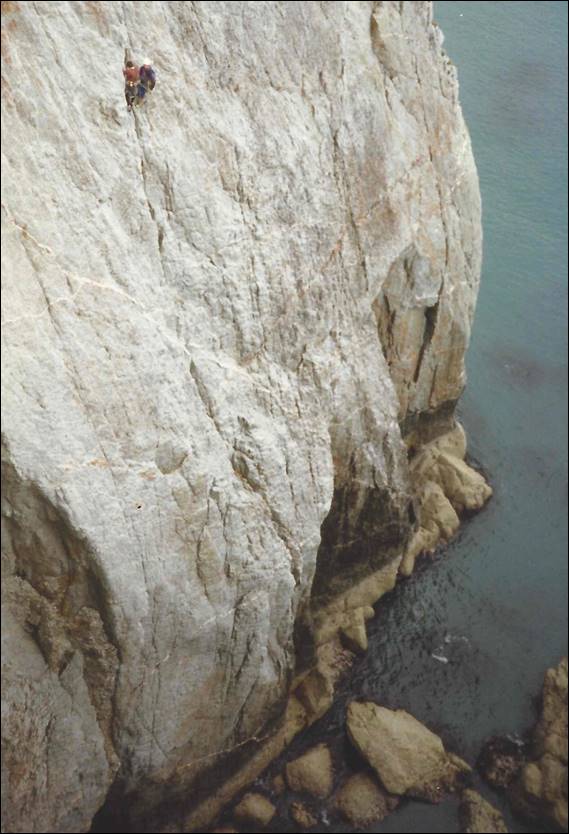
We didn’t arrive until the wee hours, the streets were dark and empty and we were a bit lost. So after waiting at a cross road for the lights to change for what seemed like forever, I encouraged Gareth to ignore the red lights and go for it. Damn a police car was round the corner and pulled us over. Ever the diplomat Gareth sorted it and even got them to lead us to the campsite. Early next morning we were greeted with mist and drizzle. Not put off we walked to Wen Zawn, which has the might Dream of White Horses a route that makes the top 25 UK Climbing wish list. Truly a mega classic with four pitches covering 100m girdle that rises from sea level to the top of the zawn with alarming exposure. As we climbed the drizzle and mist continued and the fog horn of the distant lighthouse along with the crash of the waves below added to the atmosphere. I’ve heard horror stories of groups banking up on this climb, but we managed to climb the whole route with no one else about, I can’t talk it up enough and this too was one of the best ever climbing experiences I’ve had. As we were topping out the mist and drizzle moved on giving us clear views, and at that point another crew arrived so we sat and watched them. They unlike us, probably due to the wet conditions, skipped the first pitch (as shown above) which starts at the bulge above the sea. More fool them I say:
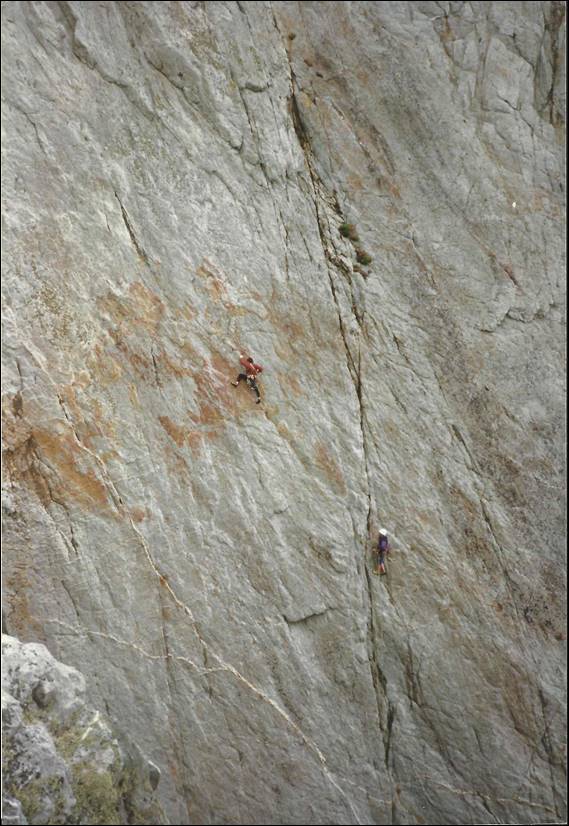
In 2000 before moving out to Australia I had one last trip to North Wales, the images of us hiking up Tryfan with the snow was taken on the Saturday of that trip. Then on the Sunday we plumped for a place we had never been to, Carreg Alltrem. We picked it for the only good reason, there was an image of a climb that looked great and that was Lavaredd. Although the place was also described as one of the most beautifully-placed crags in the Lledr Valley and the route as thrilling and exciting and not for the faint hearted. Checking out this crag online it doesn’t really have many routes and I have no recollection of what else we climbed that day. Maybe we only bagged the one route but no matter it was a stunner and made even better as we were climbing in the sun, which was a welcome contrast after feeling like we had been in the freezer the day before:
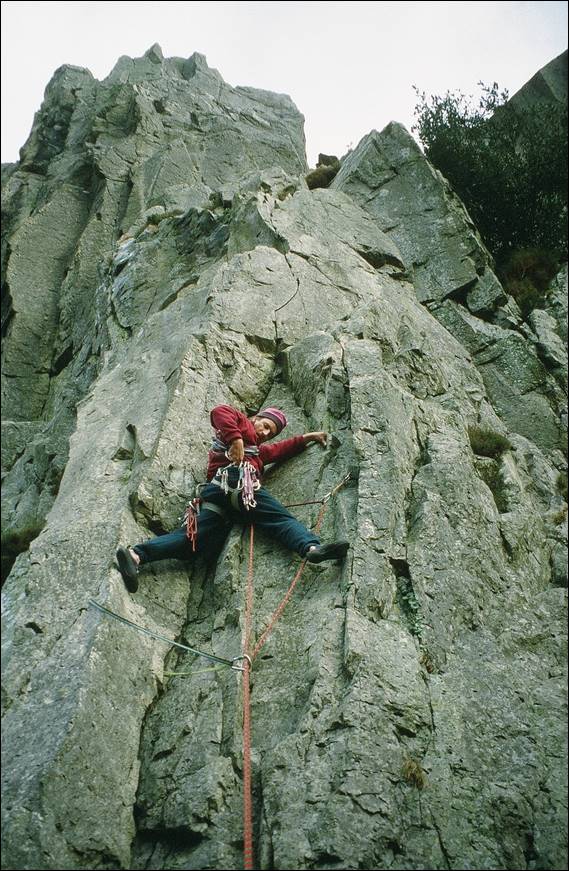
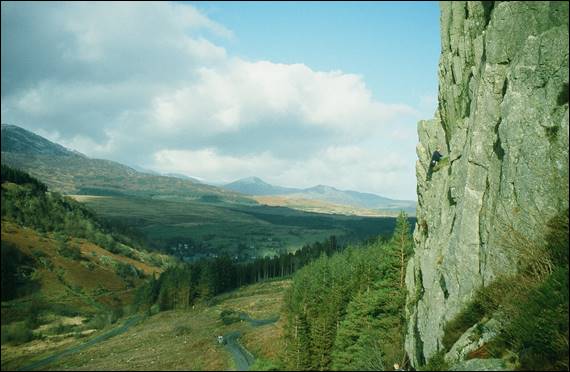
As seems to happen all too often another party rocked up after us which was good this time as I was again bale to snap a few images of this great line. In the guidebook the pine plantation hadn’t been harvested so covered more of the land and the mountains in the background had far more snow on them, but no matter we climbed it and it was very, very worthy. It was a fitting end to my time in North Wales with a big hike on Tryfan in picture perfect conditions and then a glorious sun bathed climb on yet another place that we only had the time to sample once:
In part two I’ll take you to the Peak District where I did my first lead.
 Sandbagged
One thought on “Part 1 – North Wales – were it all began”